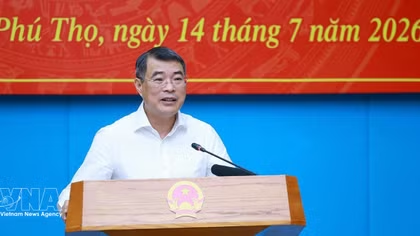
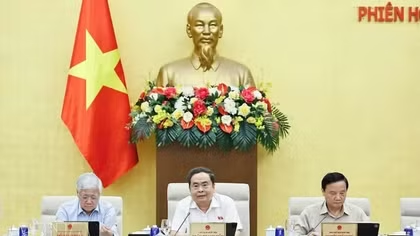
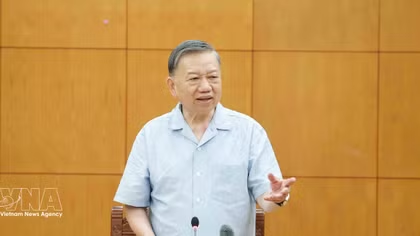
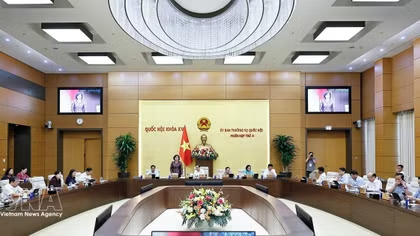
Hanoi (VNA) - Prime Minister Le Minh Hung chaired a government meeting with the business community in Hanoi on July 18, aimed at removing bottlenecks, unlocking resources and driving growth.
Opening the event, the PM underscored the significance of the meeting, saying that it is the first engagement between the new-term government’s members and the business community - the vanguard on the economic front, playing a key role in driving growth, generating employment, and enhancing national competitiveness.
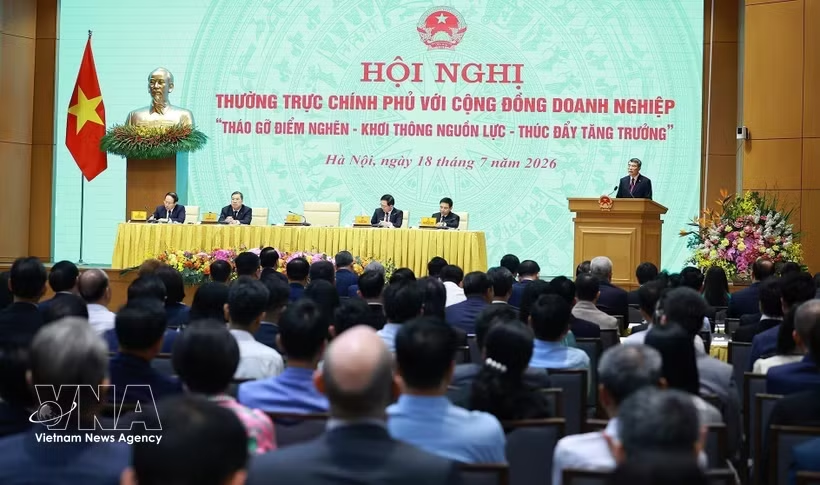
The socio-economic development tasks for both the 2026-2030 period and the year 2026 remain heavily challenging, he said, noting that achieving these growth targets depends heavily on the performance of domestic enterprises as well as foreign-invested businesses.
Despite an increasingly volatile and unpredictable global environment during the first half of this year, the country maintained positive momentum across multiple sectors, he said.
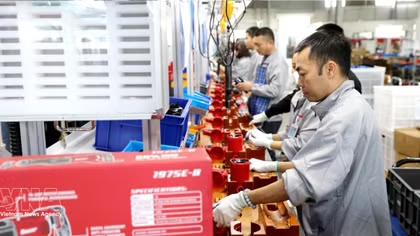
By the end of June, the country had nearly 1.062 million active enterprises with total registered capital of about 1.2 trillion USD. The business sector contributes more than 60% of gross domestic product (GDP), employs more than 17.6 million workers and remains the main engine of the country's foreign trade.
Nearly 170,000 enterprises entered or re-entered the market in the firsts six months of 2026, up 11.2% from the same period last year. The number of newly established businesses rose 22.5%, while registered capital increased 64.8%.
Against this backdrop, the meeting focused on identifying practical challenges facing businesses, with particular attention given to institutional barriers and shortcomings in policy implementation.
At the meeting, business representatives outlined major challenges related to the enforcement of laws and the handling of corporate petitions by ministries and localities, while proposing measures to improve the investment climate, strengthen competitiveness and encourage business expansion.
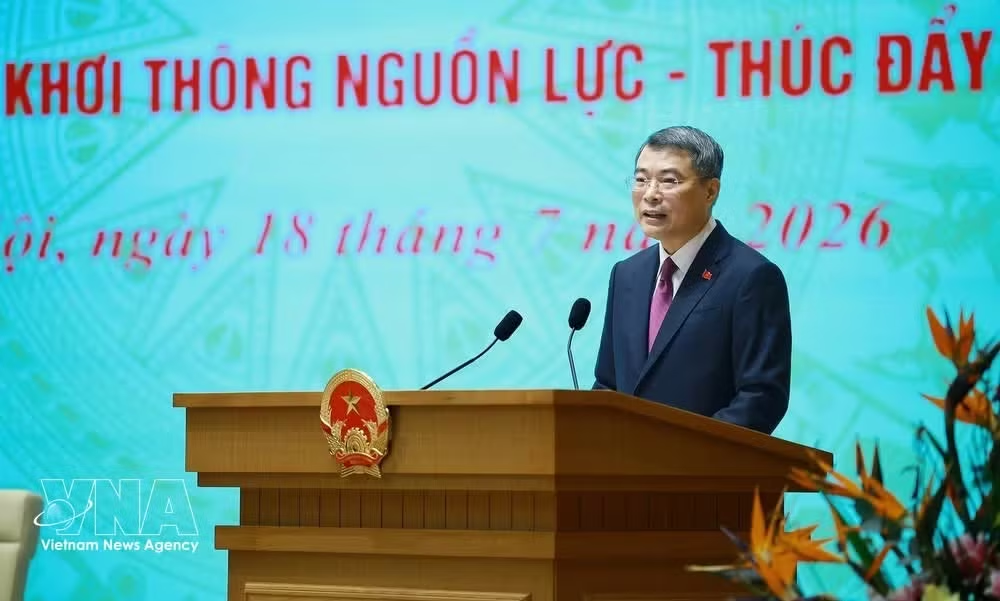
Ministries, sectors and local authorities also engaged directly with enterprises, clarifying how specific recommendations would be addressed and outlining implementation roadmaps aimed at ensuring that solutions deliver tangible results rather than procedural responses.
The Government leader instructed ministries, agencies and local administrations to immediately resolve issues within their authority while expediting reviews of policies requiring legislative amendments.
He said that all official responses to business recommendations will be made public and forwarded to the Vietnam Chamber of Commerce and Industry (VCCI), which will work with enterprises to assess whether the issues have been adequately addressed, or will continue to gather feedback from enterprises and submit unresolved cases to relevant ministries and Government agencies for further action.
Hung acknowledged that the country’s three major business sectors —state-owned enterprises (SOEs), private companies and foreign-invested enterprises (FDI) —have all made significant progress in recent years.
However, he said achieving the goal of sustained double-digit growth would require a far stronger breakthrough, particularly by leveraging the leading role of leading enterprises and high-tech companies in innovation, digital transformation and green transition, thereby creating new productivity, added value and economic momentum.
He also cited the relatively low efficiency of some state-owned enterprises, the small scale and limited technological capacity of many private firms, and the weak integration of foreign-invested enterprises with the domestic economy, along with insufficient technology transfer.
Against this backdrop, he reaffirmed that business development remains a strategic priority for Vietnam. Policies should focus on ensuring a transparent and stable investment environment, guaranteeing equal access to resources, and promoting innovation, digital transformation, the green transition and greater competitiveness, he said.
The PM called for faster institutional reform and administrative simplification by eliminating overlapping regulations and legal bottlenecks in areas including investment, land, planning, construction, environmental protection, taxation, customs and specialised inspections. He also urged greater digitalisation of public administration and stronger accountability among government officials.
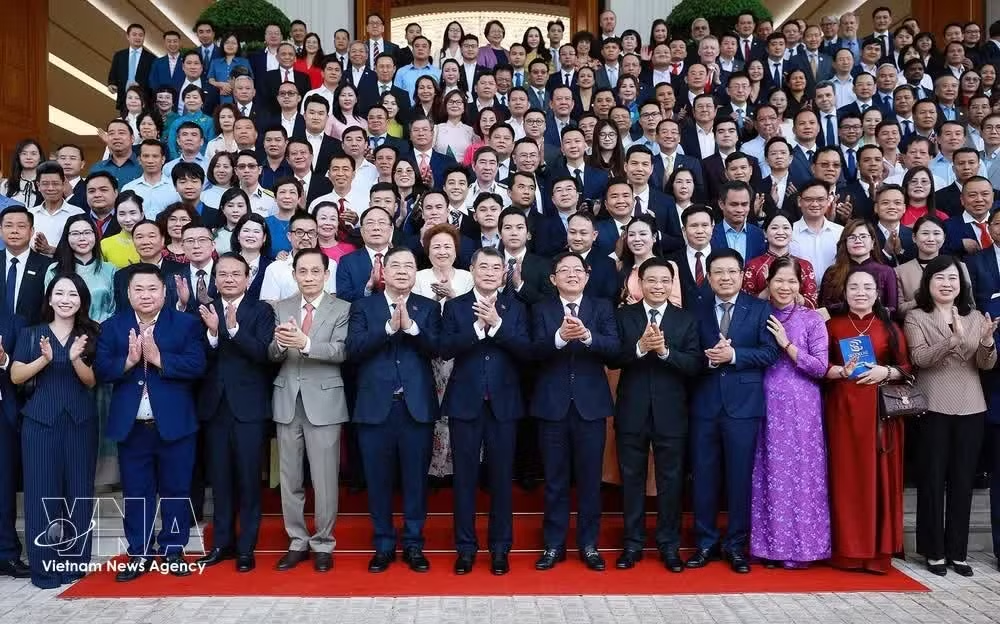
He further called for measures to mobilise financial resources and improve businesses' access to capital. Priorities include developing the capital and corporate bond markets, resolving stalled investment projects, speeding up tax refunds and public investment disbursements, and expanding credit, particularly for small and medium-sized enterprises.
The Government will also continue efforts to reduce logistics and regulatory costs, make better use of free trade agreements to expand export markets, and strengthen innovation, digital transformation, green transition and the development of a highly skilled workforce.
PM Hung said state-owned enterprises should reinforce their leading role in strategic industries, while private enterprises should become one of the principal engines of the economy with equal access to resources and investment opportunities. He added that foreign investment should prioritise quality over quantity, with incentives linked to technology transfer, workforce training and higher local content.
He also stressed the need to to establish cooperation mechanism among state-owned, private and foreign-invested enterprises through joint programmes and projects, contracts and procurement initiatives, with the localisation rate and the value added generated in Vietnam serving as the key indicators of their effectiveness.
The PM expressed confidence that, with the commitment of the entire political system, the concerted efforts of ministries, sectors, localities, and the business community's spirit of innovation and determination to grow, the country will be able to effectively mobilise all available resources, turn challenges into opportunities, achieve its goal of double-digit economic growth, and further strengthen its long-term national competitiveness./.