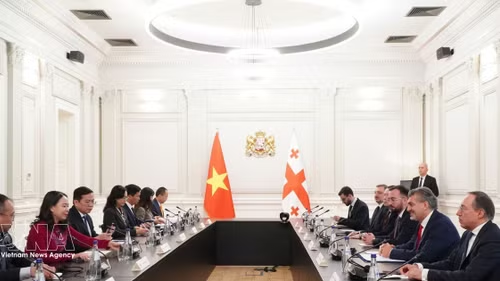
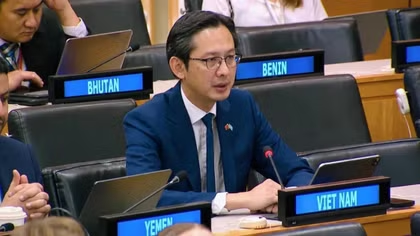
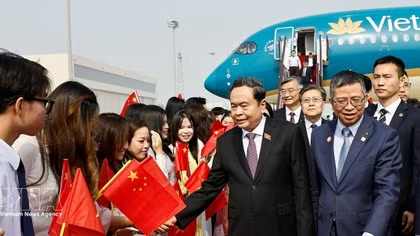
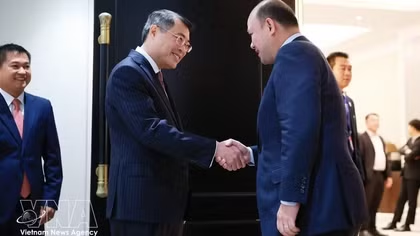
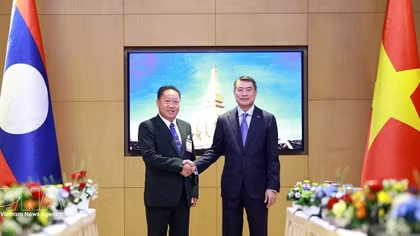
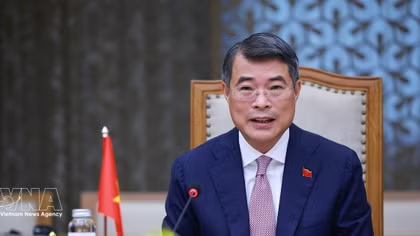
New Delhi (VNA) - Prime Minister Le Minh Hung held talks with his Indian counterpart Narendra Modi in New Delhi on September 12 as part of his trip to India to attend the 18th BRICS Summit.
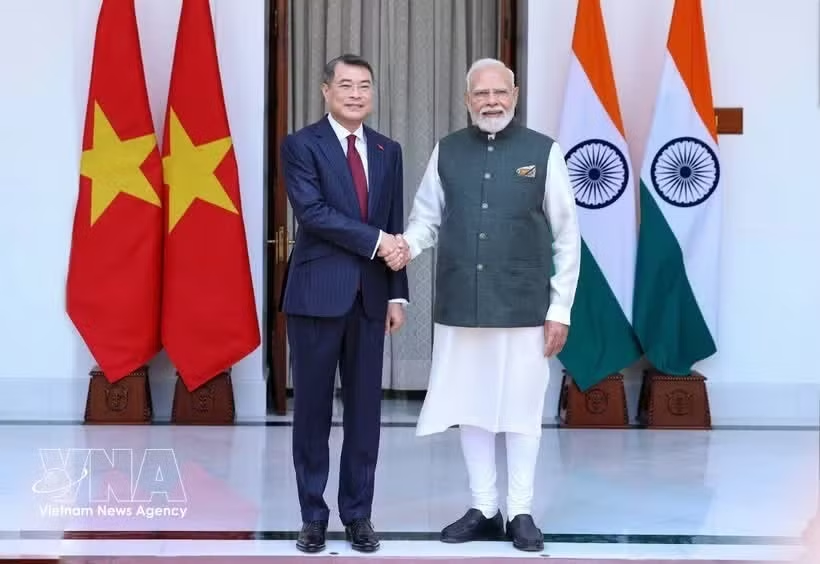
The Vietnamese leader conveyed the warm regards and best wishes from General Secretary of the Communist Party of Vietnam Central Committee and President To Lam to PM Narendra Modi and other senior Indian leaders.
He congratulated India and PM Narendra Modi personally on the success of the BRICS Summit 2026, as well as on the country's outstanding socio-economic achievements. He expressed confidence that India would successfully implement its “Vision 2047” to become a developed country.
He spoke highly of PM Narendra Modi's initiative on the Global South Voice Forum and affirmed Vietnam's readiness to coordinate with India in contributing to BRICS initiatives in 2026, particularly in innovation, digital transformation, clean energy and sustainable development.
Against the backdrop of major shifts in the regional and global landscape, PM Hung underscored that Vietnam and India have remained close, steadfast and loyal friends. The elevation of bilateral ties to an Enhanced Comprehensive Strategic Partnership during Party General Secretary and President To Lam's visit to India in May 2026 reflected the depth of bilateral relations, the maturity of political trust, shared visions and converging strategic interests, while opening up broad opportunities for future cooperation, he stated.
He noted that Vietnam and India share many similarities in their development orientations, policies and goals, creating opportunities for the two countries to advance cooperation across a wide range of areas.
PM Narendra Modi expressed his pleasure and warmly welcomed his Vietnamese counterpart to India. He praised Vietnam's participation in BRICS, saying its attendance at the 18th BRICS Summit had helped elevate the stature of the gathering.
He recalled his deep impression of Party General Secretary and President To Lam's May state visit and conveyed his regards to the top Vietnamese leader.
He highlighted the two countries' long-standing traditional ties and their bonds forged through history, culture and civilisation, as well as similarities in their foreign policies and shared development vision. He affirmed that Vietnam is an important pillar of India's Act East policy.
The two PMs welcomed the significant progress made in Vietnam-India ties. They noted that the 2024-2028 Action Programme and the outcomes of Party General Secretary and President To Lam's visit are being actively implemented, and agreed to maintain the current strong momentum and high level of political trust.
They also agreed to maintain regular exchanges and coordination between the leaders of the two countries on bilateral, regional and international issues, looking ahead to the 55th anniversary of diplomatic relations in 2027.
The two leaders agreed that Vietnam and India are among the world's fastest-growing economies and have highly complementary strengths, with substantial untapped potential for cooperation. They expressed determination to step up measures to achieve the target of 25 billion USD in bilateral trade at an early date and facilitate market access for products from both countries, particularly pharmaceuticals, agricultural products, fisheries and livestock products.
PM Hung proposed that the two sides establish economic corridors and supply chains to enhance connectivity between their economies, consider launching negotiations on a bilateral free trade agreement (FTA), and work actively with ASEAN member states to accelerate the completion of the review of the ASEAN-India Trade in Goods Agreement (AITIGA).
He welcomed major Indian corporations to invest in Vietnam in such areas as technology, infrastructure, energy and pharmaceuticals.
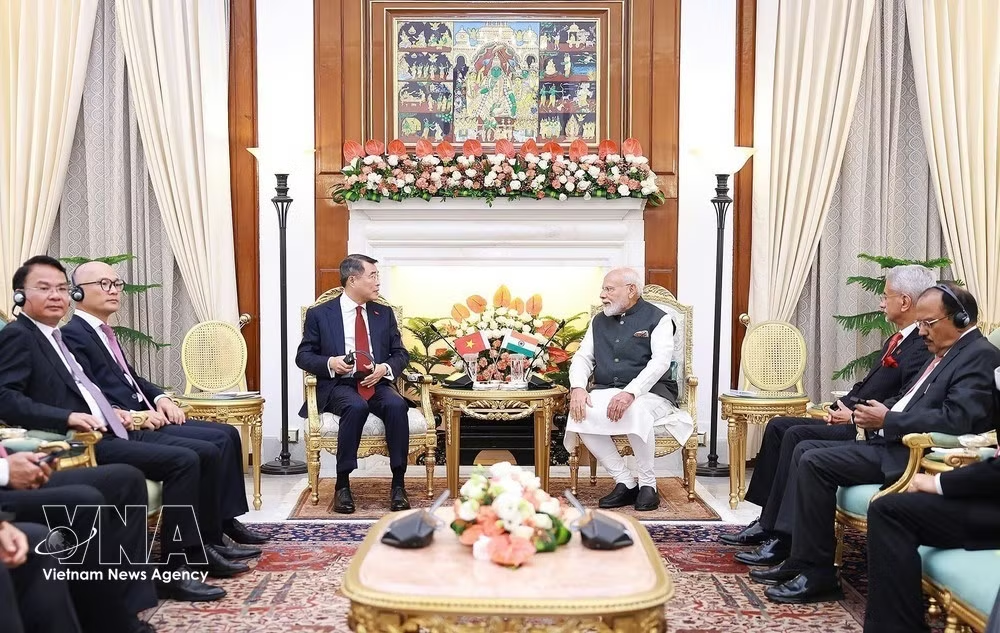
The two leaders also emphasised the importance of connectivity by road, rail, air and sea. They agreed to study ways to advance railway connectivity projects, establish a South Asia-Southeast Asia connectivity corridor and strengthen links between the two countries' seaports in connection with the Eurasian maritime route.
PM Hung called on India to continue increasing the frequency of direct flights linking major cities of the two countries.
The PMs described defence-security cooperation as an important pillar of bilateral ties and agreed to strengthen cooperation in defence industry and military trade, training and the provision of preferential credit. They also agreed to organise the first meeting of the Foreign Affairs-Defence Dialogue mechanism at an early date.
In science and technology, PM Hung suggested that the two sides soon develop a Vietnam-India technology connectivity strategy, focusing on key areas such as artificial intelligence (AI) and 5G/6G mobile technologies.
He also called for the development of cooperation programmes to train AI and semiconductor engineers, provide digital technology training for young people, and connect startups and innovation enterprises of the countries.
The leaders highlighted the countries' longstanding strengths in cultural, civilisational, historical and religious connectivity dating back thousands of years. They expressed a desire to leverage these advantages to further expand cooperation in tourism and culture, preserve and promote cultural values, and strengthen people-to-people exchanges, thereby reinforcing the foundation of friendship between the two countries.
The Vietnamese PM proposed stepping up cultural and sports exchanges as well as yoga activities and Buddhist exchanges in 2027 to mark the 55th anniversary of diplomatic relations.
PM Narendra Modi agreed with his Vietnamese counterpart’s proposals and affirmed that the Indian Government will continue to support and make efforts to implement measures to promote cooperation in various areas, further deepening bilateral ties in a substantive and effective manner.
The leaders agreed to strengthen coordination and mutual support at regional and international forums.
PM Hung reaffirmed Vietnam's support for India to play a greater role in multilateral institutions. Saying Vietnam is ready to assist India in strengthening cooperation with ASEAN, he expressed his hope that India will continue to strongly support ASEAN's position on the East Sea.
On the occasion, the Vietnamese leader invited PM Narendra Modi to pay an early return visit to Vietnam. The host accepted the invitation and said the two sides will arrange a suitable time for the visit./.