Proper scheme needed for COVID-19 vaccination for children: Health Ministry

The rollout of COVID-19 vaccinations for children should priotise high-risk areas, with the Health Ministry devising plans to distribute vaccines to localities based on the pandemic situation and the amount of vaccines needed to inoculate children aged 12 to 17.

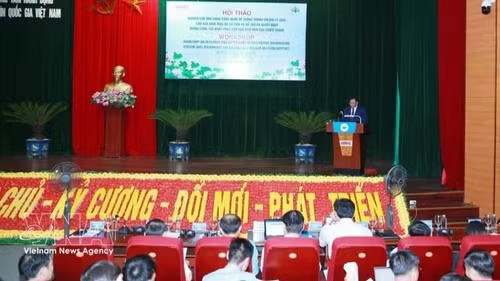
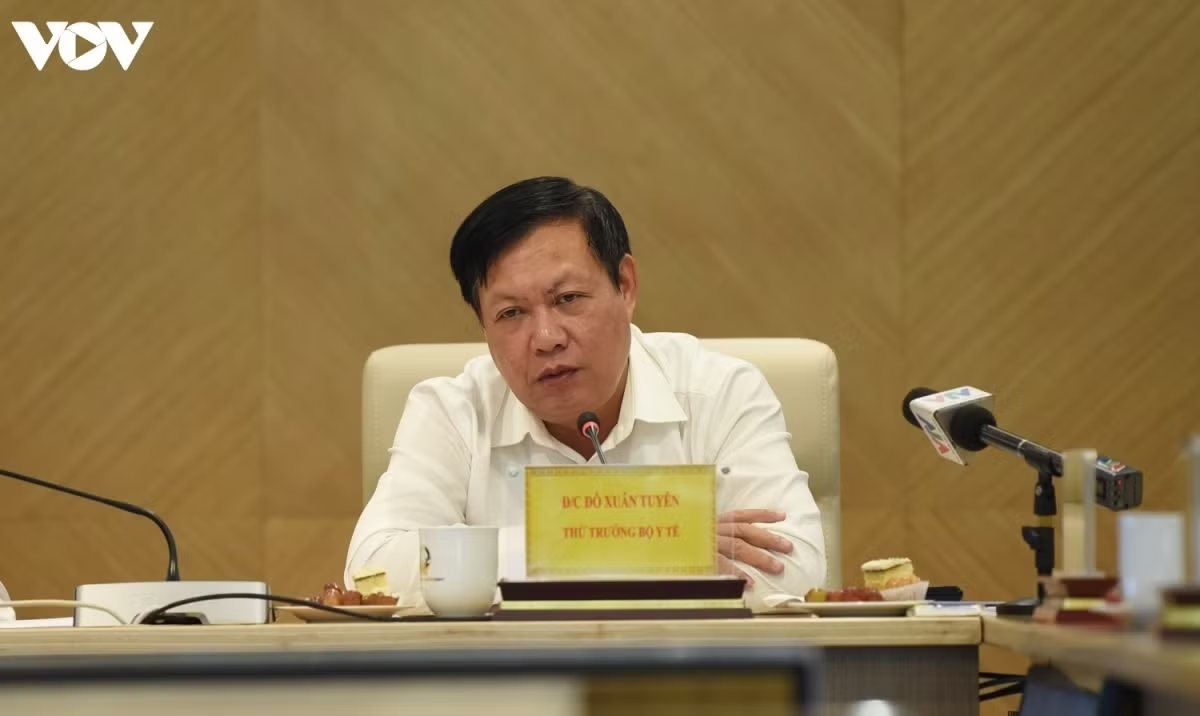
Deputy Minister of Health Do Xuan Tuyen addresses the meeting

Deputy Minister of Health Do Xuan Tuyen addresses the meeting

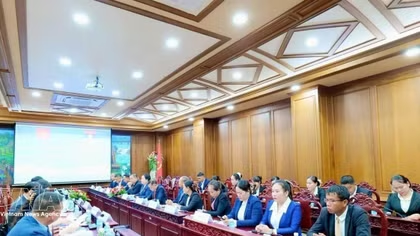
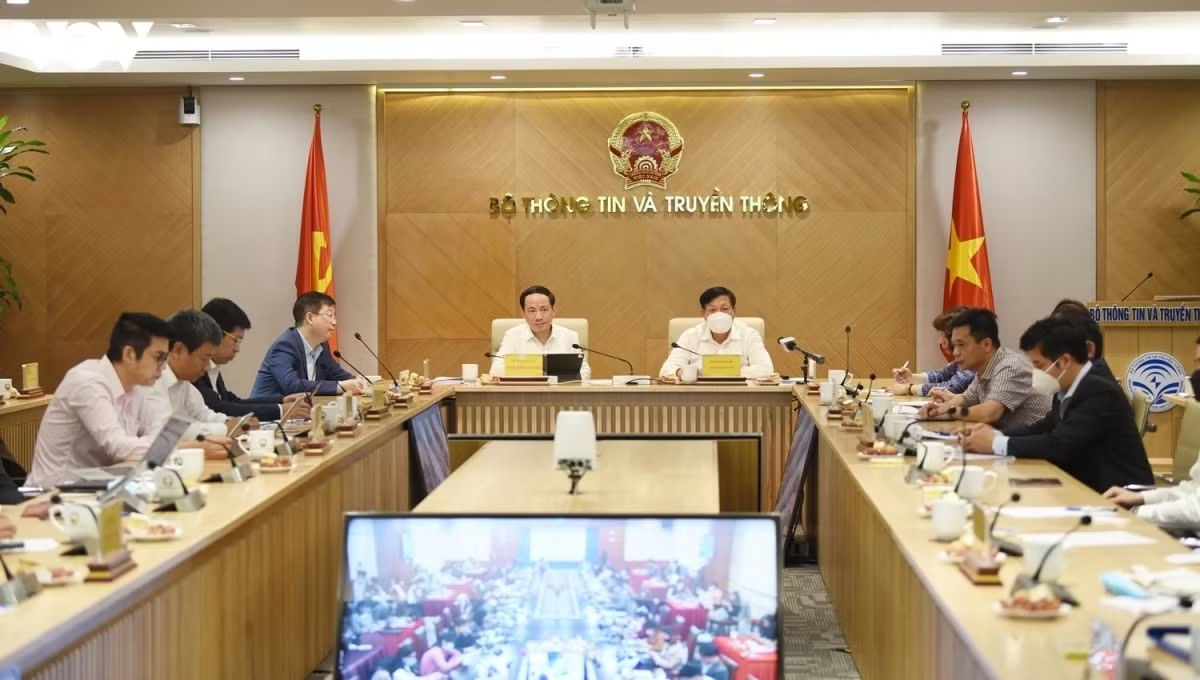
Deputy Minister of Health Do Xuan Tuyen was speaking this during a seminar held on October 29 regarding the Government’s Resolution 128 on safe and flexible adaptation and effective control of the COVID-19 pandemic.

Priority will be given to injecting 16 to 17 year olds. Indeed, many localities already have plans, with these currently being scrutinizing ahead of inoculation, he said.

The Ministry of Health has therefore assigned the Central Institute of Hygiene and Epidemiology to train and guide health workers at all levels in order to deploy vaccinations for children across 63 provinces and cities nationwide. The injection of children will primarily be carried out at schools, medical facilities, and hospitals for children with underlying diseases and obesity. This will be done in an effort to ensure vaccinations are conducted in a rapid, convenient, and safe fashion, Deputy Minister Tuyen said.

According to the Deputy Minister, the Health Professions Council under the Ministry of Health has decided to vaccinate children according to the schedule in high-risk areas. Indeed, there are currently only two licensed COVID-19 vaccines that can be given to children, including Pfizer and Moderna.

Due to the difficulties in supplying vaccines to the world, many senior leaders have actively negotiated and promoted vaccine diplomacy to allow a greater source of vaccines to speed up the vaccination drive.
Proper scheme needed for COVID-19 vaccination for children: Health Ministry ảnh 2


At present, the nation has accessed over 107 million doses, with these being allocated to localities who have injected more than 78 million doses. “Access to vaccines is positive, but the quantity is not satisfactory, particularly vaccines for children," said the Deputy Minister of Health.

Furthermore, the country is still actively researching domestic vaccine production and technology transfer, while the Nanocovax vaccine is in the process of phase three testing.

The Ministry of Health has therefore urged numerous localities to proactively monitor and test high-risk returnees from places such as Ho Chi Minh City, Long An, Dong Nai, and Binh Duong provinces, along with other pandemic-hit areas.

Regarding testing people returning from these at-risk places, Deputy Minister Tuyen said in recent times, a large number of people have moved from localities with a high number of positive cases, thereby potentially posing a risk of spreading the disease.

As a result, some localities have recorded active COVID-19 cases within their local community, with clusters of infections being detected each day. Due to this, the Health Ministry has urged the continuation of health monitoring to avoid further community transmission.
VOV

Other News

Hanoi ready to implement Capital Law 2026, unlocking new development momentum

Hanoi ready to implement Capital Law 2026, unlocking new development momentum

The effectiveness of the Capital Law 2026 will be measured not by the number of legal documents issued but by tangible improvements in governance and public administration, better services for people and businesses, faster administrative procedures, stronger investment attraction and higher economic growth.

Vietnamese students earn honours at ROBOG Asia Cup 2026

Vietnamese students earn honours at ROBOG Asia Cup 2026

Three teams from Chu Van An Secondary School in Vietnam’s Thai Nguyen province have earned First Prize honours and advanced to the quarterfinals at the ROBOG Asia Cup 2026, a regional robotics and artificial intelligence (AI) competition for students held in Hong Kong, China.

Hanoi sets out new investment blueprint with century-long development vision

Hanoi sets out new investment blueprint with century-long development vision

As of early June, Hanoi had attracted 74.6 billion USD in foreign direct investment (FDI) through more than 9,250 valid projects. FDI inflows in the first six months were projected at 3.2 billion USD, surpassing the annual target by 116%, while nearly 16,000 new businesses were established in the first five months, up 34.4% year-on-year.

Vietnam promotes legal cooperation and rule of law at global forum

Vietnam promotes legal cooperation and rule of law at global forum

Vietnam’s development and international integration have gone hand in hand with the improvement of its legal system, the incorporation of international commitments into domestic legislation, and legal reforms aimed at fostering development, openness and global integration. The country regards international law as an essential instrument for building fair, mutually beneficial relations among nations.

Hanoi to hold investment promotion event on June 29

Hanoi to hold investment promotion event on June 29

At the event, Hanoi authorities plan to grant investment policy decisions and investment registration certificates to 20 exemplary projects in the fields of transportation infrastructure, industrial parks, urban development, social housing, environment, science and technology, and foreign investment attraction.

Hanoi's Red River urban area development draws widespread attention

Hanoi's Red River urban area development draws widespread attention

Located south of the Red River and extending from the historic inner city to newly developing areas in the south and the west, the central urban area along Red River’s right bank covers approximately 45,317 hectares and is projected to accommodate around 6.365 million residents by 2045 and 6.455 million by 2065.

Hanoi's Red River urban area development draws widespread attention

Hanoi's Red River urban area development draws widespread attention

Located south of the Red River and extending from the historic inner city to newly developing areas in the south and the west, the central urban area along Red River’s right bank covers approximately 45,317 hectares and is projected to accommodate around 6.365 million residents by 2045 and 6.455 million by 2065.

Regional cooperation strengthened to combat cross-border drug crime

Regional cooperation strengthened to combat cross-border drug crime

Vietnam, China, Laos and Myanmar face common challenges as drug syndicates increasingly exploit the Mekong River, cross-border transport networks, e-commerce platforms, international logistics services, cyberspace and cryptocurrencies to organise drug transactions and smuggling operations.