As the Mekong region continues to face growing threats from transnational drug trafficking, Vietnam has stepped up cooperation with neighbouring countries to strengthen intelligence sharing, conduct joint investigations and disrupt criminal networks operating across borders.
Stretching from China through Myanmar and Laos to Vietnam, the Mekong corridor remains one of Asia’s major hotspots for synthetic drugs. According to the United Nations Office on Drugs and Crime (UNODC), transnational criminal groups have expanded industrial-scale drug production in recent years while establishing increasingly sophisticated trafficking routes for narcotics and precursor chemicals.
The agency reported that seizures of synthetic drugs in Southeast Asia and the Pacific in 2025 rose by 18% compared to the previous year. The Golden Triangle continues to be a major source of synthetic drugs distributed across the region.
Vietnam, China, Laos and Myanmar face common challenges as drug syndicates increasingly exploit the Mekong River, cross-border transport networks, e-commerce platforms, international logistics services, cyberspace and cryptocurrencies to organise drug transactions and smuggling operations.
Vietnam regards international cooperation as a strategic pillar in its fight against drug-related crime. In recent years, the country has strengthened collaboration with China, Laos and Myanmar through annual conferences, intelligence exchanges, joint investigations and coordinated operations.
The cooperation mechanism has become more practical and effective, helping law enforcement agencies improve early-warning capabilities, monitor key trafficking routes and prevent drug-related threats before they spread.
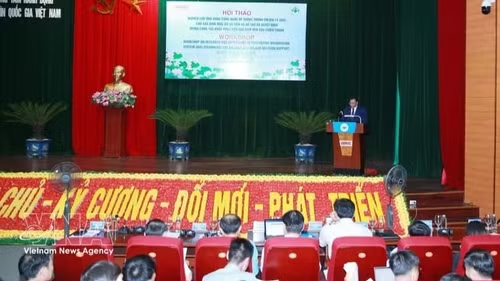
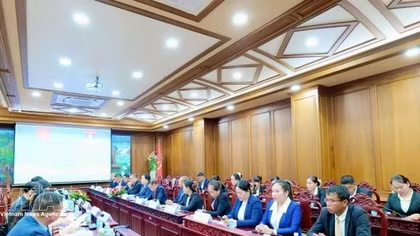
At a recent review conference on anti-drug cooperation between the public security ministries of Vietnam and Laos, Major General Ngo Thanh Binh, Director of the Drug Crime Investigation Police Department, said the two countries have steadily enhanced coordination in combating drug crime from central to local levels.
His Lao counterpart, Major General Saly Phoutthavong, Deputy Director General of the General Police Department under the Lao Ministry of Public Security, praised the results achieved through bilateral cooperation, describing them as an important contribution to security and social order in both countries while strengthening the special Vietnam–Laos relationship.
The effectiveness of regional cooperation has been demonstrated through several major cases.
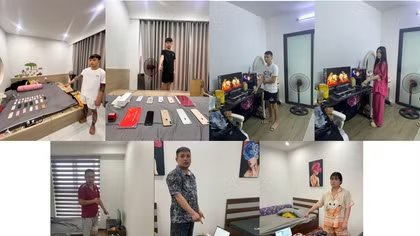
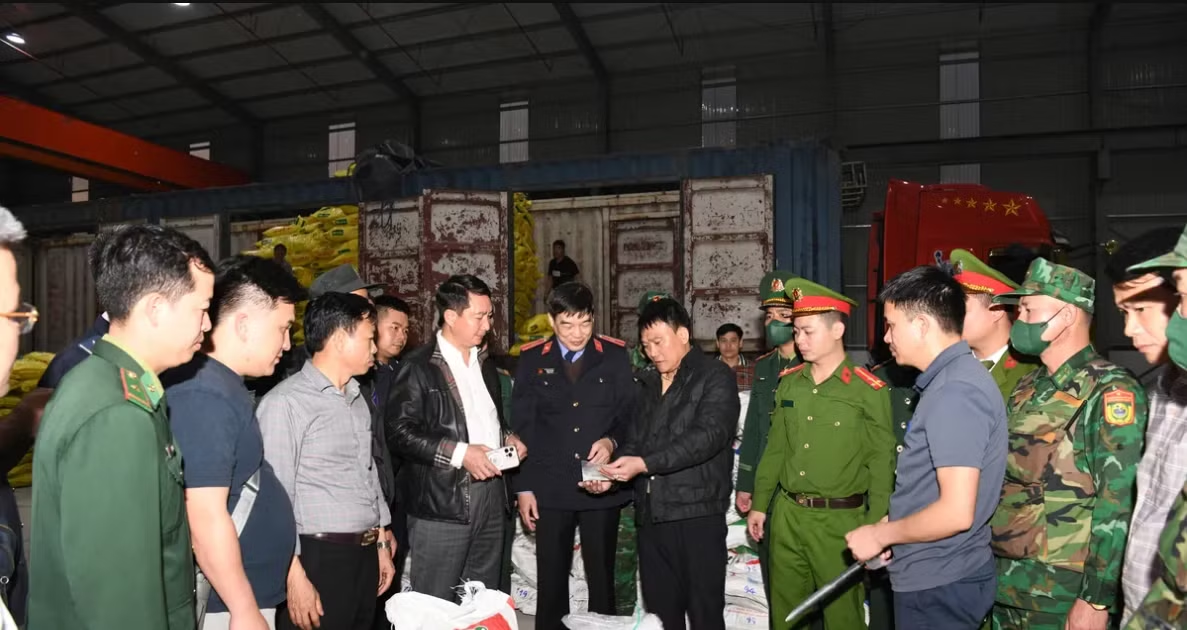
In February 2026, Vietnamese and Lao police forces jointly dismantled a transnational network involved in trafficking precursor chemicals from China through Vietnam and Laos to Myanmar for the production of synthetic drugs. The operation, known as Case 135VL, resulted in the arrest of 16 suspects and the seizure of 50.7 tonnes of caffeine, a substance commonly used in illicit drug manufacturing. Authorities also froze financial transactions worth hundreds of billions of Vietnamese dong.
Investigators said the chemicals could have been used to produce hundreds of tonnes of synthetic drugs if they had reached drug-production centres in the Golden Triangle.
Another successful operation, Case 126H, stemmed from information exchanged during a bilateral anti-drug conference between Vietnam and China. Chinese authorities alerted Vietnam to a scheme involving the transport of precursor chemicals and equipment into Vietnam for the illegal production of Etomidate. Close coordination between the two sides led to the arrest of the suspects involved.
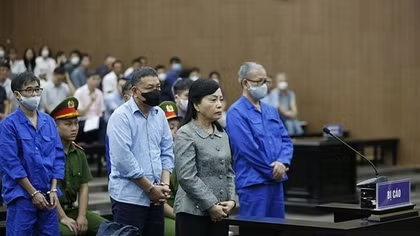
Vietnamese authorities also dismantled a major drug trafficking ring operating from the Golden Triangle through Laos and Cambodia into Vietnam. During the investigation, police arrested 37 suspects and seized large quantities of synthetic drugs, heroin and drug-production equipment. Financial investigations revealed transactions worth approximately 1.5 trillion VND (57 million USD) over a four-month period.
Looking ahead, Vietnam has proposed a joint anti-drug campaign with China, Laos and Myanmar from June to September 2026. The initiative will focus on intelligence sharing, border control, joint investigations and the arrest of fugitives hiding across national borders.
Deputy Minister of Public Security Nguyen Van Long expressed his confidence that with strong political commitment and close cooperation among the four countries, the campaign will deliver positive results, helping safeguard regional security and protect communities from the threat of transnational drug crime./.