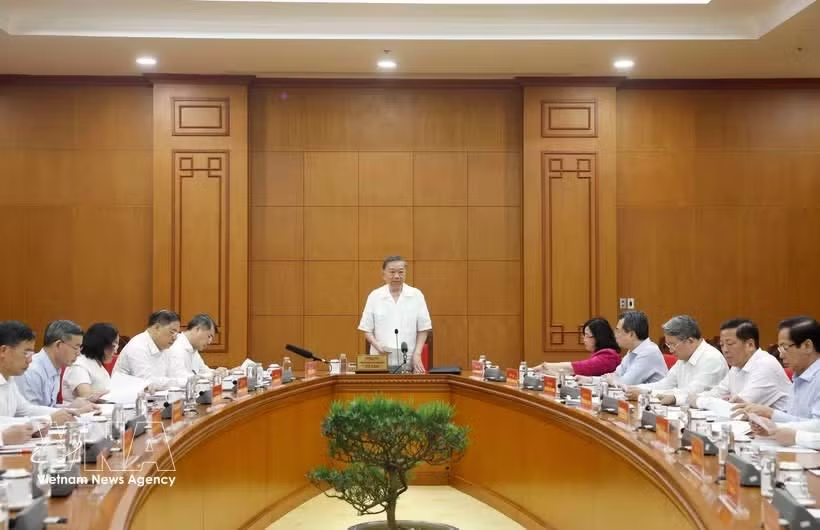
From now until 2030, housing for sale will remain necessary, but rental housing must be identified as a strategic pillar, especially in major urban centres, industrial zones, labour migration hubs and areas where housing prices far exceed people’s income levels, Party General Secretary and State President To Lam has said.
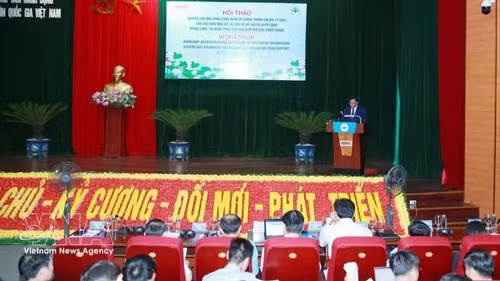
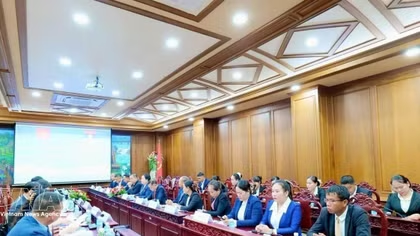
The leader made the statement while chairing a working session on May 19 with the Government's Party Committee and relevant ministries and agencies on the implementation of Directive No. 34-CT/TW dated May 24, 2024 issued by the Party Central Committee’s Secretariat on strengthening the Party’s leadership over social housing development in the new context.
He stressed that in the new development period, access to safe and affordable housing must be regarded as a fundamental right of citizens and a measure of social progress. Housing, he said, must become an integral and stable component of urban and rural structures, social welfare, urban security, labour productivity and a healthy real estate market.
The leader underscored that ensuring housing for the people reflects the humane nature of Vietnam’s political system. Housing development, he noted, must be approached from a comprehensive perspective rather than treated solely as a construction-sector issue or a policy aimed at supporting low-income groups. Instead, it should be addressed as an inter-sectoral, multi-level and inter-regional issue linked to urban planning, land use, industrial development, public transport, labour market and population management.
He acknowledged efforts made by the National Assembly, Government, ministries, sectors and localities in improving institutions, issuing policies, simplifying procedures and promoting housing development. However, he stressed that housing policy in the new period must be designed with a new mindset and vision to ensure everyone has access to housing.
Housing is for living, not for speculation or asset accumulation, he said, adding that achievements in housing policy so far have fallen short of targets and lagged behind the immense social demand.
Pointing out existing shortcomings and bottlenecks, General Secretary and President Lam called for housing to be embedded in the national urban development strategy. Every urban area, industrial park, economic zone, growth corridor and key economic region, he said, must incorporate housing planning alongside technical infrastructure, social services and cultural, healthcare and educational facilities.
Housing planning, he added, must closely follow labour supply and demand. Areas with high concentrations of workers, migrant labourers, industrial parks, universities, hospitals and service-sector employees should be prioritised for land allocation, infrastructure development and appropriate social housing mechanisms.
According to the leader, Vietnam’s housing development model in the new phase should neither rely on State subsidies nor be left entirely to market forces. The State should play a facilitating role by creating land funds, planning, providing financial support, setting standards and simplifying administrative procedures, while the market participates in construction and operation with reasonable profit margins. Citizens, meanwhile, should have access to stable, safe and affordable housing suited to eligible beneficiaries, with rental housing becoming a long-term pillar.
He urged continued efforts to improve the quality of housing-related legal frameworks for submission to the NA at its second session. The State, he said, should focus on planning, taxation and credit regulation while ensuring fairness and preventing housing speculation.
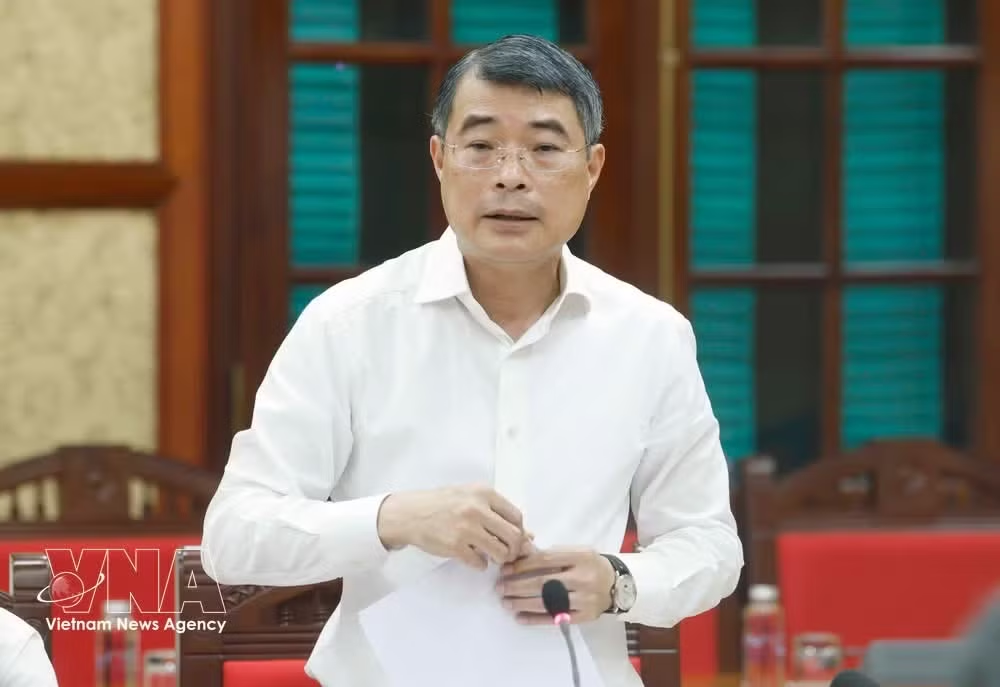
Local authorities were asked to review land funds, refine housing plans, proactively clear sites and prepare clean land reserves for policy housing projects in order to create favourable conditions for investors.
The Ministry of Finance and the State Bank of Vietnam were tasked with coordinating with relevant ministries and agencies to develop long-term financial mechanisms for policy housing. Businesses, he said, should be allowed reasonable profits while ensuring strict control over costs, quality, construction progress and sale and rental prices.
The leader also called for policies to accelerate the development of the apartment rental market and encourage private enterprises and non-profit organisations to participate in building, financing and managing low-cost rental housing subsidised by the State for low- and very low-income families unable to purchase homes.
He stressed the need for strict and transparent controls over homebuyers and policy beneficiaries to prevent speculation and profiteering. Housing policy, he said, must not be exploited for personal gain, while officials, civil servants and Party members must set an example in strictly implementing housing policies.
The General Secretary and President assigned the Government Party Committee to study and formulate a new housing development policy model in line with the Constitution, Party and State policies, and the practical needs of the people for submission to the National Assembly./.