- Russia risks decades of low growth under U.S. sanctions: Putin adviser
- EU sounds alarm, urges U.S. to coordinate on Russia sanctions
- U.S. House approves tighter North Korea sanctions
- U.S. says strategy on North Korea centers on sanctions, open to talks
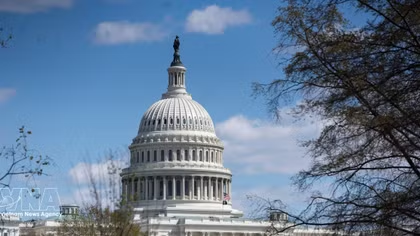
The U.S. Senate had voted almost unanimously on Thursday to slap new sanctions on Russia, forcing Trump to choose between a tough position on Moscow and effectively dashing his stated hopes for warmer ties with the country or to veto the bill amid investigations in possible collusion between his campaign and Russia.
By signing the bill into law, Trump can not ease the sanctions against Russia unless he seeks congressional approval.
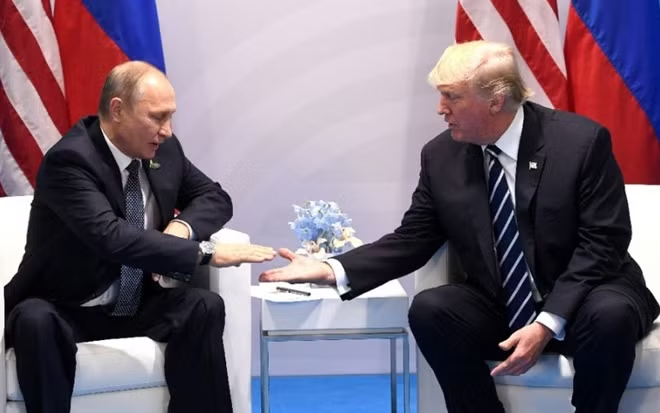 |
| President Putin and President Trump during their first meeting. |
Moscow's retaliation, announced by the Foreign Ministry on Friday, had echoes of the Cold War. If confirmed that Russia's move would affect hundreds of staff at the U.S. embassy, it would far outweigh the Obama administration's expulsion of 35 Russians in December.
The legislation was in part a response to conclusions by U.S. intelligence agencies that Russia meddled in the 2016 U.S. presidential election, and to further punish Russia for its annexation of Crimea in 2014.
Late on Friday, the White House issued a statement saying Trump would sign the bill after reviewing the final version. The statement made no reference to Russia's retaliatory measures.
Russia had been threatening retaliation for weeks. Its response suggests it has set aside initial hopes of better ties with Washington under Trump, something the U.S. leader, before he was elected, had said he wanted to achieve.
Relations were already languishing at a post-Cold War low because of the allegations that Russian cyber interference in the election was intended to boost Trump's chances, something Moscow flatly denies. Trump has denied any collusion between his campaign and Russian officials.
The Russian Foreign Ministry complained of growing anti-Russian feeling in the United States, accusing "well-known circles" of seeking "open confrontation".
President Vladimir Putin had warned on Thursday that Russia would have to retaliate against what he called boorish U.S. behavior. Putin's spokesman, Dmitry Peskov, told reporters on Friday that the Senate vote was the last straw.
Russian foreign minister Sergei Lavrov told U.S. Secretary of State Rex Tillerson by telephone that Russia was ready to normalize relations with the United States and to cooperate on major global issues.
Lavrov and Tillerson "agreed to maintain contact on a range of bilateral issues", the Russian Foreign Ministry said.
The ministry said the United States had until Sept. 1 to reduce its diplomatic staff in Russia to 455 people, the number of Russian diplomats left in the United States after Washington expelled 35 Russians in December.