- Trump, Putin discuss Syria ceasefire in first talks since U.S. air strikes
- Future strikes on Syria a ‘possibility’– White House
- Russia strikes deal with Syrian Kurds to set up base: Syrian Kurdish militia
- U.S. carrier joins South Korea drills, North Korea warns of 'merciless' strikes
The militia, who numbered in the dozens and drove a tank and a small number of construction vehicles, ignored warning shots from U.S. aircraft and, according to a U.S.-led coalition statement, even "apparent Russian attempts to dissuade" their advance.
One of the U.S. officials, who spoke on condition of anonymity, speculated that the group might have been trying to establish a position near the garrison in Syria used by U.S. and U.S.-backed forces around the town of At Tanf.
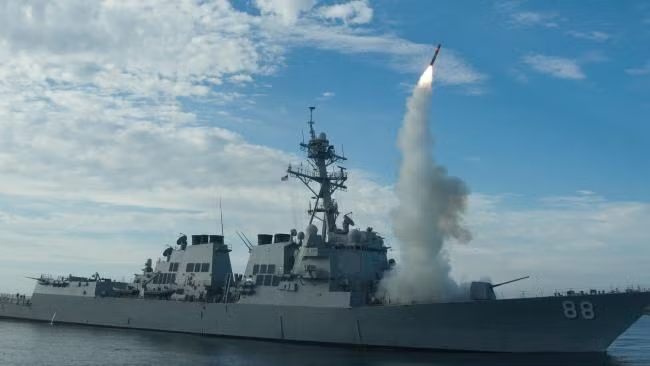 |
| U.S. strikes Syria militia threatening U.S.-backed forces: officials. |
"They were potentially probing to see how close they could get to At Tanf," the official said.
A member of the U.S.-backed Syrian rebel forces told Reuters the convoy comprised Syrian and Iranian-backed militias and was headed toward the Tanf base when they clashed with some rebel forces.
The militia were struck after they had advanced to about 17 miles (27 km) from the base.
"We notified the coalition that we were being attacked by the Syrian army and Iranians in this point, and the coalition came and destroyed the advancing convoy," said Muzahem al Saloum of the Maghawir al Thwra group.
Since they appeared defensive in nature, Thursday's strikes did not suggest a shift in the U.S. military's focus in Syria, which has been on battling Islamic State militants.
U.S. Defense Secretary Jim Mattis said America's role in Syria's conflict was unchanged.
"No. We are not increasing our role in the Syrian civil war. But we will defend our troops," Mattis said, when asked about the strikes.
UNDER PRESSURE
But the latest move showed that the area around the Tanf garrison in southern Syria could be under pressure.
Tanf is part of a region known as the Badia, which consists of vast, sparsely populated desert territory that stretches all the way to the Jordanian and Iraqi borders and was declared a military priority by Syria's foreign minister earlier in May.
Two months of U.S.-backed rebel advances against Islamic State militants have allowed them to secure swaths of territory in the Badia, alarming the Syrian government and its allies.
But rebel sources had warned last week that the Syrian army and Iranian-backed militia moved hundreds of troops with tanks to the town of Sabaa Biyar, which is in the Badia, and is near the strategic Damascus-Baghdad highway.
That highway was once a major weapons supply route for Iranian weapons into Syria.
A Western intelligence official, speaking on condition of anonymity, said the strike sent a strong message to Iranian-backed militias that have been spearheading the advance that they would not be allowed to reach the Iraq border from Syria.
The U.S.-led coalition did not signal it would cede ground around Tanf.
"Coalition forces have been operating in the At Tanf area for many months training and advising vetted partner forces engaged in the fight against ISIS," according to a statement by the U.S.-led coalition, using an acronym for Islamic State.
U.S. officials said an agreement existed with Russia on a so-called "deconfliction" area around Tanf garrison, meant to avoid an accidental clash of forces.
The statement by the U.S.-led coalition acknowledged a zone but did not offer any details about it, other than to say it was still active.
"The agreed upon deconfliction zone agreement remains in effect," the statement said.
A commander in the alliance fighting in support of Assad called the strike a "warning raid," adding it was not aimed at causing casualties but instead stopping the advance.
Still, the strikes would be the first against fighters aligned with Syria's government since the United States launched cruise missile strikes on a Syrian air base in April.
The April strikes were ordered in retaliation for a chemical weapons attack that Washington blamed on Damascus, and were described as a one-off measure to deter any future chemical weapons use.