According to the Thai Chamber of Commerce and Industry in Vietnam, Vietnam recorded ASEAN’s strongest GDP growth in 2025, expanding by 7% in the first quarter, 7% in the second and 8% in the third, lifting nine-month growth to 7%.
By comparison, the Philippines grew by 5%, 6% and 4%, Indonesia by 5%, 5% and 5%, while Thailand recorded 3%, 3% and 2% over the same quarters.
The chamber expects Vietnam to remain among the region’s fastest-growing economies over the next five years. It noted that while Thailand is likely to grow at a steadier pace, Vietnam’s economy is forecast to reach a similar size by 2029.
Vietnam is pursuing an annual GDP growth target of 10% from 2026 to 2030 as it aims to achieve high-income status by 2045, the chamber said. GDP per capita was estimated at about US$5,000 in 2024 and is projected to rise to around US$8,500 by 2030—an increase of roughly 60%.
Vietnam has also set a goal of reaching net-zero carbon emissions by 2050.
Competitive advantages
The chamber cited several structural advantages underpinning Vietnam’s outlook, including a population of around 106 million in 2025, with nearly 70% in the workforce.
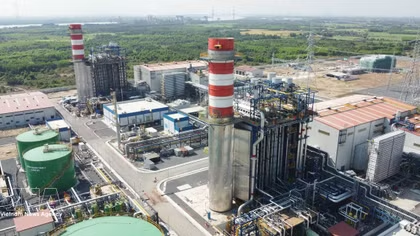
Vietnam also offers competitive cost conditions, it said, with wages estimated to be about 20% lower than in Thailand and electricity costs about 35% lower—among the lowest in ASEAN.
It added that Vietnam benefits from relatively stable political and monetary policy, alongside an export-oriented foreign-exchange approach.
Foreign direct investment (FDI) reached about US$38 billion in 2024, compared with US$32 billion for Thailand, with inflows increasingly focused on high-tech industries and artificial intelligence, the chamber said.
It added that Vietnam’s roadmap to high-income status begins with administrative reform, faster infrastructure rollout, human capital development and a shift towards higher-value industries.
GDP structure and key growth drivers
The chamber highlighted four key components of Vietnam’s growth model in the nine months of 2025:
Consumption (about 60%; US$255 billion)
Vietnam’s young demographic profile continues to support domestic demand. The chamber cited a total population of 106 million and an average age of 32, compared with Thailand’s 43, alongside a birth rate of 1.9 versus Thailand’s 1.2.
It also pointed to the expansion of the upper-middle-income class, which it said is growing by about 5.5% annually and could reach 56 million people by 2030. This trend, it added, is expected to lift demand across consumer categories and basic materials, including food products and packaging-related goods.
Investment (about 25%; US$84 billion)
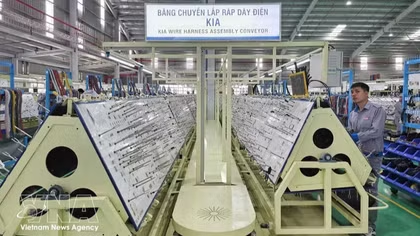
FDI registrations and disbursements surged between 2020 and 2025, the chamber said. It reported manufacturing and processing investment up 45% year to date, while science and technology investment rose 105% year to date.
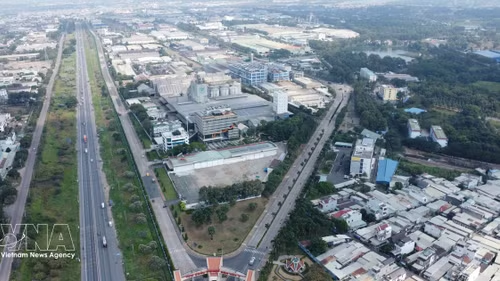
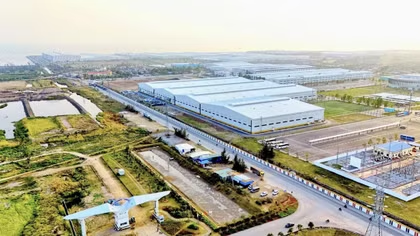
Industrial property development has accelerated, with the number of industrial parks increasing by about 10% over 2021–2025 and occupancy rates rising from 53% to 79% in four years.
Government spending (about 10%; US$30 billion, up 27% year on year)
The chamber said public spending has been supported by reforms at both central and provincial levels, with a focus on accelerating infrastructure and upgrading human capital.
It estimated Vietnam requires about US$245 billion in infrastructure investment through 2030. The government has also set a target to train 50,000 semiconductor engineers by 2030.
Private-sector participation is expected to play a major role, with businesses contributing more than half of infrastructure development and a goal of 20 corporations joining global supply chains by 2030, the chamber said.
Trade (about 5%)
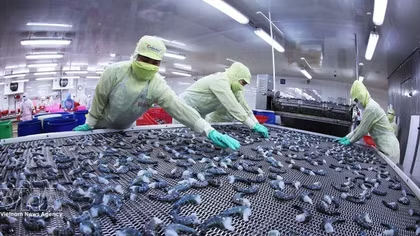
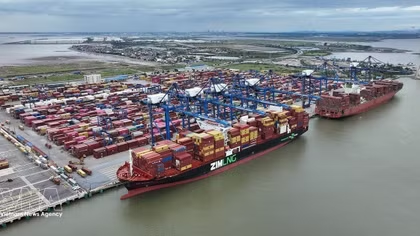
Vietnam recorded exports of about US$430 billion (up 16% year on year) and imports of about US$410 billion (up 18%). The chamber noted Vietnam has 17 free trade agreements (FTAs) covering more than 60 countries and is pursuing additional negotiations with partners in Latin America, the Arab region, Brazil, Africa and Bangladesh.
On US tariffs, it said the average effective rate was about 16%, compared with an announced rate of 20%, describing Vietnam’s position as relatively favourable compared with some regional peers.
The chamber added that “China+1” diversification and “friend-shoring” trends have continued, with Chinese companies relocating operations to Vietnam to reduce trade-related risks, particularly in high-tech sectors.
Political and administrative reforms
The chamber said Vietnam is implementing reforms in two layers: central and provincial.
At the central level, it described a stronger push to meet national goals, alongside the need for more state funding and a reduction in government staffing, noting Vietnam has one of ASEAN’s highest ratios of public servants to population.
It also pointed to plans to streamline the cabinet, cutting the number of ministries from 18 to 14. Proposed mergers include bringing transport and construction under one roof to fast-track infrastructure delivery; combining agriculture and rural development with natural resources and environment to support the agricultural transition and the net-zero agenda.
At the provincial level, the chamber highlighted policies to strengthen links between growth centres, decentralise decision-making for major development projects and empower local administrations.
It also noted a proposal to reduce the number of provinces from 63 to 34, which took effect on July 1 this year.
The stated goals include moving towards a “smart government”, reallocating budgets towards infrastructure, attracting skilled talent, streamlining policy execution, improving bureaucratic efficiency and strengthening the investment environment to draw more FDI.
Infrastructure acceleration
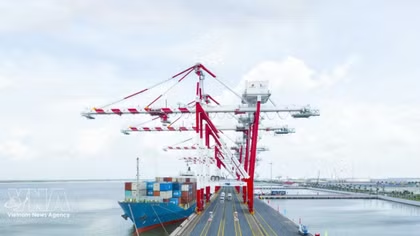
Vietnam plans to spend about 7% of GDP on infrastructure in 2025—around US$36 billion, the chamber said.
It framed the strategy around three pillars: treating infrastructure as a foundation for growth; increasing state funds through budget reallocation and restructuring, additional foreign borrowing, and higher tax and penalty collections; and deepening private-sector participation, including for social, energy and climate-related projects.
Key takeaways
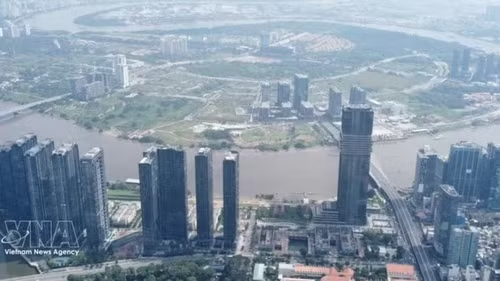
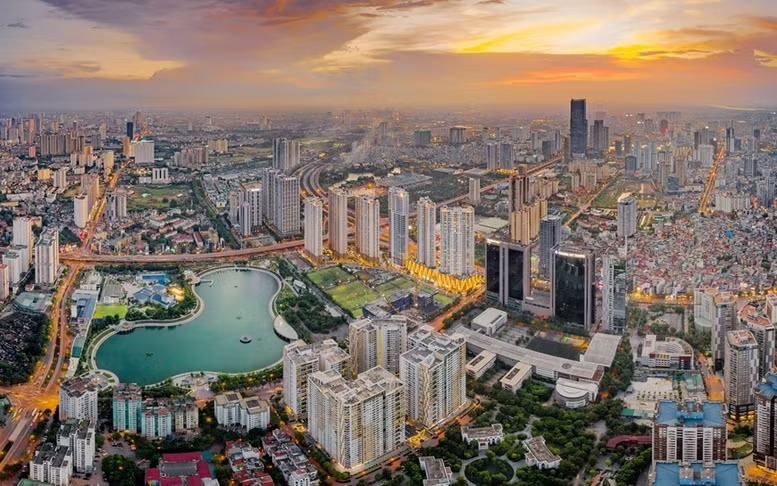
With a population of about 106 million and a growing middle class, Vietnam is being reshaped by rapid urbanisation and changing consumer habits. Together, these shifts are turning the country into a sizeable market base with strong growth momentum.
On the policy and investment front, government administrative reforms—along with greater participation from the private sector and FDI—are creating a more supportive foundation for attracting capital, particularly for high-tech upgrading and the expansion of green industrial zones.
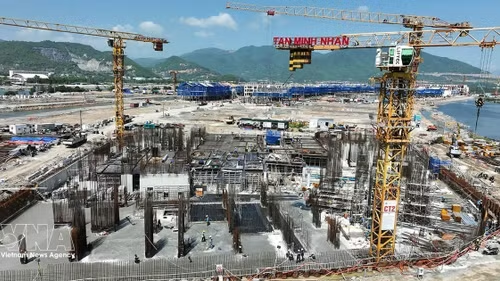
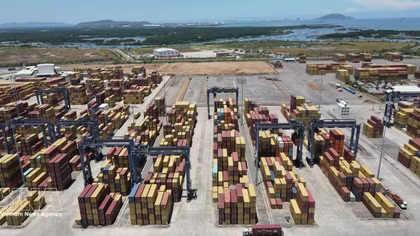
At the same time, accelerated infrastructure development across roads, ports and industrial estates is sustaining demand for construction and building-materials businesses.
Vietnam’s participation in numerous bilateral free trade agreements also strengthens its appeal as an FDI magnet, helping plug investors into regional supply chains and widening export opportunities.
However, competition remains intense, and in the short term, uncertainties linked to reforms and potential US tariff measures could significantly affect business conditions.
 Prime Minister commends Vietnamese students winning international prizes
  Party chief directs tasks to achieve modern education