Hanoi (VNA) - Recent international recognition for several Vietnamese children’s books highlights the growing potential of children's literature. Still, experts say a more coordinated strategy is needed to build a lasting global presence.
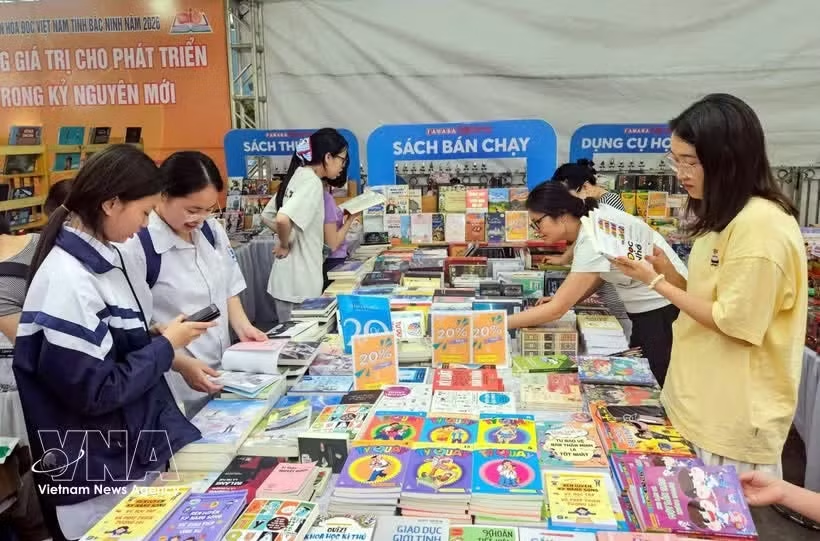
Vietnamese children’s literature has steadily expanded its presence in international literary circles in recent years. From a few notable titles earning recognition in respected competitions, the sector has shown encouraging progress in bringing Vietnamese stories to readers around the world.
At international book fairs, domestic children’s literature has begun to gain wider recognition. One notable example is “Khu vuon trong tim ta” (The Garden in Our Hearts), a picture book by author-illustrator Pham Quang Phuc published by Crabit Kidbooks, which was selected for the 150-title Amazing Bookshelf of the BolognaRagazzi Awards 2026 at the Bologna Children’s Book Fair. Meanwhile, “Dao buoc voi thoi gian” (Walking with Time) by author Quynh Huong and illustrator Maru was included in the 2025 White Ravens catalogue compiled by the International Youth Library.
These achievements reflect rigorous international evaluation standards covering content, artistic quality, visual storytelling, and accessibility for young readers. They also signal a notable shift in Vietnam’s approach to children’s publishing.
In the past, children’s books often focused on delivering moral lessons directly. Today, many authors and illustrators place greater emphasis on artistic expression, imagination, and emotional storytelling. Their works increasingly resonate with the narrative styles and creative approaches seen in international children’s literature.
Despite these encouraging signs, experts note that Vietnamese children’s literature remains relatively fragmented on the international stage. At events such as the Bologna Children’s Book Fair, leading publishing nations present comprehensive ecosystems that encompass policy support, copyright strategies, and cultural branding. National pavilions showcase distinct identities and coordinated promotion efforts.
Vietnam, by contrast, is largely represented through individual publishers and organisations, with no large-scale national presence to project a unified image of its children’s publishing sector.
As a result, high-quality titles have emerged, but they have yet to establish a recognisable international brand for Vietnamese children’s literature.
One of the key challenges is the copyright market. In countries with developed publishing industries, rights trading is supported by professional agents, market strategies, and extensive global networks. In Vietnam, international copyright promotion still relies heavily on individual publishers' efforts. Although many independent publishers actively participate in international book fairs and seek foreign partners, their resources remain limited.
Translation is another major obstacle. To reach international readers, books require high-quality translations that convey both the original narrative and its cultural nuances. Vietnam still faces a shortage of specialised literary translators, making long-term investment in translation capacity essential.
According to experts, Vietnam needs a systematic and long-term strategy to bring its children’s literature to the world. This includes strong support for authors, illustrators, editors, translators, and copyright specialists, as well as greater participation in international book fairs as part of a cultural industry development strategy.
Poet Tran Dang Khoa, Vice Chairman of the Vietnam Writers’ Association, said the growing presence of Vietnamese children’s books at international fairs reflects significant progress in creative quality, illustration, and cultural promotion.
In the near future, it is necessary to move beyond simply being present and achieving occasional successes to establishing a distinct and lasting position, he said, describing the process as a long-term journey requiring sustained investment and commitment./.