Soul of Mong people's panpipe kept alive in mountainous schools

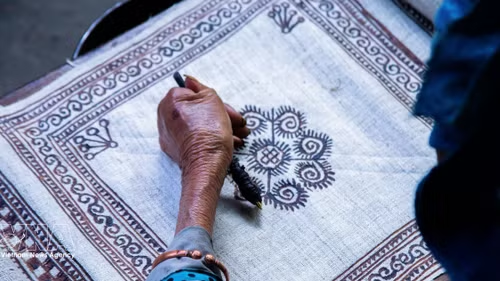
In recent years, many localities across the Dong Van Karst Plateau have strengthened efforts to integrate traditional culture preservation into schools. "Khen" performances, linen weaving, folk songs and traditional games are gradually becoming more familiar once again to younger generations.

download-10.png
Students are taught how to perform "khen". (Illustrative photo: VNA)

Under the early summer sun of Vietnam’s northern mountainous region, the schoolyard of Sung La Semi-Boarding Primary School for ethnic minority students in Sa Phin commune, Tuyen Quang province, fills with a distinctive sound. The melodies of the Mong people’s "khen" (panpipe) blend with the laughter of highland children, bringing life and warmth to the small school nestled amid the karst plateau.

In a land known for buckwheat flowers in season, old rammed earthen houses, and silver-grey stone fences, a special class is quietly helping preserve the cultural legacy of the Mong ethnic community. The training course on "khen" playing and dancing, organised by the Tuyen Quang centre for culture and cinematography, aims to pass on traditional heritage to younger generations.

Bringing heritage into schools

In the Dong Van Karst Plateau Geopark, the sound of "khen" has long been more than festive music. For the Mong people, the instrument represents the voice of the soul, reflects the rhythm of life, and carries memories of spring fairs, harvest celebrations, and gatherings along rocky mountain slopes.

Introducing "khen" performance into schools, therefore, is not simply about teaching a performing art. It’s also a way to uphold the community’s cultural identity for future generations.

Tai Dinh Tinh, Director of the centre, said the art of "khen" playing and dancing is one of the most distinctive cultural traditions of the Mong ethnic group in the Dong Van Karst Plateau.

Over time, many traditional cultural values risk fading away if they are not passed down, he noted, adding that as long as children still love the sound of "khen" and want to learn and preserve it, the heritage will continue to live on.

The sound of the "khen" echoes across the mountainous area, reflecting the traditional cultural identity of the Mong ethnic people. (Illustrative photo: baotuyenquang.com.vn)

Beyond learning performance skills, students are also introduced to the deeper cultural significance of the instrument in the Mong community life. Through stories shared by artisans, many children are discovering for the first time that "khen" is closely tied to the history, customs, and spiritual life of their ethnic group.

Nurturing young guardians of heritage

In previous years, many mountainous communities worried that younger generations were gradually losing familiarity with traditional music, folk songs, and even their native language amid the pressures of modernisation. Bringing cultural heritage into schools is therefore seen as a way to “plant the seeds” of cultural identity among local youth.

Ly Ngoc Long, Vice Chairman of the Sa Phin commune People’s Committee, shared that local authorities consistently prioritise preserving and promoting the Mong cultural identity in tandem with developing community-based tourism.

Cultural heritage can only truly survive when it is preserved and continued by the community that possesses it. Seeing students enthusiastically learn to play and dance with the panpipe is an encouraging sign for cultural preservation efforts in the locality, he added.

In recent years, many localities across the Dong Van Karst Plateau have strengthened efforts to integrate traditional culture preservation into schools. "Khen" performances, linen weaving, folk songs and traditional games are gradually becoming more familiar once again to younger generations./.
VNA
en.vietnamplus.vn

Other News

Traditional attire reflects Cham Muslim cultural identity

Traditional attire reflects Cham Muslim cultural identity

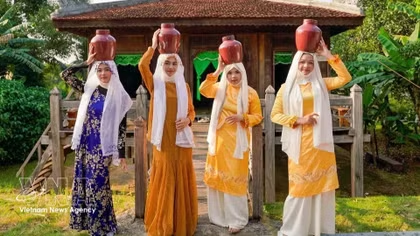
The Cham, one of Vietnam’s 54 ethnic groups, have a rich cultural heritage, with Muslim communities concentrated in An Giang province and other southern localities. Their traditional clothing, distinguished by diverse styles, colours and fabrics, reflects Islamic beliefs, modesty and aesthetics while preserving a cultural identity passed down through generations.

UNESCO expects Vietnam to lead cultural cooperation initiatives

UNESCO expects Vietnam to lead cultural cooperation initiatives

Lidia Brito, UNESCO Assistant Director-General for Priority Africa and External Relations, praised Vietnam’s contributions to education, science, culture and information, describing the 50-year partnership between Vietnam and UNESCO as a sustained and increasingly substantive journey.

UNESCO recognizes 'Pho Hien Steles' and 'Ma Nhai Inscriptions on Non Nuoc Mountain'

UNESCO recognizes 'Pho Hien Steles' and 'Ma Nhai Inscriptions on Non Nuoc Mountain'

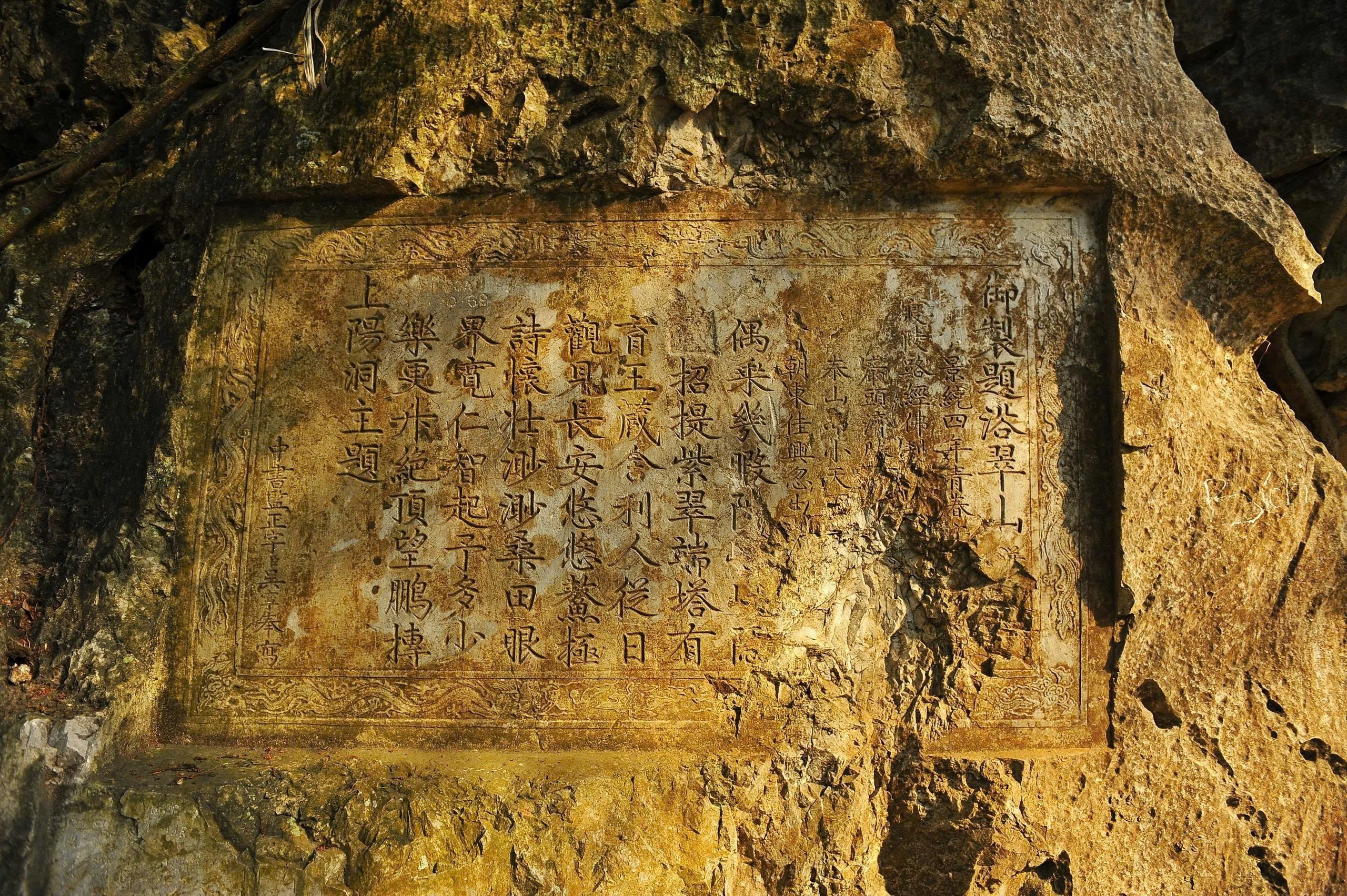
On the afternoon of November 5, at the 11th Session held in Jakarta, Indonesia, the Memory of the World Committee for Asia and the Pacific (MOWCAP) under UNESCO approved the inscription of the "Pho Hien Steles" from Hung Yen Province and the "Ma Nhai Inscriptions on Non Nuoc Mountain" from Ninh Binh Province into the Asia-Pacific Regional Register of Documentary Heritage.

Vietnamese community in the UK preserves cultural identity

Vietnamese community in the UK preserves cultural identity

In February 2027, Tet culture and the Vietnamese language are expected to feature for the first time as the main focus on the central stage of the annual Lunar New Year event at the National Maritime Museum in the UK, part of the Maritime Greenwich World Heritage Site. The 2027 London Ao Dai Week is also expected to go ahead.

Da Nang named among Lonely Planet's 'Best in Travel 2027' list

Da Nang named among Lonely Planet's 'Best in Travel 2027' list

Located in central Vietnam, Da Nang is “blessed with mountains, a long city beach and a cool vibe”. The Son Tra Peninsula offers peaceful natural surroundings and panoramic sea views, while the city’s beaches provide opportunities for swimming, relaxation and outdoor activities.

Foreign diplomats experience tea picking in Thai Nguyen

Foreign diplomats experience tea picking in Thai Nguyen

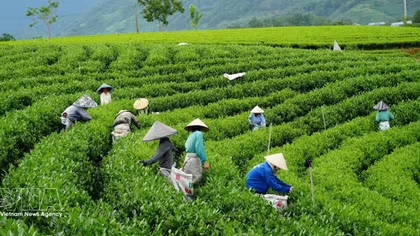
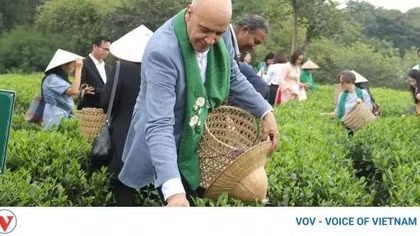
VOV.VN - Foreign diplomats in Vietnam have tried their hand at picking and pan-firing tea leaves in Vietnam’s northern Thai Nguyen province, gaining first-hand insight into the traditional craft behind the distinctive flavour of Tan Cuong tea.

Localities work to enrich vitality of Vietnamese culture

Localities work to enrich vitality of Vietnamese culture

Guided by the Politburo's Resolution No. 80-NQ/TW on Vietnamese cultural development, a range of cultural activities held nationwide over the past week have highlighted efforts to preserve and promote national identity while encouraging creativity and expanding public access to culture.

Hanoi to stage special arts programme for Vietnam Culture Day

Hanoi to stage special arts programme for Vietnam Culture Day

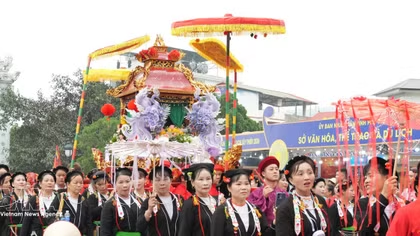
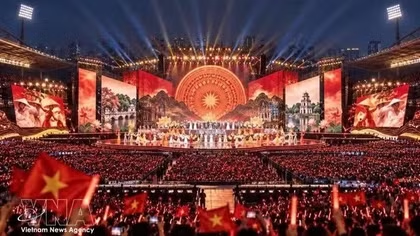
Through the programme, Hanoi seeks to recreate the continuous flow of Vietnamese culture from its origins to the present and future, connecting traditional heritage with contemporary creativity and combining traditional arts with modern stage technology to create a distinctive artistic space with intellectual depth and broad social resonance.