Media plays pivotal role in promoting Vietnam's tourism growth, global image

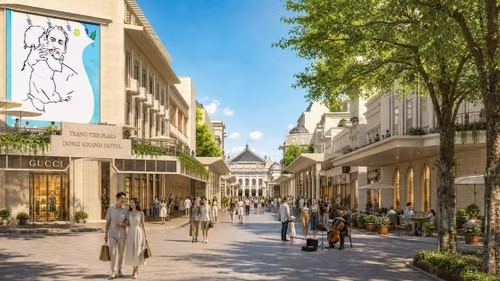
Vietnam aims to welcome 25 million international visitors and 150 million domestic travellers in 2026. Alongside the sector’s efforts, strong, responsible and innovative media engagement is expected to play a key role in helping the country achieve its tourism growth ambitions and enhance its position on the global tourism map.

vnanet-vn.jpg
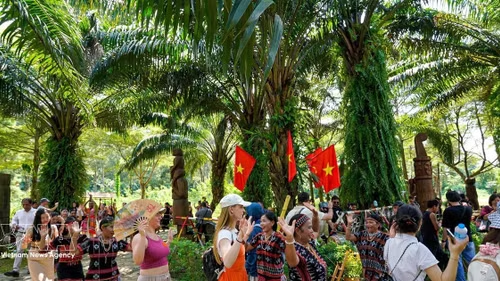
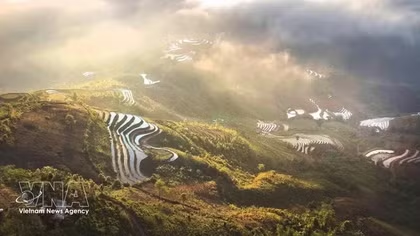
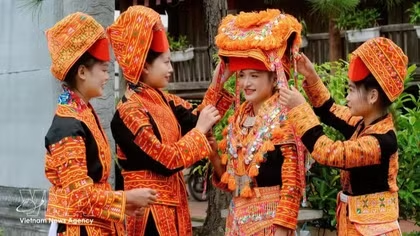
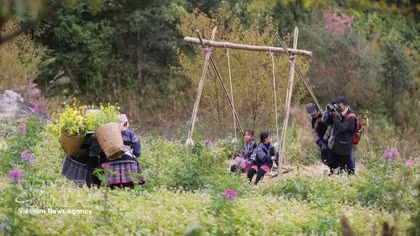
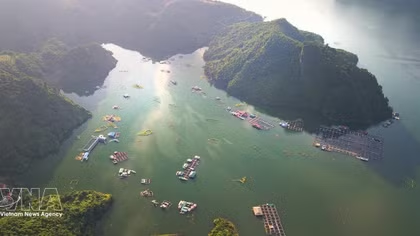
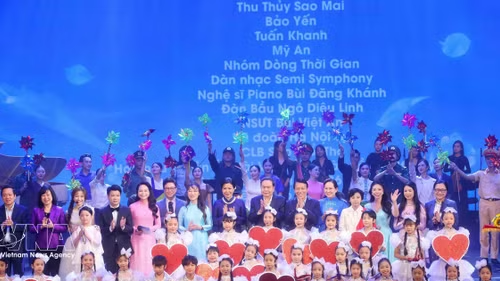
Vietnam is emerging as a safe, green, friendly destination with a rich cultural identity (Photo: VNA)

As digital transformation and artificial intelligence reshape the tourism industry, changing how destinations are managed and promoted, tourism communication is no longer merely a supporting activity, it has become a core competitive advantage of destinations, said insiders.

Media helps promote cultural values, stimulate tourism consumption, and enhance national image

In recent years, Vietnam’s tourism sector has made a strong recovery and development, reinforcing its role as a key driver of economic growth. Beyond its economic contribution, tourism also contributes to enhancing the country’s soft power, allowing international visitors to experience Vietnam’s culture, people and national image firsthand.

Deputy Minister of Culture, Sports and Tourism Ho An Phong described the media as a “soft bridge” connecting destinations with travellers, cultural values with markets, and the national image with the international community.

In the digital era, the press is not only a communication channel but also a force that shapes public perception, influences trends, promotes cultural values and supports economic development, he said.

However, Phong pointed to several shortcomings in tourism journalism and communications, such as fragmented content, destination storytelling yet to create a distinctive identity, and insufficient collaboration among media agencies, businesses and local authorities.

To address these challenges, he stressed the need to modernise multi-platform communication, harness AI and digital data, and strengthen partnerships to build a more integrated tourism media ecosystem.

According to Nguyen Trung Khanh, Director of the Vietnam National Authority of Tourism (VNAT), post-COVID pandemic travel trends are creating favourable conditions for Vietnam, as tourists increasingly seek safe, green, friendly destinations with rich cultural identity.

Vietnam enjoys significant advantages thanks to its diverse natural landscapes, rich cultural ecosystem, renowned cuisine and stable political environment, he said.

UN Tourism forecasts that international tourist arrivals worldwide could reach 1.8 billion by 2030, with the Asia-Pacific expected to be one of the world’s most dynamic regions. The trend presents an opportunity for Vietnam to reposition itself from a “low-cost destination” to a "provider of high-quality travel experiences", Khanh noted.

Dang Thi Phuong Thao, Deputy Director General of the Press Department under the Ministry of Culture, Sports and Tourism, said the media is playing an increasingly important role within the tourism development ecosystem. Apart from promoting destinations, it helps spread cultural values, stimulate travel demand and enhance the country’s image.

She emphasised that closer cooperation among State management agencies, media organisations and businesses, combined with digital innovation and multi-platform communication, will be key to improving the effectiveness of tourism promotion in the time to come.

Media helps stimulate demand, shape tourism trends

Khanh noted that Vietnam’s tourism industry is entering a new stage of development, supported by a series of policies of the Party and State aimed at making tourism a spearhead economic sector. Those underscore the Government’s strong determination to positioning tourism as a key driver of economic growth in the future, he said.

Measures such as expanded visa exemptions, broader e-visa access, longer temporary stay periods and streamlined immigration procedures have significantly improved competitiveness of Vietnam’s destinations in the international arena.

At the same time, advances in transport infrastructure, digital platforms, electronic payments, AI and big data are fundamentally transforming tourism management and marketing, and consumption patterns.

Against this backdrop, communication has emerged as a decisive factor in destination competitiveness. Through articles, documentaries, digital content and social media campaigns, the media has helped project an image of Vietnam as a safe, welcoming and culturally vibrant destination.

Khanh said media coverage can also stimulate tourism demand and shape travel trends, with compelling stories and creative campaigns inspiring exploration and boosting visitor spending.

The media has further supported sustainable tourism models, including green, net-zero, wellness and community-based tourism, while helping combat misinformation, manage communication crises and protect Vietnam’s tourism image, he added.

By connecting localities, businesses and travellers, media organisations have also helped attract investment and strengthen cooperation between tourism and related sectors such as aviation, culture, sports, film and creative industries.

Vietnam aims to welcome 25 million international visitors and 150 million domestic travellers in 2026. Alongside the sector’s efforts, strong, responsible and innovative media engagement is expected to play a key role in helping the country achieve its tourism growth ambitions and enhance its position on the global tourism map./.

VNA
en.vietnamplus.vn

Other News

Ta Xua named Asia's leading emerging tourism destination 2026

Ta Xua named Asia's leading emerging tourism destination 2026

In recent years, Ta Xua, dubbed "the paradise of clouds", has emerged as one of the mountainous destinations attracting strong interest from young travellers, particularly for its spectacular sea of clouds stretching across the mountains in the northwestern region.

Digital transformation key to preserving, promoting ethnic cultural values

Digital transformation key to preserving, promoting ethnic cultural values

Training local young people in filming, audio recording, digital storytelling, data preservation and responsible use of AI can help build a new generation of cultural custodians. This, in turn, can help transform cultural heritage into a resource for economic development while contributing to the country’s broader development.

Indigenous culture becomes tourism asset in northern highlands

Indigenous culture becomes tourism asset in northern highlands

With growing recognition of indigenous knowledge, customs and cultural values as unique assets, ethnic communities in the northern mountainous region are shifting from simply providing tourism services to becoming creators and owners of tourism products, confidently telling their own cultural stories

UNESCO ready to work with Vietnam to implement International Decade of Culture for Sustainable Development initiative: Representative

UNESCO ready to work with Vietnam to implement International Decade of Culture for Sustainable Development initiative: Representative

Jonathan Wallace Baker, UNESCO Representative to Vietnam, noted that the official proclamation of the 2027–2036 period as the "International Decade of Culture for Sustainable Development" comes at a particularly important moment. As the international community works to accelerate progress towards the 2030 Agenda while beginning to consider what comes after 2030, the Decade provides a ten-year framework to strengthen the place of culture in development.

Traditional culture finds new life in contemporary Vietnam

Traditional culture finds new life in contemporary Vietnam

Under Resolution 80-NQ/TW, dated January 7, 2026, November 24 was designated Vietnam Culture Day, to be observed annually. The occasion aims to give the public opportunities to participate in, create and enjoy cultural activities, helping spread positive values and foster pride in Vietnamese culture.

Vietnam prioritises MICE tourism as strategic product

Vietnam prioritises MICE tourism as strategic product

For the MICE tourism sector in both Ho Chi Minh City and Vietnam, growth can no longer be driven merely by increasing the number of events; instead, the focus must shift to enhancing the value of each event and the competitiveness of each destination.

Potential of ethnic minority women's football

Potential of ethnic minority women's football

Women’s football movements in local communities have been quietly growing, but they’ve now built up enough momentum to inspire organisers to launch the first Vietnam Ethnic Minority Women’s Football – VTV Cup in 2026.

Phong Nha - Ke Bang named among Vietnam's 11 most beautiful destinations

Phong Nha - Ke Bang named among Vietnam's 11 most beautiful destinations

According to the magazine, boat trips into Phong Nha Cave and strolls through Paradise Cave (both family-friendly) offer a tantalising glimpse of their astonishing scale, but the real adventure lies deeper within the park, where cavers wade through underground rivers and weave among stalagmites.

Tourism seeks new growth momentum under Resolution 26

Tourism seeks new growth momentum under Resolution 26

Tourism effectiveness should be measured not only by visitor numbers and revenue, but also by spending, length of stay, repeat visits, job quality, visitor satisfaction and environmental carrying capacity, said experts.

Vietnam welcomes nearly 2 million international visitors in August, up 19.7% from July and 18.4% year-on-year. (Illustrative photo: VNA)

Vietnam tourism maintains strong growth, expands international markets

The National Statistics Office under the Ministry of Finance reported that Vietnam welcomed nearly 2 million international visitors in August, up 19.7% from July and 18.4% year-on-year. The figure represented 63.6% of the tourism sector’s full-year target of 25 million arrivals.

First ladies of Vietnam, Myanmar visit Van Phuc silk village

First ladies of Vietnam, Myanmar visit Van Phuc silk village

Ngo Phuong Ly, the spouse of General Secretary of the Communist Party of Vietnam Central Committee and President To Lam, said the two countries share similarities in silk weaving and can enrich their cultural heritage through exchanges and experience sharing.