ASEAN city leaders explore Hanoi's heritage sites

At the Imperial Citadel of Thang Long, delegates visited the Doan Mon Gate and learnt about the formation and development of the ancient capital through different historical periods at display spaces. They also explored the Kinh Thien Palace’s Dragon Steps (large stone steps with dragon carvings), regarded as the political and ceremonial centre of the imperial citadel during successive Vietnamese dynasties.

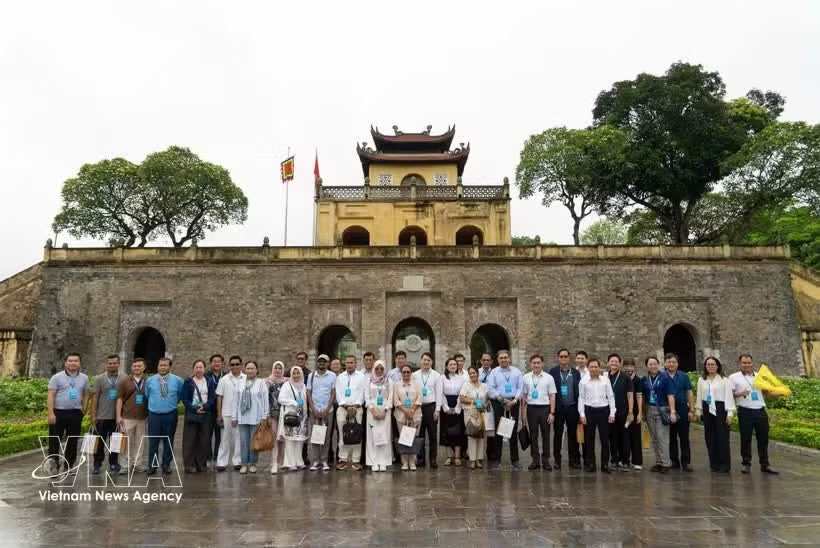
Delegates attending the ASEAN City Leaders Conference 2026 on June 9 joined a cultural and fact-finding tour of two of Hanoi’s most prominent heritage sites – the Imperial Citadel of Thang Long and the Temple of Literature – as part of the conference programme.
8.jpg
Delegates attending the ASEAN City Leaders Conference 2026 visit the Imperial Citadel of Thang Long on June 9. (Photo: VNA)

The tour was organised by the Hanoi Department of Tourism in coordination with relevant agencies to introduce international delegates to the capital city’s rich cultural and historical heritage.

At the Imperial Citadel of Thang Long, delegates visited the Doan Mon Gate and learnt about the formation and development of the ancient capital through different historical periods at display spaces. They also explored the Kinh Thien Palace’s Dragon Steps (large stone steps with dragon carvings), regarded as the political and ceremonial centre of the imperial citadel during successive Vietnamese dynasties.

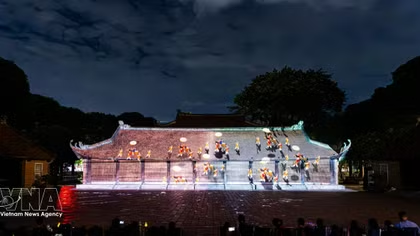
The delegation further visited House and Bunker D67, a historical site associated with major strategic decisions made during Vietnam’s struggle for national liberation and reunification. The programme also featured a traditional water puppetry performance, offering guests an opportunity to experience one of Vietnam’s most distinctive folk art forms.

At the Temple of Literature – Quoc Tu Giam Special National Relic Site, delegates toured key cultural landmarks, including the Nhap Dao Area, Khue Van Cac (Pavilion of the Constellation of Literature) – a symbol of Hanoi – and the Doctors’ Stelae Garden which preserves 82 stone stelae honouring successful royal examination laureates and has been recognised by UNESCO as part of the Memory of the World Programme for Asia and the Pacific.

Visitors also learned about Quoc Tu Giam, Vietnam’s first university built in the 11th century during the Ly Dynasty (1010 – 1225), through exhibitions and tours of the Thai Hoc Area and the “Scholar” exhibition space, gaining deeper insights into the country’s long-standing traditions of learning, respect for teachers and rich cultural heritage.

The ASEAN City Leaders Conference 2026, held in Hanoi from June 7–10, brings together city leaders, experts and international research organisations to exchange experiences, share initiatives and promote cooperation toward building smart, sustainable and resilient cities in line with the ASEAN Community Vision 2045./.
en.vietnamplus.vn

Other News

Vietnam welcomes nearly 2 million international visitors in August, up 19.7% from July and 18.4% year-on-year. (Illustrative photo: VNA)

Vietnam tourism maintains strong growth, expands international markets

The National Statistics Office under the Ministry of Finance reported that Vietnam welcomed nearly 2 million international visitors in August, up 19.7% from July and 18.4% year-on-year. The figure represented 63.6% of the tourism sector’s full-year target of 25 million arrivals.

First ladies of Vietnam, Myanmar visit Van Phuc silk village

First ladies of Vietnam, Myanmar visit Van Phuc silk village

Ngo Phuong Ly, the spouse of General Secretary of the Communist Party of Vietnam Central Committee and President To Lam, said the two countries share similarities in silk weaving and can enrich their cultural heritage through exchanges and experience sharing.

A pot of Mi Quang (Quang noodles). (Photo: VNA)

Da Nang promotes distinctive cuisine as key tourism attraction

As travellers increasingly seek authentic local experiences, the central coastal city of Da Nang is stepping up efforts to integrate cuisine into tourism itineraries, linking culinary promotion with destination branding and cultural preservation.

Vietnam taps community tourism potential for sustainable development

Vietnam taps community tourism potential for sustainable development

The tourism market is shifting from sightseeing towards living and connecting with destinations. Visitors increasingly seek authentic and locally rooted experiences, interaction with local people, culture and nature, as well as small-group and personalised trips with limited environmental impact and clear benefits for communities.

Tickets for Hue–Phong Nha tourist train go on sale

Tickets for Hue–Phong Nha tourist train go on sale

Rather than serving solely as a means of transport, the railway service will become an integral part of the tourism product, connecting Hue with Quang Tri’s historical, cultural and natural attractions, as well as Phong Nha-Ke Bang National Park.

More European travellers love to visit Vietnam

More European travellers love to visit Vietnam

A recent report from Agoda has revealed that Vietnam has been ranked among the top spots as the most-searched Asian destinations by European travellers, showcasing a surge in interest among global tourists.

Reasons why Phu Quoc shines even during rainy season

Reasons why Phu Quoc shines even during rainy season

Recently named by Expedia among the "10 Best Islands to Visit in 2026" for offering premium holidays at reasonable prices, Phu Quoc is far from being just a dry season destination. Even during the rainy months, Pearl Island offers enough experiences to fill every hour of the day, with short tropical showers rarely disrupting the journey.

Van Phuc silk weaving village officially recognised as Hanoi tourist destination

Van Phuc silk weaving village officially recognised as Hanoi tourist destination

With its millennia-old heritage and growing integration of preservation and innovation, Van Phuc silk weaving village is poised to become a distinctive cultural destination, helping promote Hanoi’s sustainable cultural tourism and bring the quintessence of Vietnamese silk weaving closer to domestic and international visitors.