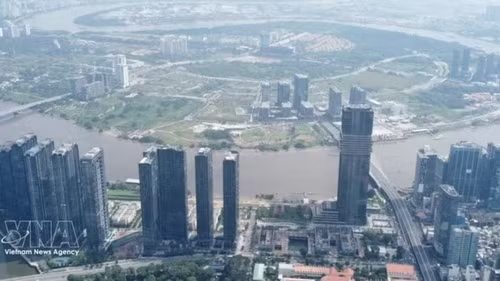
With its great potential in IT, Vietnam as ASEAN chair has been making efforts together with other member states in boosting the application of high technologies to adapt to the Fourth Industrial Revolution, which is sweeping regionwide.

As the entire ASEAN region is seriously hit by the expanding health crisis, member states are discussing possibilities for the regional economy to bounce back strongly, in order to help enterprises and individuals stay afloat.
One of the best solutions is the boosted application of digital technologies and usage of new achievements of Industry 4.0, which according to experts, refers to a set of highly disruptive technologies such as AI, robotics, blockchain, and 3D printing – all of which are transforming social, economic, and political systems while placing pressure on leaders and policymakers to respond.
“Cooperation in digital transformation and digital economy development are not only discussed now, but also at the coming 37th ASEAN Summit in Vietnam later this year,” said an official from the Ministry of Foreign Affairs. “With its great potential in IT, Vietnam is sharing experiences and also learning lessons from other regional nations to develop itself into a veritable digital economy and the ASEAN into a big digital economy. This will help the ASEAN address emerging challenges.”
For example, Vietnam is seeking experience from Indonesia in digitalisation and how to enact relevant policies.
In 2017, Indonesia began to embrace Industry 4.0 in order to turn itself into one of the 10 biggest economies globally by 2030. Its government has selected five key sectors for the initial adoption of Industry 4.0: food and beverages; textiles and clothing, automotives, chemicals, and electronics.
“These sectors would need a very high digitalisation level in the future, and they are the biggest contributors of Indonesia’s economy,” said Indonesian Ambassador to Vietnam Ibnu Hadi.
Currently Southeast Asia has 10 unicorns with over US$1 billion in valuation each – Gojek, Tokopedia, Traveloka, Bukalapak, Lazada, Revolution Precrafted, Grab, Sea (Garena), Razer, and VNG. However, four of which come from Indonesia, including ride-hailing company Gojek, online travel agent Traveloka, e-commerce platform Tokopedia, and e-commerce platform Bukalapak. Vietnam has only one, namely game developer VNG.
Winning global applause
Vietnam’s efforts to develop a pro-business e-government and a digital economy have received applause from the international community, especially amid a surge in the pandemic hurting economic growth.
Under the UN’s Department of Economic and Social Affairs’ newly-launched hallmark E-government Survey 2020, Vietnam has climbed two places to rank 86th out of 193 countries. With this ranking, Vietnam has maintained its record of consecutive increases since 2014, climbing from 99 to 86 in the process.
Harvesting 0.6667 points in the survey’s E-Government Development Index (EGDI), Vietnam is among the e-government developing countries with a high index, a score which is higher than the global EGDI average of 0.5988 points, the Asian average of 0.6373 points, and the Southeast Asian average of 0.6321 points.
In Southeast Asia, Vietnam has successfully maintained the same position as in 2018, ranking sixth among 11 countries, behind Singapore, Malaysia, Thailand, Brunei, and the Philippines.
“Vietnam’s tax authority has deployed e-filing, e-payment, and e-customs initiatives that have helped to improve tax collection and management and have lowered taxpayers’ compliance costs,” the survey’s report cited.
Commenting on Vietnam’s efforts to develop a digital economy amid the trend in the region, Deputy Foreign Minister Bui Thanh Son said, “Vietnam is striving for sustainable growth on the basis of improving the quality of growth and taking advantage of the opportunities of the Industry 4.0 to raise its labour productivity and competitiveness to move up the ladder in the global value chain.”
In Vietnam, about 60% of the 96 million population are under 35 years of age. They have quick access to new technology and about 55 per cent of the population use the internet, he added.
According to Tran Dinh Thien, former head of the Vietnam Economics Research Institute, this potential is quite favourable for Vietnam to build a digital economy successfully and even take the lead in the ASEAN’s digital development. “Vietnam has many opportunities in Industry 4.0. However, the problem now is how to apply lessons from regions such as Indonesia and Singapore to Vietnam and how to integrate data among ministries, agencies, sectors, and individuals into one integrated and shared system,” Thien said.
Fostering digitalisation
According to the World Economic Forum, the ASEAN is the fastest-growing internet market in the world. With 125,000 new users accessing the internet every day, the ASEAN digital economy is projected to grow significantly, adding an estimated $1 trillion to regional GDP over the next 10 years.
Prime Minister Nguyen Xuan Phuc said that the opportunities induced by Industry 4.0 are indeed enormous, and not only Vietnam but also other nations in the region must seize all these opportunities.
“The startup atmosphere is truly permeating throughout the ASEAN,” he said at a meeting with ASEAN leaders.
He suggested a number of priorities for ASEAN nations to grab opportunities from Industry 4.0. The priorities include the regional harmonisation of e-platforms on connectivity in finance, banking, market, communications, and logistics. “I suggest the establishment of a mechanism on harmonising the business climate, legal system, and regulations among ASEAN member states. This will help regional firms to improve their global competitiveness. The ASEAN Single Window – a regional initiative that connects and integrates the National Single Window of ASEAN member states – is a good example,” PM Phuc said.
Envisioning a future defined by Industry 4.0, Vietnamese Minister of Information and Communications Nguyen Manh Hung also underlined the need of ASEAN nations for “smart governance” and the willingness of governments, businesses, and societies to collectively adapt to rapid technological change.
“Technology can change very fast but the people and governments cannot change so fast and this will be our biggest challenge. So what do we need to do?” he said. “We have to train people so they are adept at change, not only technological training, but soft skills too. I think Industry 4.0 is more about a mindset revolution.”
The ASEAN bloc is now jointly boosting the implementation of some new initiatives that Vietnam advanced two years ago in Hanoi, including a “pan-ASEAN roaming charge for mobile phones” initiative, a cybersecurity intelligence cooperation initiative, and an initiative on cooperating in training high-quality IT human resources.
Vietnam also proposed the establishment and connectivity of innovative incubators.
“In the Industry 4.0 context, many ASEAN nations have their own national-level innovation hubs and incubators. And I suggest the construction of a framework on connecting these incubators into a regional-level incubator,” PM Phuc stated.
Meanwhile, Prime Minister of Singapore Lee Hsien Loong also said that Industry 4.0 is opening new prospects to all regional nations which should grab them through proper solutions. “Industry 4.0 is upon us. The global economy is being transformed by new and far-reaching breakthroughs in technologies,” he said. “Here in the ASEAN, member states are in a good position to take advantage of the new opportunities that Industry 4.0 can bring.”

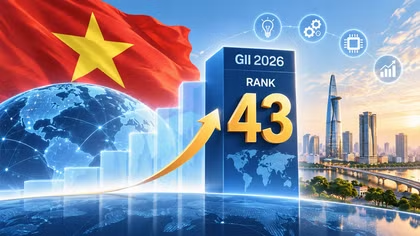
By 2030, Vietnam aims to rank among the world’s top 40 in the GII; raise total social investment in R&D to at least 2% of GDP, with non-State funding accounting for over 60%; increase international scientific publications by an average of 10% annually; and raise the number of patent applications and granted patents by an average of 16-18% annually.
The State Bank of Vietnam set the daily reference exchange rate at 25,624 VND/USD on October1, down 3 VND from the previous day.
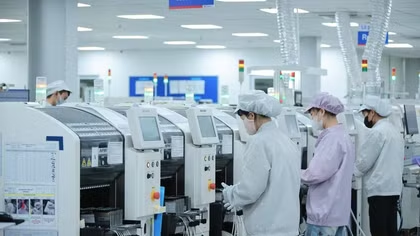
Quang Ninh's GRDP grew 15.04% in the third quarter, also leading the country.
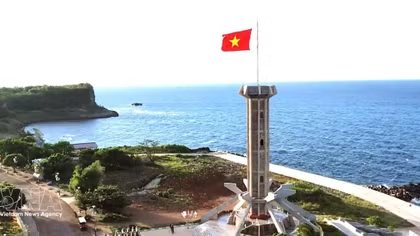
Vietnam needs flexible incentives and specialised green financial instruments, stronger inter-sectoral coordination, improved local governance capacity and a more complete MRV data system, said Ramla Khalidi, Resident Representative of the United Nations Development Programme (UNDP) in Vietnam.
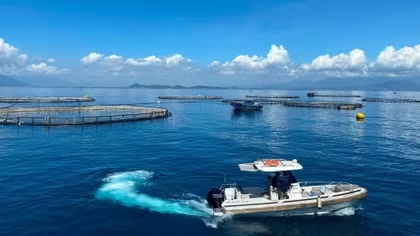
As the country enters a new development phase with greater demands for stronger marine-economy growth, institutional bottlenecks have emerged and need to be addressed.
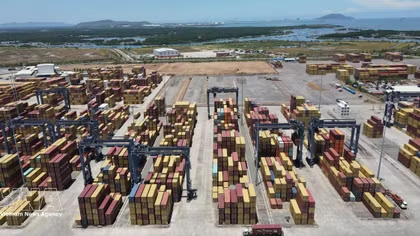
Experts from the Institute of Vietnam and World Economy under the Vietnam Academy of Social Sciences noted the quality of recent growth as the high growth rate has been recorded against an increasingly higher comparative base.

Vietnam's Halal exports remain modest at around 900 million USD a year, accounting for less than 1% of the global market. Most exports are still raw agricultural and seafood products. Only around 1,000–1,300 Vietnamese businesses obtained or maintained Halal certification during 2024–2026.
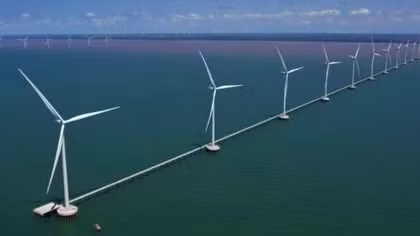
Vietnam needs a comprehensive policy framework to remove legal and procedural bottlenecks and create conditions for offshore wind power projects to access long-term investment capital, helping to unlock the country’s substantial offshore wind potential, said insiders.
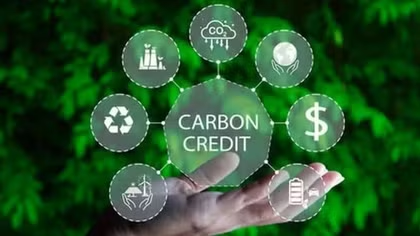
Under a decision of the municipal People’s Committee on establishing an inter-agency working group, departments and agencies are responsible for identifying facilities subject to greenhouse gas inventories, developing emissions-reduction plans and studying projects capable of generating carbon credits.
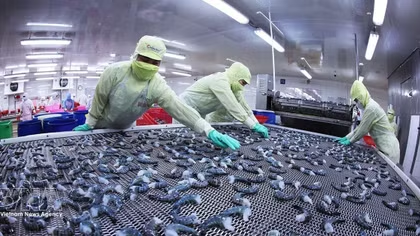
According to data from the Vietnam Customs cited by the Vietnam Association of Seafood Exporters and Producers (VASEP), shrimp exports reached 478.5 million USD in August, up 4.2% from the same month last year. The eight-month total stood at 3.3 billion USD, representing a year-on-year increase of 12%.
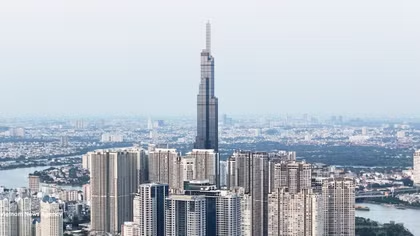
Vietnam is seen as a potential market, with considerable room for growth in real estate, particularly commercial property, compared with some regional markets. Strong Vietnam-Russia ties and opportunities to establish foreign-invested enterprises are also considered favourable for Russian investors.
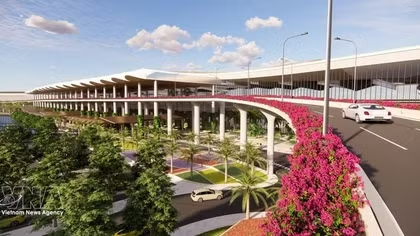
For 2021-2030, the Civil Aviation Authority of Vietnam proposed bringing forward the investment in a parallel taxiway system and a connecting taxiway north of Runway No. 2 at Phu Quoc International Airport, in order to connect with the aircraft maintenance and repair facility (hangar) planned for the northern area of the airport.
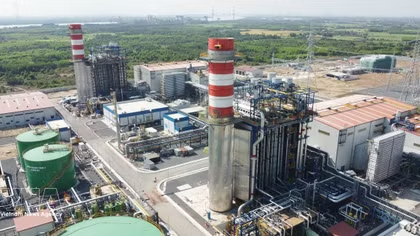
For LNG-fired power to fulfill its role in Vietnam’s energy transition, bottlenecks in institutions, infrastructure, electricity pricing, PPAs, power dispatch and financing must be addressed together.
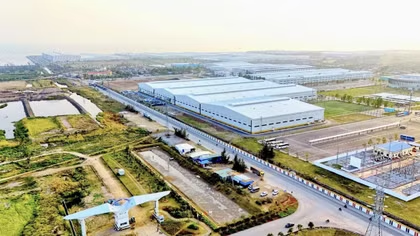
From policy and infrastructure to industrial real estate, Vietnam’s FDI advantages are broadening towards a more integrated production ecosystem, offering investors a stronger combination of conditions for high-value, technology-intensive and long-term projects.
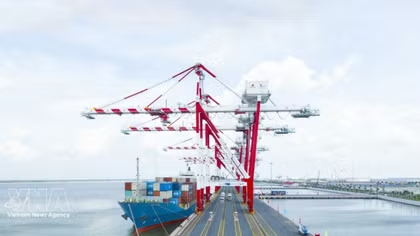
As trade expands, systemic bottlenecks across transport networks, warehousing, ports, border gates, and industrial zones are becoming more apparent. Experts emphasise the need to shift from a fragmented, project-by-project approach toward strategic management structured around trade corridors and integrated supply chains.
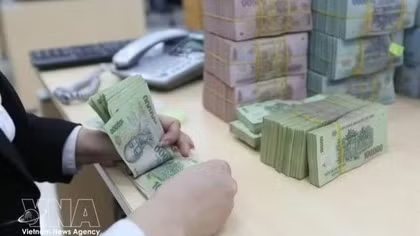
The company will buy non-performing loans from credit institutions and foreign bank branches, recover and dispose of debts and collateral, restructure loans and support lenders in resolving bad debts.
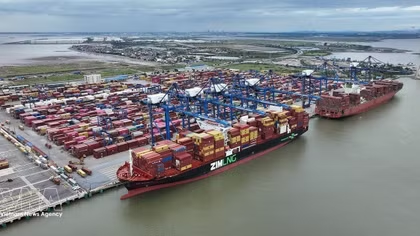
Do Ngoc Hung, Trade Counsellor and head of the Vietnam Trade Office in the US, said what stands out is not only the growth in trade volume but also the increasingly deep economic ties between the two countries.
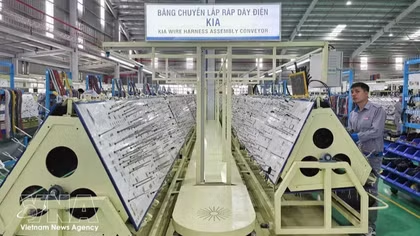
According to the Ministry of Finance, State budget revenue in the first eight months of 2026 was estimated at 2.02 quadrillion VND (77.7 billion USD), equivalent to 80% of the annual estimate and up 16% year-on-year. Domestic revenue reached 1.75 quadrillion VND, accounting for 86.6% of total revenue and rising 16.6%.
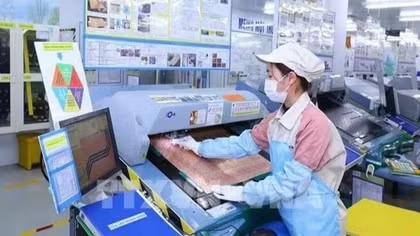
Hanoi aims to achieve average annual export growth of at least 12% during 2026-30, with the city seeking to diversify export markets, boost high-tech and value-added products and reduce reliance on traditional markets.
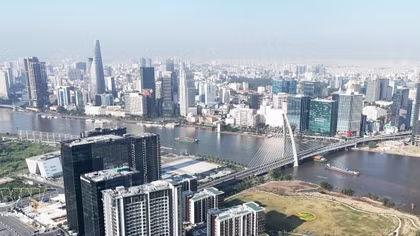
Great reliance on the state budget and conventional bank lending could put considerable pressure on the financial system, making it necessary to develop new and sustainable sources of funding from both domestic and international capital markets.