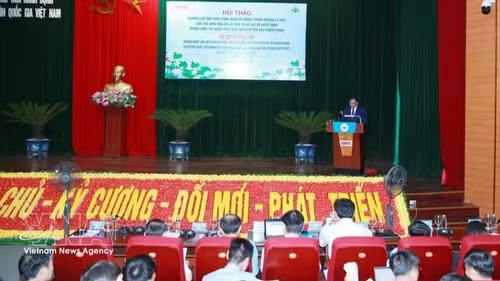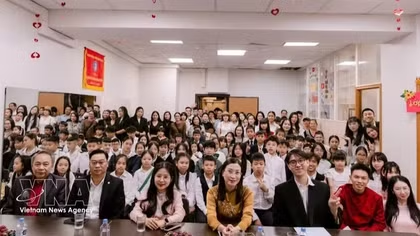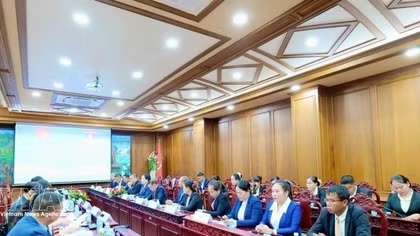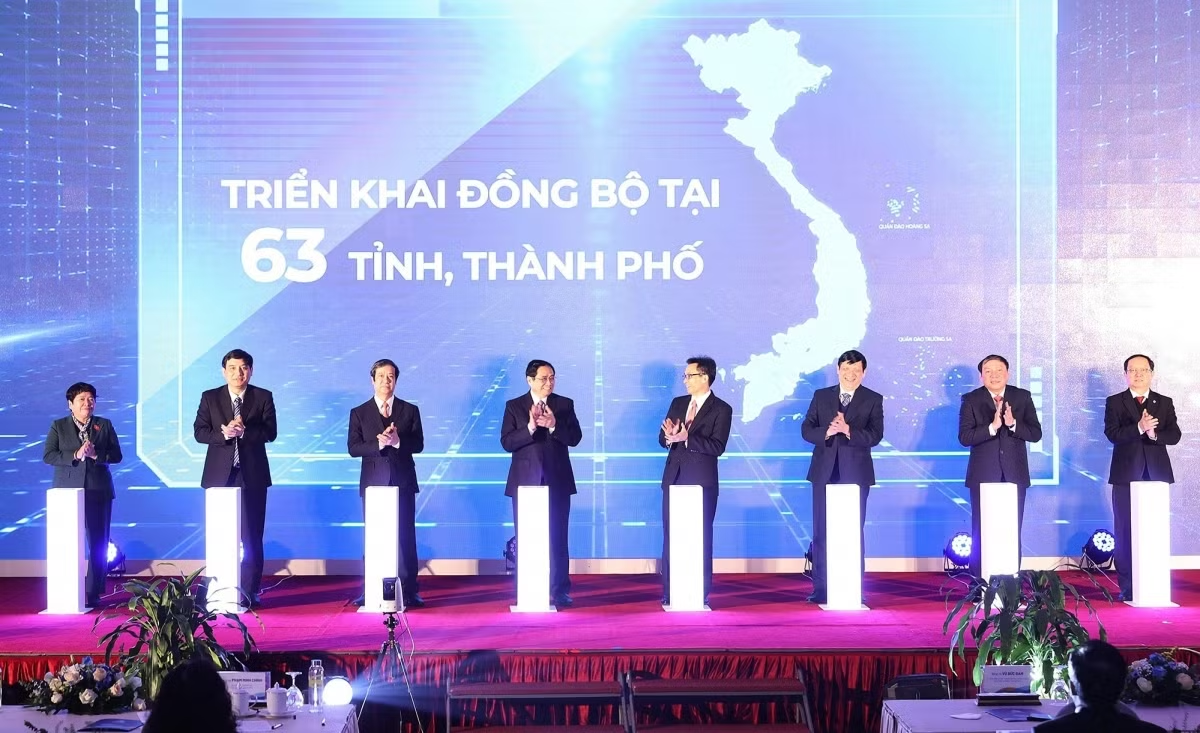
The PM made the statement at a ceremony announcing the 2021-25 National School Health Programme, which was held online at the International Convention Centre in Hanoi with the participation of representatives from 63 cities and provinces.
The programme was launched at a time when Vietnam is taking steps to reopen schools after after closure for months to help contain COVID-19 spread.It demonstrates the Party’s and the State’s resolve to better care for children and students and give them the best possible, the PM said, stressing that the Party and State always pay attention to education, training, protecting and caring for health of the public and school health in particular.
The COVID-19 pandemic has seriously impacted physical and mental health of tens of millions of students, both directly and indirectly, Chinh said, noting that thousands of them have been orphaned by the pandemic. The PM on October 2, 2021 issued a decision approving the National School Health Programme, and assigned tasks to ministries, agencies and localities in order to provide comprehensive and synchronous care for physical and mental health of children and students.
He urged ministries, agencies and localities to closely coordinate in implementing the programme, and called for the response of each school, family, student and individual. Strong messages should be made, and bold actions are needed as there remain children without care and protection, and facing threats to their life and physical and spiritual health, Chinh emphasised.
He also ordered quick and drastic actions to improve school infrastructure, especially in remote, border and island areas, noting students should be equipped with living skills. The PM stressed the need to improve child nutrition, especially in the areas hit hard by the pandemic, and cut course load, firstly at the primary level, to help students find joy at schools. Apart from school reopening, ministries, agencies and localities will continue with the vaccination rollout for children aged from 5-12 safely, scientifically, suitably and effectively to control the pandemic, he requested.
The Government welcomes and creates optimal conditions for domestic and international organisations, businesses and individuals to play a part in the programme, and other relevant programmes and projects. Chinh noted his belief that with the sound leadership of the Party, the close and effective management of the State, the engagement of the entire political system, the support of people nationwide as well as international friends, and the response of schools, the National School Health Programme will be rolled out successfully, creating breakthroughs in child health protection and care.
At the ceremony, the Ministry of Education and Training (MoIT) and the Ministry of Health signed a programme on coordination in school health work in 2022-2026. The MoIT and the Ministry of Culture, Sports and Tourism also reached another coordination programme for the period.
Ensuring all-round development of children
The 2021-25 National School Health Programme focuses on promoting education, care, protection and management of students' health.Its target is to ensure the comprehensive physical and mental development for children at preschools, special education schools, and students at primary and high schools.
The national programme has set goals for 80% of schools to have adequate medicines and equipment as regulated by the Ministry of Health, 75% of schools to provide enough drinking water and clean water for students' activities. It also sets targets for physical education and sports activities in schools.
According to the programme, 80% of schools will have at least one area to ensure necessary equipment and tools for physical education and sports activities as prescribed by the Ministry of Culture, Sports and Tourism. All schools will periodically organise sports competitions in accordance with the law on physical sports; 100% of primary and high schools have enough qualified physical teachers who were trained in professional skills. Targets were set for school meals, ensuring proper nutrition for children, including 100% of schools organising lunch at canteens, ensuring hygiene and food safety according to regulations of the Ministry of Health.
About 60% of schools will have milk and dairy products in standard school meals according to regulations of the Ministry of Health. School health education must also be a focus. According to the programme, 100% of students must be educated about health and improve knowledge about disease prevention and mental health. Students must be taught about proper nutrition, healthy and safe food. About 50% of high school students must receive information and counselling on mental health and psychology. Education on the care of children will also be expanded to include teachers, students and parents.
The 2021-25 National School Health Programme also clearly outlines the tasks and solutions for the future. One of the important solutions is to upgrade the healthcare facilities and equipment in schools. Specifically, schools need to be equipped with medical equipment and medicine to ensure the effective implementation of school healthcare work, meeting the requirements of disease prevention and control especially amid the COVID-19 pandemic. In which, schools will install tables and chairs suitable for students' height, especially children with disabilities; building or repairing clean water works, and sanitation facilities in schools.
The health and education sectors will also be working to strengthen their inspection of school healthcare including food safety, dental care, optical care and first aid capabilities. For disadvantaged, remote and mountainous, ethnic minority areas, the Government will give priority and promote the improvement of medical equipment to ensure conditions for teaching and learning, and school meals.
Another major solution is to improve the quality of school health workers. According to the programme, schools are suggested to arrange full-time or part-time health staff, even if they are not on the school's payroll, to carry out school health work in accordance with the specific conditions of each locality and each school. In addition, schools need to renovate physical education and school sports activities, encourage the development of swimming, football and ethnic sports suitable to the characteristics of each region.
They will effectively deploy school sports activities suitable to students' interests and ages, as well as organising school-level sports tournaments. Funding will come from the State budget, and lawful revenue of schools, as well as support from domestic and social organisations and individuals.