The iNut Smartcity Team from Vietnam’s University of Economics and Law has won the World Technopolis Association (WTA) 2018 Binh Duong Smart City Initiative Competition.

The Vietnamese team won the grand prize worth 100 million VND (4,300 USD) with its Internet of Things application, the organising board announced on October 12.
The SK2 team from Hannam University (the Republic of Korea’s Daejeon city) won the first prize worth 70 million VND (3,000 USD) with an initiative to manage waste treatment from plants using blockchain technology.
The organisers also awarded consolation prizes and several other awards to the remaining teams.
The contest was organised with the preliminary round and semi-finals taking place in Binh Duong city and Daejeon city.
Fourteen teams passed a vigorous selection to compete in the final round held on October 10 in Binh Duong province, with more than 100 smart-city solutions from universities across Vietnam and 26 solutions from 13 universities in the Republic of Korea.
Each team consists of three to four students from schools, colleges or universities from both Vietnam and the Republic of Korea.
Each team was given 10 minutes to present their creative ideas and 15 minutes to answer questions from judges after they finished their presentation in the final round.
In addition, all winning individuals and teams will receive an additional entrepreneurial support package from the Becamex Business Incubator (BBI) at Eastern International University (EIU) based in Binh Duong city.
Launched in July, the contest, co-organised by the Binh Duong People’s Committee, the WTA and Daejeon city, is one part of the activities for the 20th Anniversary of the WTA.
The contest focuses on smart urban management, healthcare, culture and tourism, smart education, public services, environmental energy, urban agriculture and smart production.
The criteria include new and innovative features, feasibility for application to real life, improving the quality of life, and socio-economic effectiveness.
Mai Hung Dung, Vice Chairman of the provincial People’s Committee, said the contest aimed to create an environment for creative ideas in smart urban construction in Binh Duong.
Kang Byung-Joo, secretary-general of WTA, said: “The event provides opportunities for Vietnamese and Korean students to exchange and share knowledge and develop their creative talents to serve the community, deepening the friendship between the two countries.
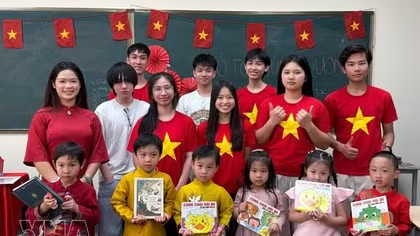
Beyond language skills, children learn about Vietnamese history, stories of filial devotion and national heroes, and the importance of respecting parents and teachers. Weekend classes begin with the national anthem, while festivals and traditional holidays offer opportunities to make greeting cards, prepare traditional cakes and learn to wrap 'banh chung' (square sticky rice cakes).
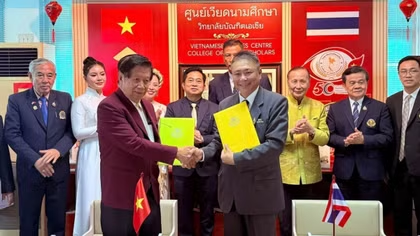
The centre would serve as a valuable academic hub for teaching and promoting Vietnamese language, culture and history, while fostering people-to-people exchanges and connecting younger generations of the two countries.
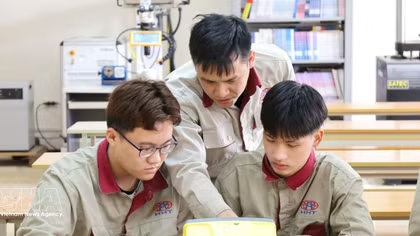
The need to harness young talents is becoming more pressing as AI, automation and digital transformation rapidly reshape the labour market.
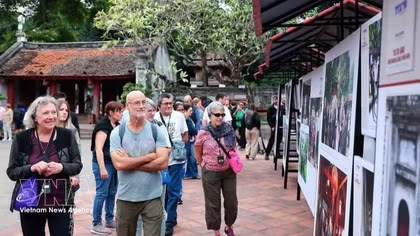
Russia’s senior researcher in Oriental studies Dr. Anatoly Sokolov said that although founded nearly a millennium ago, Quoc Tu Giam remains far more than a historical monument. It has continued to pass on the tradition of learning to successive generations and remained an integral part of Vietnam’s cultural and educational life.
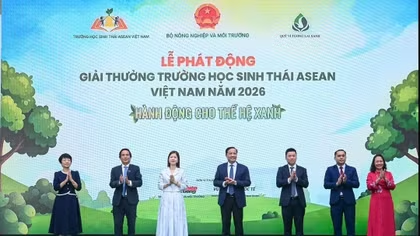
At the launch ceremony, Deputy Minister of Agriculture and Environment Le Trong Yen said schools play an important role in shaping young people's knowledge, character, and habits. Daily practices such as saving electricity and water, sorting waste and caring for trees could help students understand the value of natural resources and their responsibility towards the environment, while spreading positive habits to families and communities.
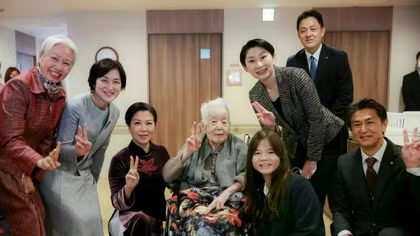
As Japan has made earlier progress and achieved certain results in coping with population ageing, its experience can provide valuable lessons for Vietnam through cooperation in this humanitarian field, Ngo Phuong Ly remarked.
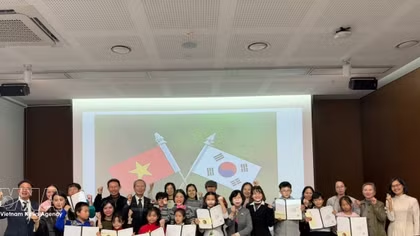
Through the seminar and bilingual contest, VESAMO aimed to provide a platform for young people to share knowledge, pursue their aspirations and contribute to closer friendship and comprehensive cooperation between the two nations.
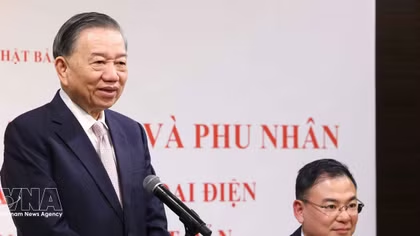
Welcoming the Vietnamese community's efforts and contributions, the General Secretary and President affirmed that the Party and State will continue improving institutions and policies to create favorable conditions for overseas Vietnamese to engage more deeply in the country's socio-economic development and play a proactive role as partners and co-creators in nation-building.
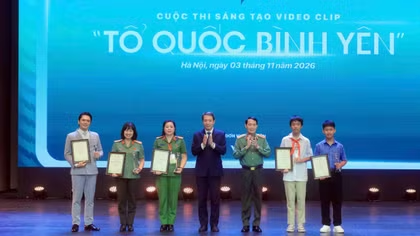
The Ministry of Public Security, in collaboration with the Ministry of Education and Training, hosted the closing and award ceremony for the 2026 “Peaceful Homeland” Video Creation Contest, on the evening of November 3 in Ha Noi.
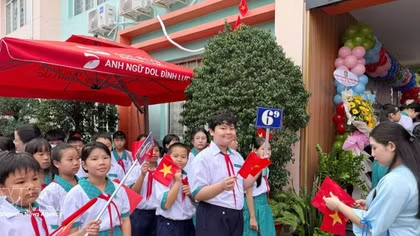
In 2027-2028, Ho Chi Minh City targets 20-30% of managers, teachers and staff in English proficiency training, 30% of establishments providing training in English/STEM/STEAM teaching methods, at least 30% of educational establishments with a complete English-speaking environment, and at least 15% of educational establishments teaching subjects in English.
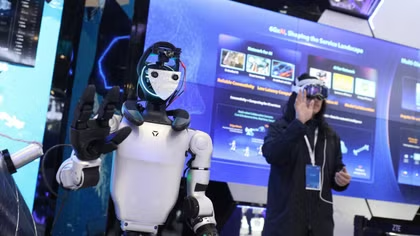
France and the EU could be suitable partners for Vietnam in robotics research, integration, testing and training, complementing equipment and technology supplies from other countries.
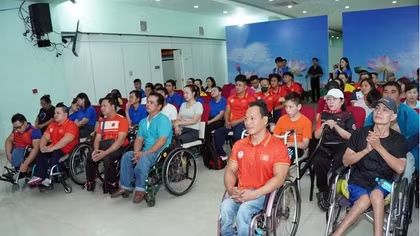
Notably, it has organized online scam prevention training courses for more than 1,000 young people with disabilities. In coordination with the Hanoi Police, it has also run awareness campaigns and guided members on identifying fraudulent schemes, protecting their accounts and personal data, and verifying information before sharing it on social media.

By 2030, Vietnam aims to ensure social security and improve the quality of life of people with disabilities, with priority given to those facing hardship or unable to support themselves. It also aims to ensure their appropriate participation in elected bodies and enable them to benefit from the country's development achievements.
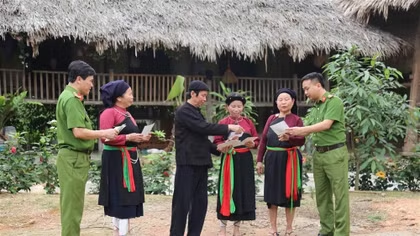
The Party and State of Viet Nam have consistently identified the prevention and combat of human trafficking as a key priority in safeguarding national security, maintaining social order and public safety, and protecting human rights and the lawful rights and interests of its citizens.
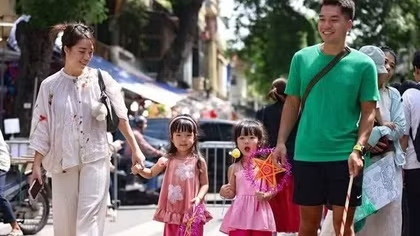
Hanoi's fertility rate has remained below the replacement level in recent years. The total fertility rate stood at 1.88 children per woman in 2023, 1.86 in 2024 and 1.87 in 2025.
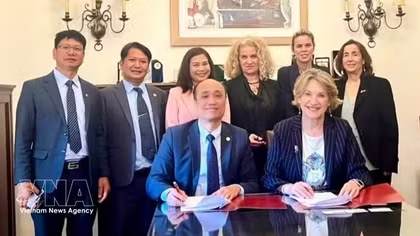
With the support of the Vietnamese Embassy in Greece, Hanoi Law University signed memoranda of understanding (MoUs) with Deree College of the American College of Greece (ACG) and Panteion University.

By 2045, all Vietnamese children are set to fully enjoy their rights and gain equitable access to high-quality healthcare, education, culture, sports, social welfare and other essential services.
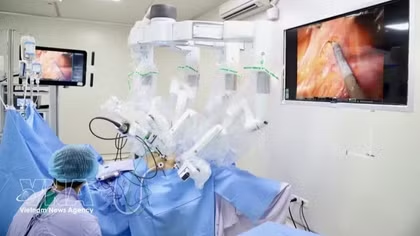
Recent developments in Hanoi and other localities highlight efforts to develop specialised treatment, standardise professional practices and apply artificial intelligence (AI) and advanced medical techniques, towards a more modern healthcare system.
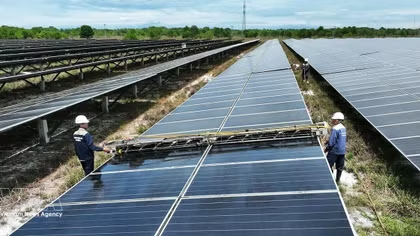
The PM stressed that national energy security and an adequate electricity supply are fundamental to achieving socio-economic development goals and constitute a particularly important political task for the entire political system.
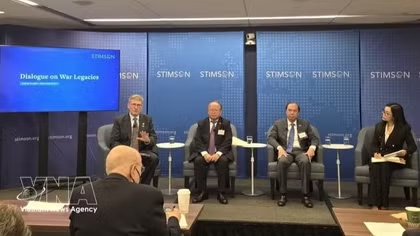
Addressing a dialogue on war legacies in Southeast Asia organised by the Stimson Centre in Washington, D.C on October 21, Vietnamese Ambassador to the US Nguyen Quoc Dung briefed representatives of US government agencies, non-governmental organisations and experts on Vietnam’s efforts to address war consequences, while calling for international support and cooperation in urgent humanitarian work.