
Improved water management can help Vietnam tackle the threat of climate change, Belgium Ambassador to Vietnam Paul Jansen said at a workshop held in Hanoi on May 28.

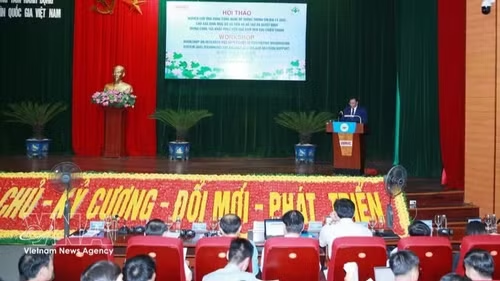
At the workshop, entitled “Water Management in Urban Areas in Vietnam in the Context of Climate Change”, policymakers and representatives from universities, research institutions, international development partners and private firms shared knowledge and expertise in the field.
Urban resilience has always been a key issue in the developing areas of Vietnam. And now, with the growing threat from climate change, improvements to the urban infrastructure are becoming increasingly more important, Jansen said.
Vietnam is one of the countries most affected by climate change, which also influences the interplay between water and urban areas and intensifies the risks of both drought and flooding, according to experts.
In Vietnam’s rapidly expanding cities, increased development and increased rainfall due to climate change have created significant flood risks, impacting human lives and the economy and creating environmental problems.
Analysis of climate change impact, consideration of increased risk and vulnerability as well as actions for capacity building, awareness raising and infrastructure works were discussed at the workshop.
Prof. Pham Quy Nhan, Deputy Rector of the Natural Resources and Environment University, described the current reality of water usage in Vietnam.
At present, 60 percent of the population rely on groundwater for their water supply while the groundwater resource has been heavily exploited in some areas, said Nhan.
The high extraction rates are causing a rapid lowering of the water levels in key areas around Hanoi, Ho Chi Minh City and in the Central Highlands. The sustainability of these water sources is under serious threat, he said.
Groundwater is very vulnerable to pollution and has a very poor inventory and information system, he added.
Climate change will increase evaporation, reducing rainfall in the dry season above all river basins, causing irrigation water demand to increase," Nhan said.
According to the professor, about 8.5 million urban citizens lack access to clean water while in rural areas, 41 million people do not have a supply that meets the Ministry of Health's clean water standards.
Along with insufficient access to clean water, millions of people suffer regular and massive losses from natural disasters.
Vietnam is one of the most natural disaster-prone countries in the world, with about half of the population living on the coast and more than 80 percent at risk of direct impacts from natural hazards.
From 1997 to 2006, natural disasters caused more than 5,000 deaths, and destroyed more than 6,000 fishing boats, nearly 300,000 houses and 4 million hectares of paddy rice, with total damage in excess of 50 trillion VND (2.1 billion USD).
To prepare for and reduce impacts of climate changes, the country would need effective measures including national strategic plans, national policy framework, vulnerable community protection plans, sustainable water development and protection projects, and campaigns improving people’s awareness on water use, the professor said.
The workshop was held by the Embassy of Belgium, in collaboration with the Vietnam National University’s Institute of Vietnamese Studies and Development Science (IVIDES), the Belgian Development Agency (Enabel) and Belgian universities.
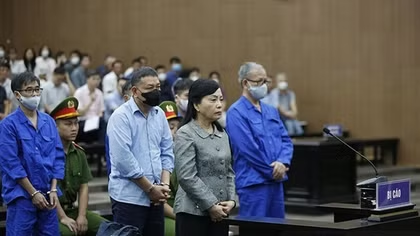
The Supreme People’s Court’s appellate panel had been scheduled to deliver its verdict on September 30 afternoon. However, before the verdict, defence lawyers and defendants asked the panel to postpone the hearing to allow them more time to prepare additional payments.
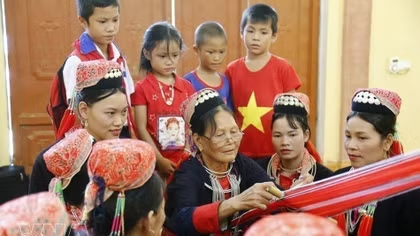
The International Day of Older Persons 2026, themed “The Age of Longevity: Rethinking Systems for Longer Lives,” highlights the need to develop healthcare, social security, labour-market and social-service systems in response to increasing life expectancy. For Vietnam, rapid population ageing is not only a demographic issue but also a development challenge.
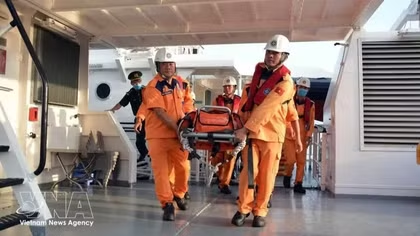
The Vietnam Maritime Search and Rescue Coordination Centre on September 29 safely brought ashore an unconscious sailor from the Liberian-flagged MSC HERMES III, who was suspected of inhaling toxic gas, for further medical treatment.

This year, lessons will weave Vietnamese culture, history and everyday life into the curriculum, tailored to each age group.
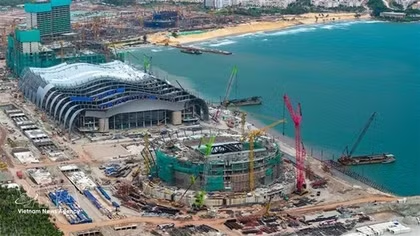
Among the key transport and conference projects, the runway expansion at Phu Quoc International Airport has been completed, while the VIP terminal is 96% complete and Terminal 2 is 72% complete.
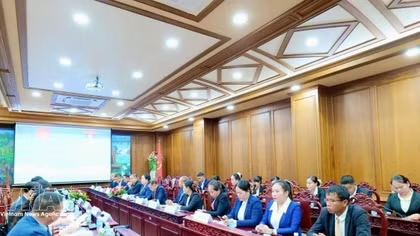
Both sides agreed to keep educating officials, Party members, youth union groups and the broader public, especially young people in both provinces, on the great friendship, special solidarity, comprehensive cooperation and strategic cohesion between Vietnam and Laos.

Standing Deputy Prime Minister Pham Gia Tuc on September 27 inspected Huu Nghi – Chi Lang and Dong Dang – Tra Linh expressway projects, urging local authorities, investors and contractors to speed up construction to connect the two routes before the Lunar New Year (Tet) 2027.

General Secretary and President Lam stressed that bilateral friendship and cooperation have been nurtured by people living and working in both countries, with the Vietnamese community in Canada playing an important bridging role.

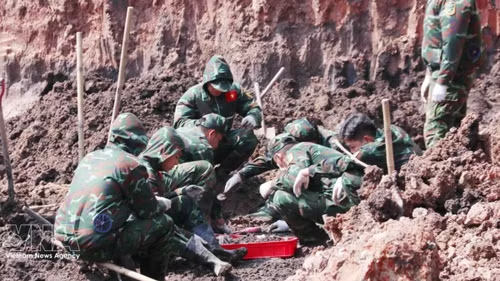
Of the total, 631 were individual sets of remains, while 33 were recovered from eight mass graves. Personal artifacts were found with 298 sets of remains.
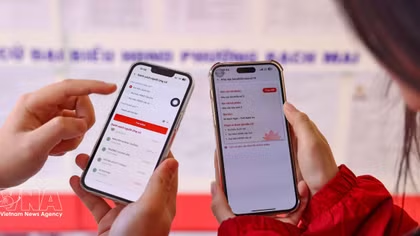
Vietnam plans to connect its national digital identification application VNeID with the electronic identification systems of Singapore and Laos, with a view to expanding the connection to other ASEAN countries.
Such assessments, however, need to be viewed in the context of Vietnam’s starting point in 1986 and the broader trajectory of its development. A country emerging from prolonged wars, facing severe socio-economic difficulties and economic embargo has undergone profound changes over the past four decades.
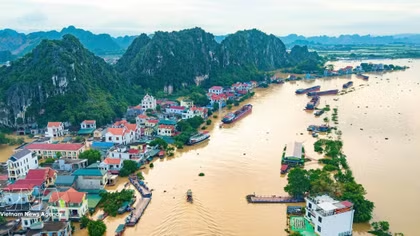
The floods have left three people dead, destroyed eight houses and damaged 111 others, while nearly 20,000 houses have been inundated, with more than 5,000 in riverside and low-lying areas of Hanoi and Ninh Binh currently remaining flooded.
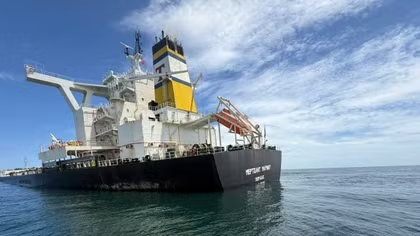
The captain discovered water entering ballast tanks No. 4, 5 and 6 on the port side, causing the vessel to list slightly. Initial assessments indicated that the vessel may have struck an underwater rock formation while underway.

Publishing copyright is entering an entirely new phase. As AI becomes increasingly capable of generating text, summarising books, mimicking writing styles and producing content at enormous speed, ensuring copyright protection is becoming more difficult.
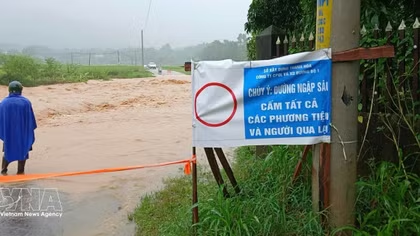
Authorities urged residents in the eight provinces and cities - Son La, Phu Tho, Lao Cai, Tuyen Quang, Thai Nguyen, Quang Ninh, Thanh Hoa and Nghe An - to remain alert for a high risk of flash floods and landslides on September 17.
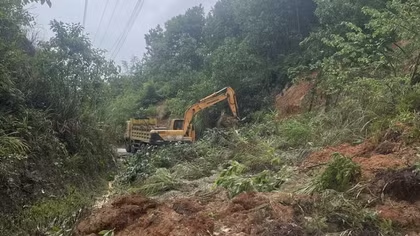
Prolonged heavy rains from September 13–17 have caused flooding and landslides, damaging homes, crops, roads and infrastructure in Phu Tho and Thanh Hoa provinces, with local authorities mobilising forces for emergency response.
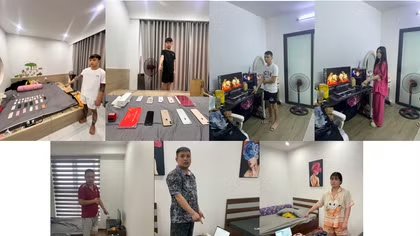
Quang Ninh city's Public Security Department warned individuals, agencies and businesses not to publicly disclose or provide personal information or bank account details on social media, and urged organisations and businesses to strictly comply with regulations on protecting customers’ personal data.
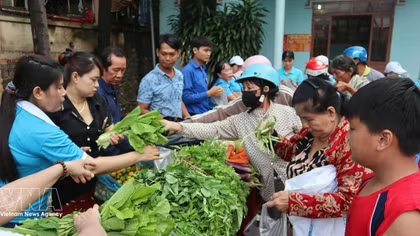
From a weekend support activity, the “Zero-dong stall” has grown into a widely recognised community initiative, helping ease living costs while fostering solidarity and compassion among local residents.
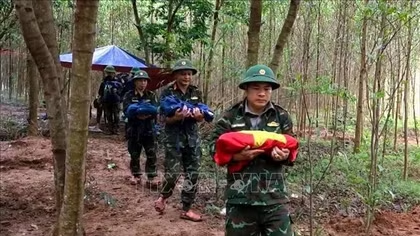
The continued recovery of martyrs’ remains provides valuable information and further evidence of those who fought and sacrificed their lives for national independence and freedom. It also encourages search teams to persist in locating fallen soldiers still lying on former battlefields, contributing to the effective implementation of the 500-day campaign and reflecting Vietnam’s long-standing tradition of gratitude.

Vietnam will launch nationwide screening for five groups of school-related diseases and health conditions among students from preschool through high school from 2028, including overweight and obesity, refractive errors, spinal curvature, oral diseases and mental health disorders.