- French art exhibition raises funds for disabled children
- Exhibition of Cuban poster artist opens in Vietnam
- Hanoi to host exhibitions on Belarus
- Exhibition “Truong Son – The Legendary Trail” opens
The exhibition will run until August 2 at the Vietnam Museum of Ethnology.
An unprecedented combination of the best of Italian Renaissance's masterpieces and cutting-edge technology unveil to the Vietnamese public an exclusive collection of 34 digital artworks of one of the most prominent Italian painters of the XV-XVI century: Raffaello Sanzio, Raphael.
Visitors will be taken along a journey of celebrated harmony of colors, lines and characters belonging to different eras and worlds and through the unique refined beauty that made the Italian Renaissance renowned worldwide, earning universal reputation and immortality to the genius of its artists.
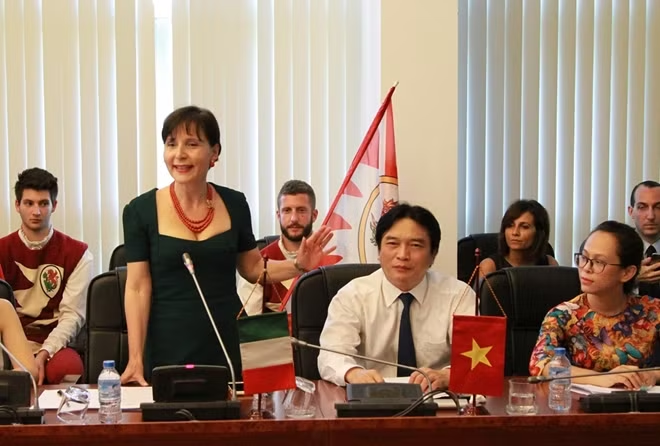 |
| Embassador of Italy in Vietnam speaking at the opening ceremony of the exhibition. |
Since Renaissance, the ability to master artisanal techniques, the leading edge technology and, most of all, the power to elicit emotions have waved a unique Italian "golden thread" through culture, art, artisanship and trade. This distinct heritage has stayed over the centuries open to international partnerships, keen to seek and forge contaminations, providing a powerful driver of mutually beneficial exchanges.
The decision to bring to Vietnam the project "Raffaello: opera omnia", carried out by the Italian MFA, has a very symbolic meaning, as it embodies indeed the Italian way to engage with Vietnamese counterparts in the cultural and commercial activities, within a genuine bilateral partnership focused on the value of "sharing" good practices as well as experiences and knowledge.
In this respect, the exhibition renews Italy' s will to achieve with the Vietnamese friends the targets set forward by our Strategic Partnership Agreement, expanding the multifaceted network of bridges among institutional, economic and cultural players and enriching a remarkable "collection" of achievements with new ambitious "artworks" of bilateral cooperation.
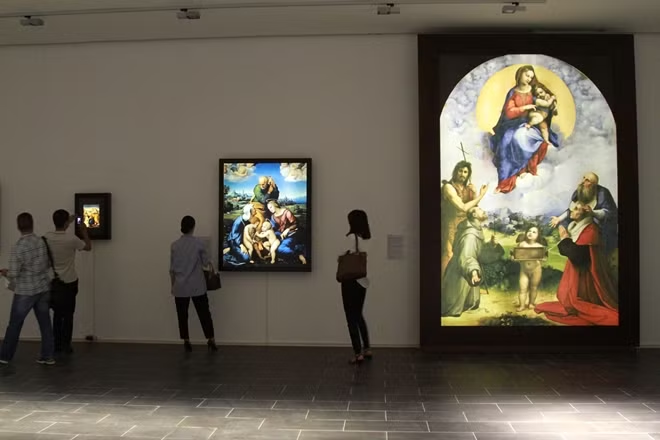 |
| Visitors will be taken along a journey of celebrated harmony of colors, lines and characters belonging to different eras and worlds and through the unique refined beauty. |
Raffaello was born in Urbino on April 6, 1483. His father, Giovanni Santi, ran the most important pictorial workshop in the city. As a court intellectual and man of letters, Giovanni was one of trusted advisors to the Duke of Urbino. Raffaello's artistic education developed within his father's workshop as well as the Ducal Palace, where he was exposed to many among the most iconic Italian and Flemish masterpieces. When Giovanni passed away in 1494, Raffaello inherited the workshop and, at the age of 17, was recognized the title of "Maestro (Master).
In 1504, the 21-year-old Raffaello, an already accomplished painter after the exposure to the art of Pietro Perugino, moved to Florence where he worked for four years. In Tuscany, Raffaello got in contact with masters of the caliber of Michelangelo, Leonardo and with those of San Marco School (Fra' Bartolomeo and Mariotto Albertinelli) as well as with the unmatched masterpieces of the "old masters" (Masaccio, Beato Angelico, Luca della Robbia).
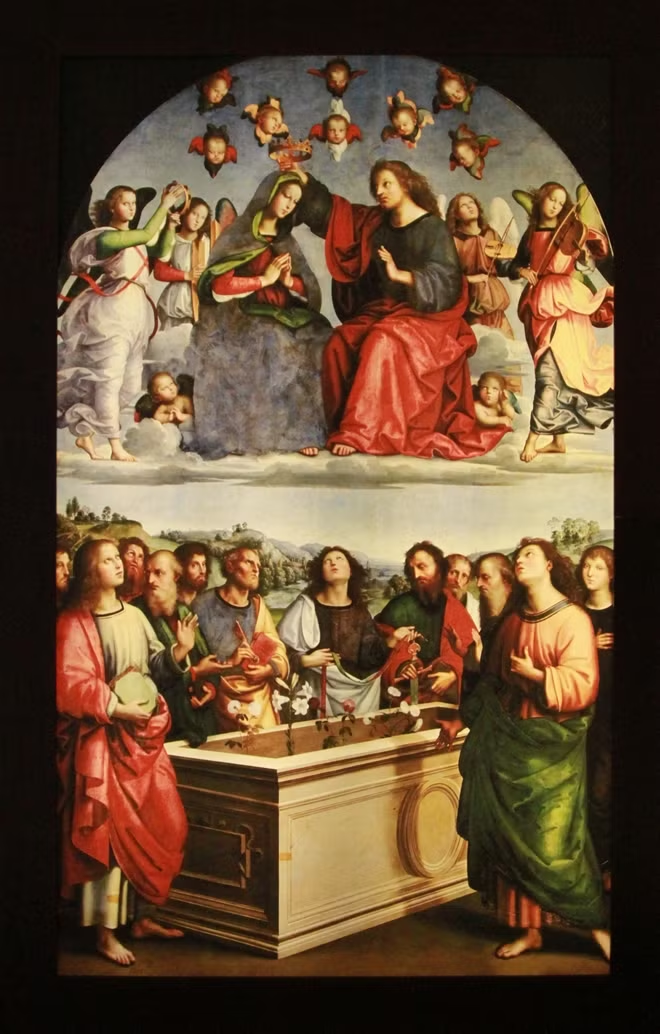 |
| One of the most famous art works painted by Raffaelo. |
In 1508, introduced by fellow Marche region citizen, architect Donato Bramante, 25-year-old Raffaello began his most fruitful and rewarding artistic partnership working under the patronage of Pope Julius II della Rovere in Rome. For him he painted the frescoes of his private apartment in the Apostolic Palaces worldwide known as Le Stanze.
Even more than Giulio II della Rovere, Pope Leo X Medici was "Raffaello's Pope" Imbued with a love for all forms of art stemming from his humanistic education, he was one of his most enthusiastic supporters, as well as one of his most intelligent and munificent clients.
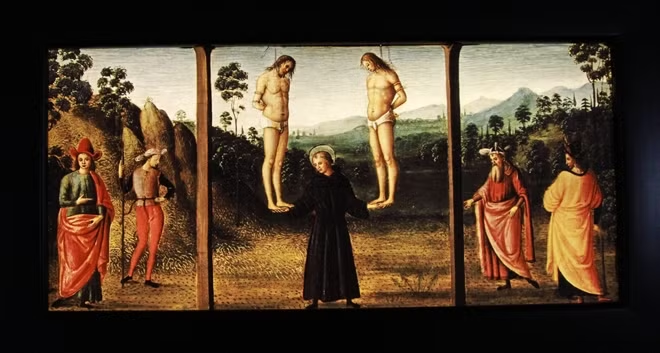 |
| One of the most famous art works painted by Raffaelo. |
Indeed, not only did Pope Leo X task him with the great works of the last years (Loggia and Sistine Tapestries), but he also named him "Superintendent of Rome".
Coveted by cardinals and sovereigns in Italy as well as all over Europe, loved by women while resented by men, in 1520 the young Urbinate genius fell sick, struck by malaria fevers, and passed away on April 6, on the same day of his birth, 37 years earlier.
The funerals took place in Rome at the Pantheon, where Raffaello's body is still kept in a marble coffin on which his friend, poet Pietro Bembo, engraved: "Nature feared to be won when he was alive and to die now that he is dead."