Phu Quy special zone, an island district off the south-central coast of Vietnam, is capitalising on its strong marine economy potential, particularly in tourism and fisheries, to transform the island’s economy, improve local livelihoods and position itself as a key sea-based economic hub.
Located about 120 kilometres southeast of the mainland, Phu Quy is often described as a “pearl island” thanks to its pristine natural landscapes, clear blue waters and rich marine ecosystems. The special zone, with a population of around 32,000, was formed through the merger of Long Hai, Ngu Phung and Tam Thanh communes.
Effectively tapping potential of marine and island eco-tourism
In recent years, Phu Quy has emerged as an attractive destination for both domestic and international visitors thanks to its scenic landscapes and friendly and hospitable coastal communities. The island is home to beautiful beaches such as Trieu Duong Bay, Doi Dua and Ganh Hang, along with several historical and cultural relic sites.
Local authorities said tourism has developed strongly since 2016, especially after the island gained access to a stable 24/7 electricity supply, opening a new phase of socio-economic development. In 2025, Phu Quy welcomed around 155,000 visitors, up 5% year-on-year, generating tourism revenue of more than 200 billion VND (nearly 7.6 million USD).
Transport connectivity between the mainland and the island has also improved significantly. The Phan Thiet–Phu Quy route is currently served by five high-speed boats and regular cargo vessels, facilitating travel, tourism and trade.
Nguyen Van Khoa, Chairman of the provincial Tourism Association, said Phu Quy’s tourism industry is still in its early stages compared to other destinations, but has seen rapid growth and strong potential thanks to its natural landscapes, marine ecosystems and cultural heritage.
To fully tap the tourism potential, local authorities have focused on developing diversified marine tourism products linked to green and sustainable tourism. Campaigns encouraging residents and visitors to reduce plastic waste have also been promoted. Cultural tourism, including visits to historical sites and traditional festivals, has become another attraction for visitors seeking local experiences.
Strengths in marine fisheries exploitation
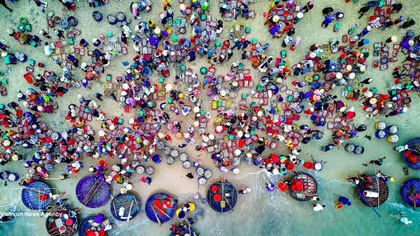
Alongside tourism, fisheries remain a major economic pillar of the island. With extensive fishing grounds and abundant seafood resources, Phu Quy has become one of the province’s key fishing centres.
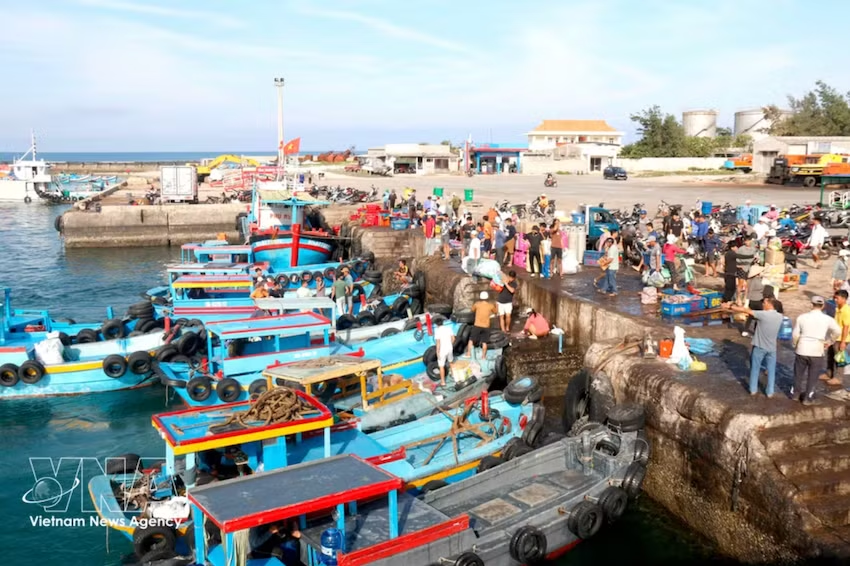
According to Le Hong Loi, Chairman of the People’s Committee of the special zone, local fishermen have invested heavily in offshore fishing fleets and modern fishing equipment. The island currently has nearly 1,678 fishing vessels, including more than 160 logistics and seafood boats for offshore fishing operations.
The Truong Sa archipelago and DK1 platform areas have become familiar fishing grounds for Phu Quy fishermen, with long offshore trips contributing significantly to the local economy. Annual seafood output averages around 30,000 tonnes.
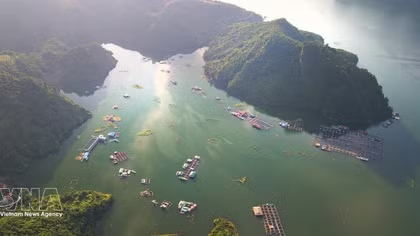
The island has also developed one of the province’s largest semi-natural floating cage aquaculture models, with more than 50 farming facilities covering 7,000 sq.m and producing over 100 tonnes of seafood annually.
Authorities have stepped up efforts to raise awareness among fishermen about protecting marine resources, preventing illegal fishing and avoiding the use of explosives or harmful fishing methods. Patrols and inspections have also been strengthened to address violations and support sustainable fisheries development.
Orientation for sustainable marine economic development
Looking ahead, local authorities aim to develop Phu Quy into a major marine tourism and fisheries service centre in south-central Vietnam. Before its merger with Lam Dong province in July 2025, the former Binh Thuan province officially recognised Phu Quy as a provincial-level tourism area, paving the way for more professional and diversified tourism development.
According to Deputy Director of the provincial Department of Culture, Sports and Tourism Nguyen Lam Ngoc, the island is expected to become a key tourism destination by 2030, focusing on green and sustainable marine tourism linked to cultural heritage and coastal ecosystems.
At the same time, authorities are mobilising investment to upgrade infrastructure, modernise fishing fleets, expand seafood processing and logistics services, and strengthen the island’s role as a fisheries logistics, search-and-rescue and seafood processing centre for the south-central coastal region.
Despite ongoing challenges, local leaders said the achievements in recent years reflect the determination and efforts of both authorities and residents to build a stronger, more prosperous island economy rooted in sustainable marine development.