Folk culture seen as 'gold mine' for Vietnam's cultural industries

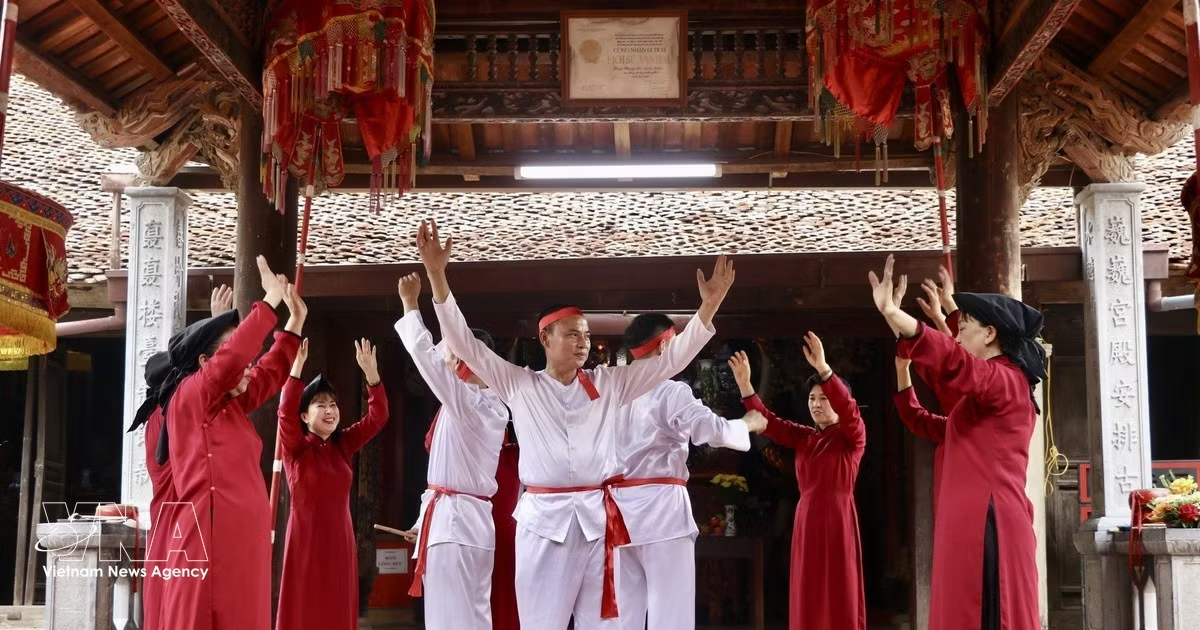
An expert said that while Vietnam has yet to build globally influential cultural brands like the US' Hollywood or the Republic of Korea’s K-pop wave, folk culture offers a unique advantage thanks to the diversity of its ethnic cultures.

Folk culture seen as 'gold mine' for Vietnam's cultural industries

The Politburo’s Resolution No. 80-NQ/TW on the development of Vietnamese culture defines culture as a source of national soft power and a direct driver of socio-economic growth. Notably, it introduces a new approach to heritage, including folk culture, viewing it not only as a legacy to be preserved but also as a valuable resource for developing cultural industries in the new era.

Prof. Dr Le Hong Ly, Chairman of the Vietnam Folk Arts Association, said folk culture has always held a central position in the spiritual and cultural life of Vietnamese people throughout history. Before the August Revolution, when more than 90% of the population was illiterate, folk culture served as the primary means through which history, customs, beliefs and moral values were transmitted from one generation to another.
1-5879.jpg
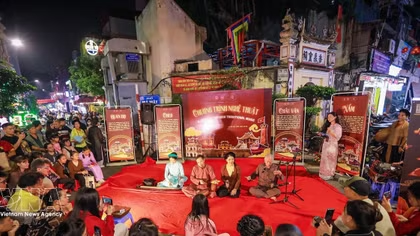
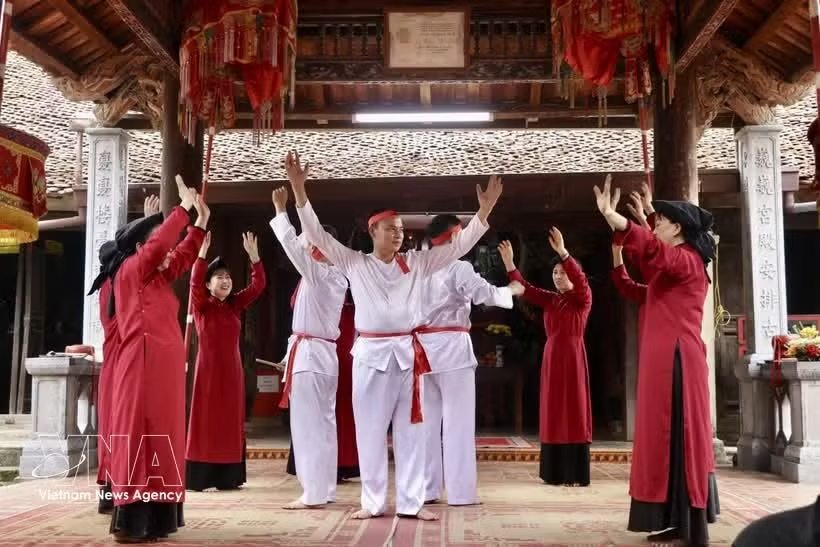
Hat Xoan (Xoan singing), a valuable intangible cultural heritage of Phu Tho province, is linked to the worship of the Hung Kings, a belief rooted in the Vietnamese practice of ancestor worship. Photo: VNA

Legends of the Hung Kings, Saint Giong, the Trung Sisters, Ngo Quyen and Tran Hung Dao entered the public consciousness through oral storytelling, village festivals and community rituals. Folk songs, proverbs, ceremonies and traditional practices helped nurture patriotism, solidarity and the Vietnamese tradition of gratitude to ancestors.

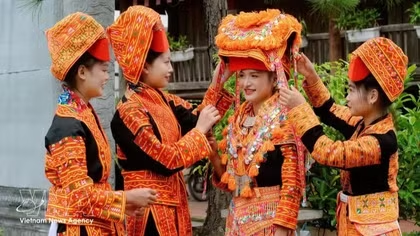
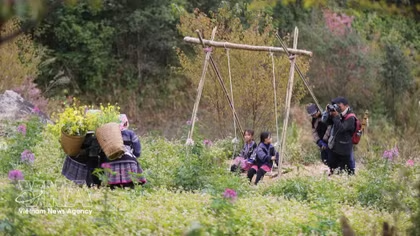
Vietnam is home to more than 8,000 cultural and religious festivals, alongside a vast treasure of folk performing arts, rituals, handicrafts and traditional cuisine of the country’s 54 ethnic groups.

Forms of folk art such as quan ho singing, xoan singing, cheo, tuong and cai luong, together with rituals related to agriculture, forests and water worship, have become distinctive cultural assets and formed an enduring foundation of national identity.

Cultural experts described this rich heritage as a huge “gold mine” for the development of cultural industries. However, they stressed that exploitation must strike a balance between economic value and cultural authenticity.
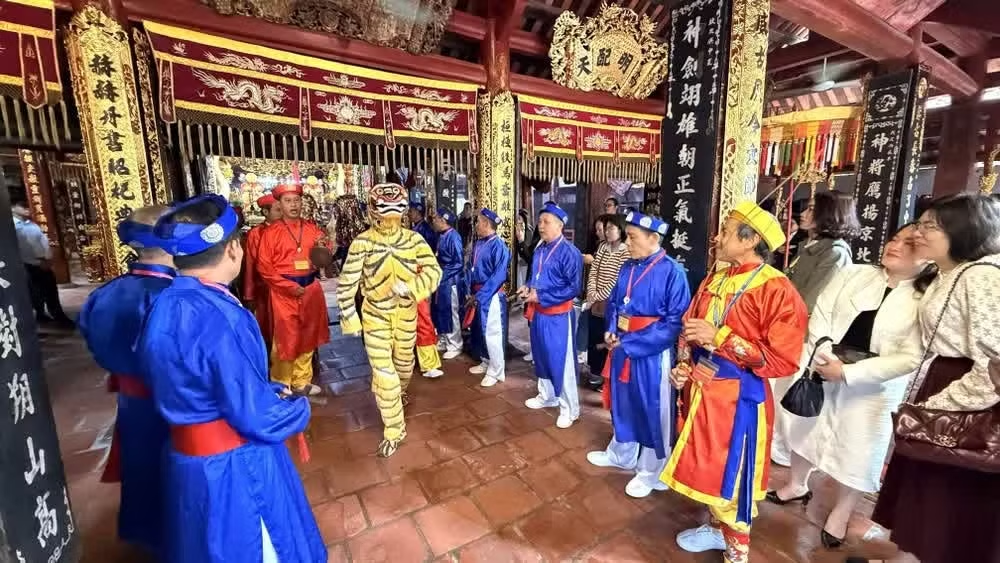
People join the Giong Festival in Phu Dong commune, Hanoi. (Photo: VNA)

Ly said that while Vietnam has yet to build globally influential cultural brands like the US' Hollywood or the Republic of Korea’s K-pop wave, folk culture offers a unique advantage thanks to the diversity of its ethnic cultures. This diversity can endlessly inspire music, cinema, tourism, performing arts and contemporary creative products.

In recent years, many young artists have successfully incorporated folk elements into modern entertainment. Singer Hoa Minzy attracted wide attention with the music video “Bac Bling” while Duc Phuc won the Intervision Song Contest 2025 with “Phu Dong Thien Vuong”, which blended folk melodies with rap. Soobin Hoang Son has also drawn praise for creatively reinterpreting traditional materials in contemporary music.

Researchers said these successes demonstrate that folk culture is not a static heritage but a dynamic economic resource capable of appealing to younger generations when presented through modern thinking and technology.

Resolution 80 also highlights the need to fully identify and effectively utilise cultural resources, placing heritage at the centre of sustainable cultural development. Experts believe this orientation is strategically important as global competition increasingly depends not only on economic or technological strength but also on cultural influence.

Many sectors identified by Vietnam for cultural industry development are closely linked with folk culture, including cultural tourism, performing arts, handicrafts, fashion, cinema, digital media and cuisine. Folk legends such as Saint Giong, Son Tinh – Thuy Tinh and Chu Dong Tu could become valuable materials for films, animation, video games and stage productions, similar to how other countries have commercialised their own myths and legends.

Experts stressed that Vietnam must combine folk culture with modern technology, creative storytelling and international promotion strategies. When revitalised through innovative formats and contemporary expression, folk culture can become both a sustainable economic resource and an effective channel for promoting Vietnam’s image worldwide./.

en.vietnamplus.vn

Other News

Vietnam secure berth at FIFA U17 World Cup 2026 for first time

Vietnam secure berth at FIFA U17 World Cup 2026 for first time

Vietnam national U17 football team secured a place at the FIFA U17 World Cup 2026 for the first time after defeating United Arab Emirates national U17 football team 3-2 on in the final Group C match of the AFC U17 Asian Cup 2026 in Saudi Arabia on early May 14 (Vietnam time).

Vietnam’s most beautiful railway station twins with French counterpart

Vietnam’s most beautiful railway station twins with French counterpart

A twinning agreement between Da Lat Railway Station in Vietnam and Trouville-Deauville Railway Station in France was signed at the French Embassy in Vietnam on May 7, creating new opportunities for cooperation in station management and operations, as well as cultural and tourism promotion between the two sides.

Hanoi gains two more craft villages in World Crafts Cities network

Hanoi gains two more craft villages in World Crafts Cities network

The recognition of Chuyen My and Son Dong craft villages as members of the World Crafts Cities network represents international acknowledgement of the cultural value, artisanal techniques, creativity and sustainable vitality of Vietnam’s traditional craft villages, he said.

Thang Long - Hanoi Festival 2026 to return in September

Thang Long - Hanoi Festival 2026 to return in September

Co-hosted by the municipal People’s Committee, the Department of Culture and Sports, and domestic and foreign agencies, the whole spectacle is meant to honour the city’s millennia-old heritage while reafffirming its strategy of establishing culture as a development engine.

Spreading Vietnamese cultural identity in digital space

Spreading Vietnamese cultural identity in digital space

In the context of deep international integration, cultural identity serves as both a “shield” against assimilation and a defining marker of a nation’s image. Protecting and promoting uniquely Vietnamese cultural values has therefore become a pressing task, particularly in an increasingly complex digital environment.

ITE HCMC 2026 to promote Vietnam’s tourism on global map

ITE HCMC 2026 to promote Vietnam’s tourism on global map

With its large scale, the ITE HCMC 2026 aims to promote tourism cooperation between Vietnam and priority markets such as Northeast Asia, Western Europe, North America, Southeast Asia, and Oceania while also boosting visitor arrivals from the Indian market

Vietnamese puppetry seeks renewal amid preservation challenges

Vietnamese puppetry seeks renewal amid preservation challenges

Although widely regarded as a cultural “speciality” attracting tourists, Vietnamese puppetry is facing multiple challenges in preservation and development, requiring renewed efforts to both safeguard its identity and adapt to contemporary cultural currents.

Project on digital transformation in cultural sector approved

Project on digital transformation in cultural sector approved

By 2030, the project targets the establishment of shared digital platforms across 100% of cultural sectors. All digitised cultural heritage will be standardised under the national data framework and shared in accordance with regulations, while 80% of public digital heritage assets are expected to receive digital identifiers to clarify ownership and management, encouraging organisations and individuals to do the same and support market development.

Vietnam eyes becoming region’s leading tourism destination

Vietnam eyes becoming region’s leading tourism destination

Vietnam has in recent years undergone a notable transformation in its tourism development strategy, placing a strong emphasis on nature-based and eco-tourism. This shift is not merely aligned with global trends, but represents a necessary step towards safeguarding valuable natural resources, while appealing to a growing segment of environmentally conscious travellers.

Vietnam serves 6.76 million foreign arrivals in Q1

Vietnam serves 6.76 million foreign arrivals in Q1

China and the Republic of Korea (RoK) continued to lead as Vietnam’s largest source markets in the quarter, with 1.4 million and 1.3 million visitors respectively, accounting for around 40% of total arrivals.