- Hoi An beats Hanoi, Saigon to crack TripAdvisor’s global travel list
- Northwestern culture, native flowers to be showcased at event in Sapa
- An Giang sees tourist growth in religious sites
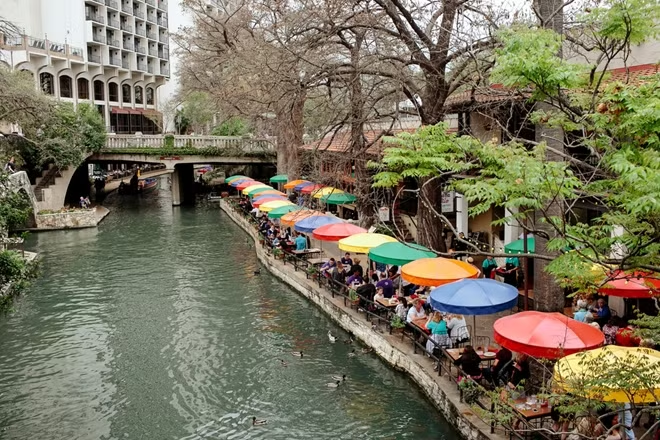
The River Walk, San Antonio’s riverside promenade, which opened in 1941, has long influenced other cities eager to replicate its development-spurring success. By expanding the River Walk from three to 15 miles in 2013, and linking it to five Spanish colonial missions, San Antonio remains a jump ahead of the imitators.
Sticking largely to the extended linear park, visitors can access a wide range of attractions, including those missions (collectively named a Unesco World Heritage site in 2015) as well as a Western art museum, a performing arts center and a former brewery complex now filled with restaurants and shops. Expanded bus service, a shared bike program and Uber mean you don’t have to rent a car to see it all, either.
 |
Friday
The downtown hub of the River Walk is a tourist magnet lined with restaurants and bars that pinch the sidewalks. But with its expansion, the River Walk now offers untrammeled sections. Stroll two miles north to the revitalized Pearl Brewery district, and you can join runners and dog walkers on a landscaped path with art installations, a wetlands restoration and an underpass soundtrack of singing woodland birds.
The 1883 Pearl Brewery stopped making beer in 2001, the same year developers drew up a mixed-use plan for the 22-acre riverside site. Now it hosts a branch of the Culinary Institute of America, the new retro-chic Hotel Emma and a rich cache of good restaurants and boutiques.
The Tiny Finch carries arty accessories and home goods, including antlers shaped into bowls. Melissa Guerra deals in Mexican tableware and foodstuffs. Pick up a bespoke guayabera shirt from Dos Carolinas and some vintage cowboy boots at Leighelena.
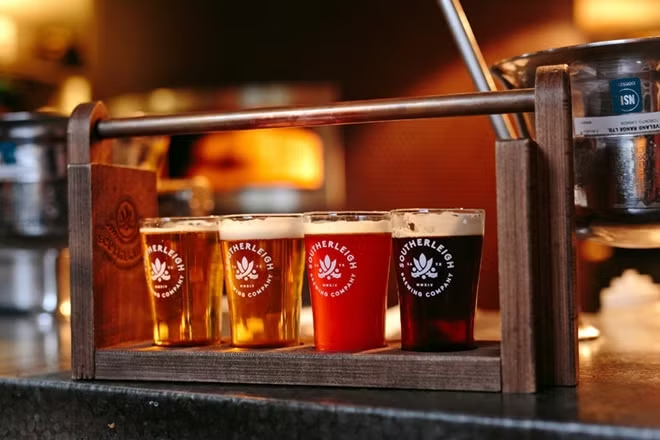 |
The Pearl’s already significant culinary reputation was expanded with the 2015 opening of the Hotel Emma. It adjoins the original Pearl Brewhouse building, now home to Southerleigh Fine Food & Brewery, where the chef, Jeff Balfour, has returned brewing to the district.
Stop in for a Texas Uncommon Ale ($6), then trek across the steampunk-inspired hotel lobby next door to Supper. Its chef, John Brand, champions not just farm-to-table fare, but root-to-stem cooking. Sit near the open kitchen to watch the rotisserie char vegetables while dining on smoked cauliflower and roasted carrots ($7) and crisp quail with pickled corn relish ($24).
The visual history of San Antonio streams artfully onto the facade of the 18th-century San Fernando Cathedral several times each weekend night in a 24-minute video projection.
Designed by the French artist Xavier de Richemont, the Saga at San Fernando Cathedral (free) spares audiences milling around the Main Plaza the dates and details in favor of surround-sound music while the church acts as a canvas.
Sometimes the projections obliterate the facade in images of nature or historic figures; other times they highlight the colonial architectural details in patterns representing Native American and Mexican cultures.
Saturday
The Missions of San Antonio, five 18th-century Catholic outposts including the Alamo, erected by the Spanish, are strung out from downtown south over nearly eight miles. The southern expansion of the River Walk generally traces the route, and the presence of the shared bike service B Cycle (rentals $12 a day) at every mission means cyclists can bike from site to site by following the river.
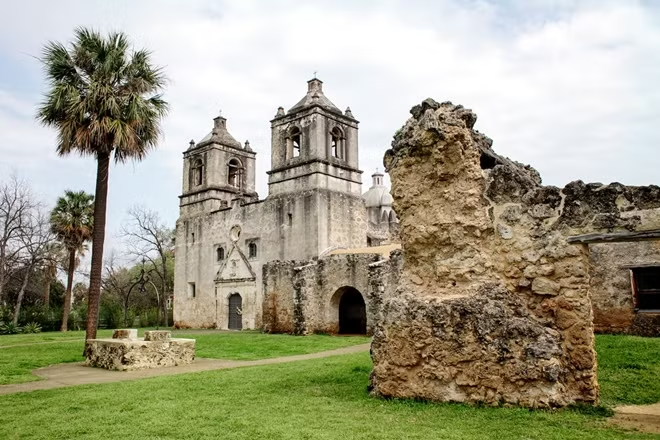 |
Most, including the unadorned stone Mission Concepción, the whitewashed Mission San Juan and the more rural Mission Espada, post information for self-guided tours. Don’t miss the largest and most fully restored, Mission San José, which offers films and talks on mission history. Non-bikers can hop the new Viva Missions (No. 40) bus route (one-day pass, $2.75).
Dock your B Cycle north of downtown at the Luxury, now remodeled, a compound of picnic tables, chair swings overlooking the River Walk and a pair of cargo containers, one repurposed as a kitchen with a food-truck-style window, and the other a beer-centric bar.
Its name might be odd for what is essentially a beer garden, but there’s nothing indirect about the food, including buttermilk chicken sandwiches ($9.75), six-ounce burgers ($9.75) and addictive twice-blanched fries ($4.50).
The Briscoe Western Art Museum fills three floors of the former San Antonio Public Library with paintings, sculptures, engraved spurs, silver-studded saddles and Native American costumes.
 |
Representing 500 years of history from the Spanish conquest to modern times, the collection is less concerned with the chronology of the West than the interpretations of it, from romantic paintings of cowboys and grand landscapes to artifacts, such as a reproduction stagecoach resting on leather straps for suspension, which illustrate frontier functionalism.
By midafternoon in the South Texas heat, you need a beer and a break. You’ll find both at the microbrewery Alamo Beer Company, which has a tasting room and family-friendly beer garden in an east side industrial complex.
Peek into the 18,000-square-foot brewery through a wall of windows in the corrugated metal building, then hit the tasting hall for one of four standard brews, including its original crisp Alamo Golden Ale ($5.50). Live music, food trucks and games of cornhole encourage lingering.
San Antonio’s gastronomic credentials extend from a branch of the Culinary Institute of America specializing in Latin American cuisine to a plethora of small coffee roasters, enough to warrant an annual coffee festival.
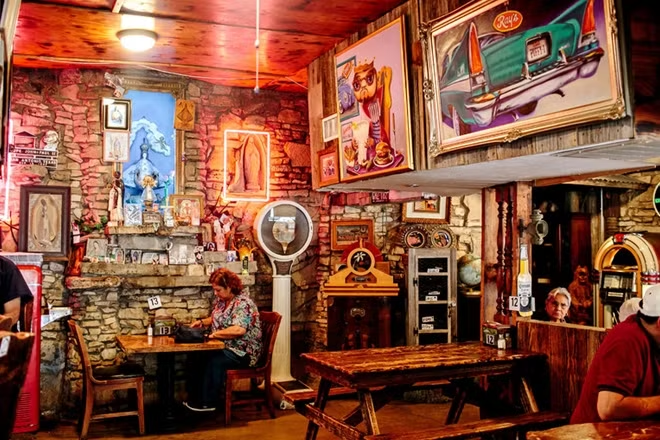
Long before these innovators, there was San Antonio’s homegrown staple, the puffy taco. Ray’s Drive Inn, founded in 1956, claims to have brought the fryer-fluffed tortilla stuffed with beef, lettuce and tomato ($2.25) to town. You can still get carhop service, but the cheer is greater indoors in the memorabilia-filled road house with a jukebox spinning oldies.
With the expansion of the River Walk, which runs in front of it, the Tobin Center for the Performing Arts grew, too. Now a metallic honeycomb addition conceals two additional theaters appended to a 1920s-vintage auditorium.
Ten San Antonio artistic companies call the Tobin home, including Ballet San Antonio, San Antonio Symphony, Opera San Antonio and an acting company called AtticRep, making the Tobin one-stop shopping for entertainment.
A spate of inventive bars offers a wide range of craft cocktails. Reopened in 2011, the 1933-vintage Esquire Tavern serves a deep selection of mezcal in drinks like the grapefruit-flavored Texecutioner ($10) at a 100-foot-long wooden bar.
The new and more intimate Juniper Tar offers a similar vintage setting and worldly drinks like Portuguese gin and tonic made with white port ($9) and a pisco sour with Peruvian carob syrup ($12). Make Paramour your last stop for the rooftop bar’s view over the city from an expansive, couch-filled deck.
Sunday
You can’t leave San Antonio without visiting the Alamo, and early morning is the best time to beat the crowds. Originally Mission Valero, the compound was the site of the 13-day losing battle with Mexican troops in 1836 that remains a symbol of Texas defiance. Massive live oaks shade the grounds, and the gift shop offers T-shirts with the slogan “Come and Take It,” the Texan revolutionists’ taunt to their foes.
Formerly a series of ice and cold-storage warehouses, the Blue Star Arts Complex in the hip Southtown neighborhood now houses art studios, galleries and boutiques. Its event space Brick at Blue Star hosts an art and flea market every Sunday. Grab a pour-over coffee ($3.50) from neighboring Halcyon Southtown, then troll for treasures.