Why State Bank of Vietnam has kept deposit rates unchanged

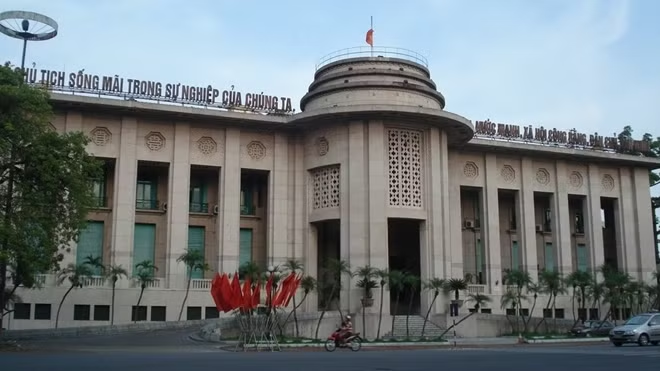
The State Bank of Vietnam has recently decided to lower the interest rates on short-term loans to priority sectors by 0.5 percentage points and some policy rates by 0.25 percentage points.

This move is beneficial to the business community but there is still much to be discussed over this decision. In an interview, Can Van Luc, a member of the National Financial and Monetary Policy Advisory Council, offered his insights into the central bank’s move.

Q: Why did the State Bank decide to refrain from cutting deposit rates?

A: I think the State Bank has a good reason for not adjusting deposit rates because if cuts are made, money will flow to other channels, possibly gold, stocks or property. This move would be very risky and cause difficulty for banks to mobilise funds especially when the amount of deposits was not very high in the first six months of the year.
Q: Why did the State Bank opt for a reduction in interest rates on loans to five priority sectors at just 0.5 percentage points rather than a larger cut?

A: The National Financial and Monetary Policy Advisory Council met and discussed the issue thoroughly and recommended that level of reduction as a deeper cut would please enterprises but could also have other implications.

Firstly, banks would be hesitant to lend to priority sectors because the interest rates were too low.

And secondly, the difference between deposit and lending rates in Vietnam is around 2 percentage points while the gap is much higher in the region, about 3 points in China and about 4 points in Indonesia and the Philippines.

The banking system cannot deal with a larger cut, given the ratio of non-performing loans remains high.

Q: So why did the State Bank have to intervene with administrative measures instead of just letting the market adjust interest rates automatically?

A: I myself have repeatedly suggested scrapping the ceiling interest rates but I understand that in the current context, there are still many vulnerabilities and risks, so administrative measures still have to be taken.

If the State Bank did not use administrative measures, it would be difficult to adjust the interest rates. Of course, competition has become more intense in the banking system. If there are good projects and business plans, there will always be funds available with attractive interest rates.

Q: Some say that such rate cuts will lead to overwhelming credit growth. Do you think it is a problem in the current context?

A: I think credit is unable to grow so fast as the cuts are made only to five priority sectors while credit growth in these sectors is not too high. I think by all means the State Bank will restrict credit growth at 17-18% and will ensure it doesn’t exceed 20% since the IMF and some experts have cautioned the central bank against overheated credit growth.

Basically, liquidity of the banking system is still good and the loan-to-deposit ratio is safe. However, if credit grows too fast and there are insufficient deposits, it will cause liquidity problems for banks and won’t be unable to fully support growth. Credit growth should not be higher than 18%.

The problem now is how to mobilise funds, which certainly involves gold and the US dollar.

Q: What do think are the solutions to the problem of mobilising funds?

A: To help banks lower interest rates, I suggest that the State Bank first expedite the progress of resolving bad debt. There are only five years for such measures to be implemented, otherwise it will be too late.

Secondly, the State Bank should consider revising the document known as Circular 06 issued last year on prudent ratios in the operations of credit institutions. The circular allows banks to use 50% of their short-term funds for medium and long-term loans this year and 40% next year. This means the banking system will use fewer short-term funds for medium and long-term loans next year.

That is why the banking system now has to speed up the mobilisation of medium and long-term funds to meet requirements of next year. If so, the banking system has to guarantee capital for medium and long-term loans while also having to mobilise funds to achieve the credit growth target of 18% this year.

If the above-mentioned circular is amended, the demand for medium and long-term funds will be met, thereby easing the race for deposit rates and helping to reduce lending rates.

I also suggest adjusting the ceiling rate for USD deposits because the demand for foreign currency this year is higher than last year.

Besides the issue of trade deficit, loans in foreign currency rose about 5% in the first half of 2017 while the increase stood at only 1.5-2% last year. It is apparent that Vietnam’s economy still has a high demand for foreign currency.

For the meantime domestic banks must borrow USD from foreign banks at around 2.5%, and if we raise the USD deposit rate by 0.25 percentage points to mobilise USD from the people, the borrowing costs will be much lower. It will also help to reduce lending rates.

Moreover, measures are needed in the long run to mobilise gold held by the public to boost the economy. It is also a way to reduce the pressure on Vietnamese dong interest rates.

NDO

Other News

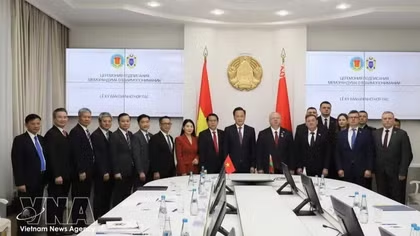
Vietnam, Russia, Belarus step up cooperation in state audit

Vietnam, Russia, Belarus step up cooperation in state audit

The State Audit Office of Vietnam and the Accounts Chamber of Russia signed an MoU on cooperation and expressed their wish to further expand collaboration at both bilateral and multilateral levels, focusing on the role and impact of supreme audit institutions on macroeconomic policies, digital transformation and the application of information technology to public auditing.

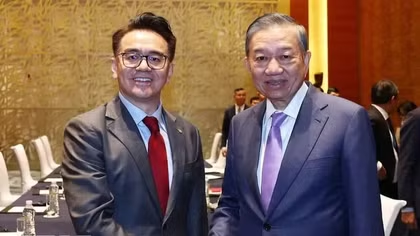
Vietnam, China widen economic, trade cooperation space

Vietnam, China widen economic, trade cooperation space

General Secretary of the Communist Party of Vietnam Central Committee and President To Lam’s trip to China for the 33rd APEC Economic Leaders’ Week and bilateral engagements is expected to add new momentum, including deeper economic connectivity, broader trade, investment and supply chain links, and a more balanced, substantive economic relationship that matches both sides’ potential.

VEFTA implementation requires exporters to restructure supply chains: Experts

VEFTA implementation requires exporters to restructure supply chains: Experts

Under VEFTA, tariff reductions to zero will be meaningless for Vietnam’s key export sectors, including textiles and garments, footwear, and agricultural and aquatic products, if goods are found to contain banned chemicals, violate rules of origin or lack transparency regarding their carbon footprints.

IMF sees positive growth prospects for Vietnam, urges cautious monetary policy

IMF sees positive growth prospects for Vietnam, urges cautious monetary policy

Martin Sommer, head of the IMF’s Article IV consultation mission team to Vietnam, noted that inflation risks in Vietnam remain under control, but several factors could add to price pressures. He therefore called for cautious monetary policy management and readiness to respond promptly if inflationary pressures increased.

Seven green-tech startups secure 770,000 USD at Net Zero Challenge 2026

Seven green-tech startups secure 770,000 USD at Net Zero Challenge 2026

In its fourth year, the competition attracted more than 1,100 applications from 80 countries and territories, making it the most competitive edition since its launch in 2023. Nine finalists presented solutions in three categories, namely renewable energy and carbon removal; food systems and sustainable agriculture; and circular economy and waste management.

Vietnam remains an attractive destination for Japanese businesses

Vietnam remains an attractive destination for Japanese businesses

Fukai Akihiko, President and Representative Director at Gunma Bank and head of a business delegation from Japan’s Gunma prefecture, said cooperation between Gunma and Vietnam has continued to expand in recent years. Around 15,000 Vietnamese people currently live in Gunma, forming the largest foreign community in the prefecture.

Vietnam and Sweden step up cooperation in telecom infrastructure, cybersecurity

Vietnam and Sweden step up cooperation in telecom infrastructure, cybersecurity

Vietnam is accelerating institutional reforms, improving its investment and business environment, developing infrastructure and enhancing human resources quality. The Government stands ready to cooperate with leading global corporations investing in sectors of strategic importance to the country's development.

Vietnam-Japan trade machine has room to run

Vietnam-Japan trade machine has room to run

Economic, trade and investment cooperation remains the core pillar and the main engine of comprehensive, sustainable bilateral ties. General Secretary of the Communist Party of Vietnam Central Committee and President To Lam’s official visit to Japan is therefore a key moment to reinforce political trust, deepen the Comprehensive Strategic Partnership and open new cooperation opportunities in the next growth phase.

Vietnamese goods eye greater access to the Australian market

Vietnamese goods eye greater access to the Australian market

Participants at the Vietnam-Western Australia Business Forum 2026 in Perth on November 6 highlighted strong prospects for Vietnamese rice, agricultural produce and food products in the Australian market as local businesses seek to diversify supply chains.

WTO hails Vietnam's 20-year journey since accession

WTO hails Vietnam's 20-year journey since accession

Joining the World Trade Organisation (WTO) was a strategic choice for Vietnam, closely associated with its Doi Moi (Renewal) process, opening-up policy and international economic integration. Over the past two decades, international economic integration has become a driving force for institutional reforms, trade expansion, foreign investment attraction and enhancement of the country's international standing.

US to send largest-ever agricultural trade mission to Vietnam

US to send largest-ever agricultural trade mission to Vietnam

The USDA’s statistics show that Vietnam was the seventh-largest export market for American agricultural and related products in 2025, with import turnover of nearly 5.6 billion USD. The US’s 2025 agricultural exports to Vietnam increased 38% from 2024.

APEC 2027 seen as fresh impetus for Vietnam-Russia cooperation

APEC 2027 seen as fresh impetus for Vietnam-Russia cooperation

VOV.VN - Vietnam’s hosting of the Asia-Pacific Economic Cooperation (APEC) summit in 2027 is expected to create new momentum for cooperation between Vietnam and Russia, with opportunities to expand ties across a range of areas of mutual interest, according to Russian expert Tatyana Gorchakova.