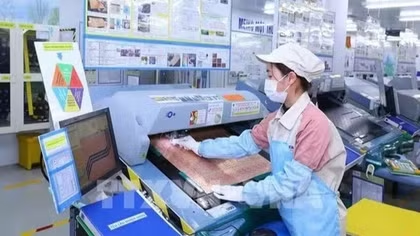
Living safely with the virus
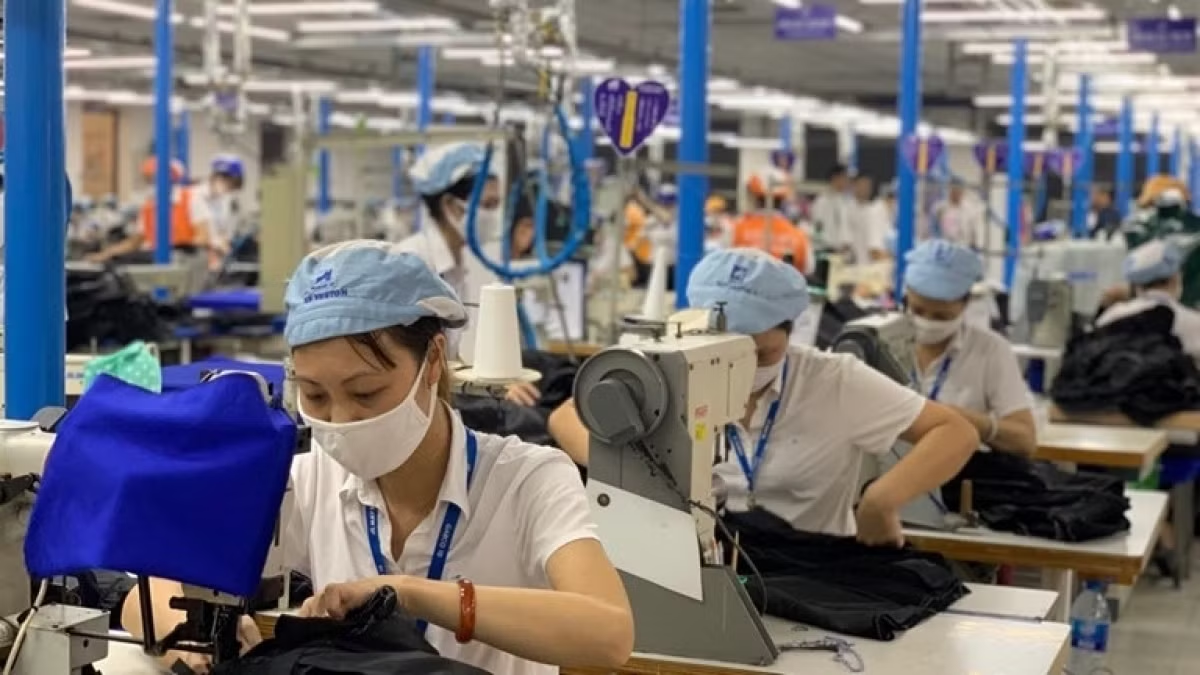
After two years of fighting COVID-19, domestic enterprises have now acquired experience in dealing with and adapting to a crisis such as the pandemic. As a means of maintaining production, many businesses have become aware that they have no choice but to accelerate the restructuring process and digital transformation.
Nguyen Trong Van, director of Nhan Hoa Food Joint Stock Company in Hanoi, says COVID-19 has dealt a significant blow to production, although it is inadvertently a good test for the corporate culture value that the firm has painstakingly built over the past 15 years.
“All the managers and employees always stay united and determined to overcome the pandemic altogether,” confides Van.
According to the executive, the COVID-19 pandemic has served to sharpen the capabilities of businesses to flexibly respond to the crisis. For Nhan Hoa JSC, Van says the firm was forced to develop scenarios to cope with the unpredictability of the pandemic, in which the worst possible case scenario was that the enterprise would have to close for six months, but fortunately, this situation did not occur.
“We expect there will be good signs for the new year 2022. Right at the beginning of the new year, we marketed a score of quality products such as pork, pangasius, salmon, chicken, vegetables and fruits to serve residents during and after the lunar New Year holiday,” reveals Van.
Meanwhile, Dinh Van Thap, deputy general director of Nha Be Garment Corporation, also believes the experience acquired during the COVID-19 fight, coupled with the strategy of living safely with the virus, will give rise to a bonanza year ahead.
“Looking to 2022, we are optimistic about the Government’s flexible pandemic control policy. Though the pandemic is yet to be contained globally overnight, the customer demand for garments is still very huge. We are happy that we have signed production orders with foreign partners until mid-2022, and we expect to secure a more positive growth in the new year,” confides Thap.
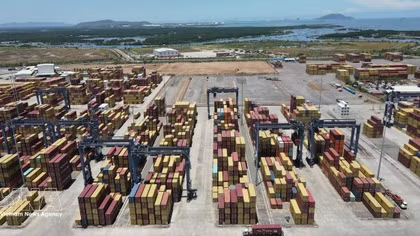
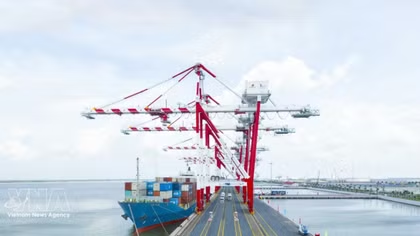
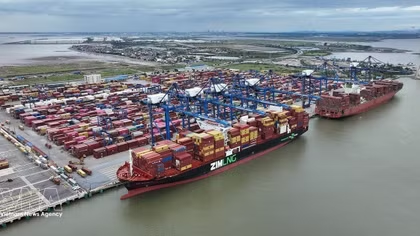
However, the biggest challenge which has caused a significant headache to local garment makers in recent times is the huge transportation costs. In addition, disruptions to the global supply chain have fuelled increases in the prices of raw materials and finished products as well, not to mention difficulties in seeking ships for export consignments. Indeed, these factors are far beyond the control of enterprises.
“The business community are looking forward to the State’s support. For example, the State should soon build a fleet of domestic ships for long-distance trips to avoid dependence on foreign fleets,” Thap suggests.
Much work to do in 2022
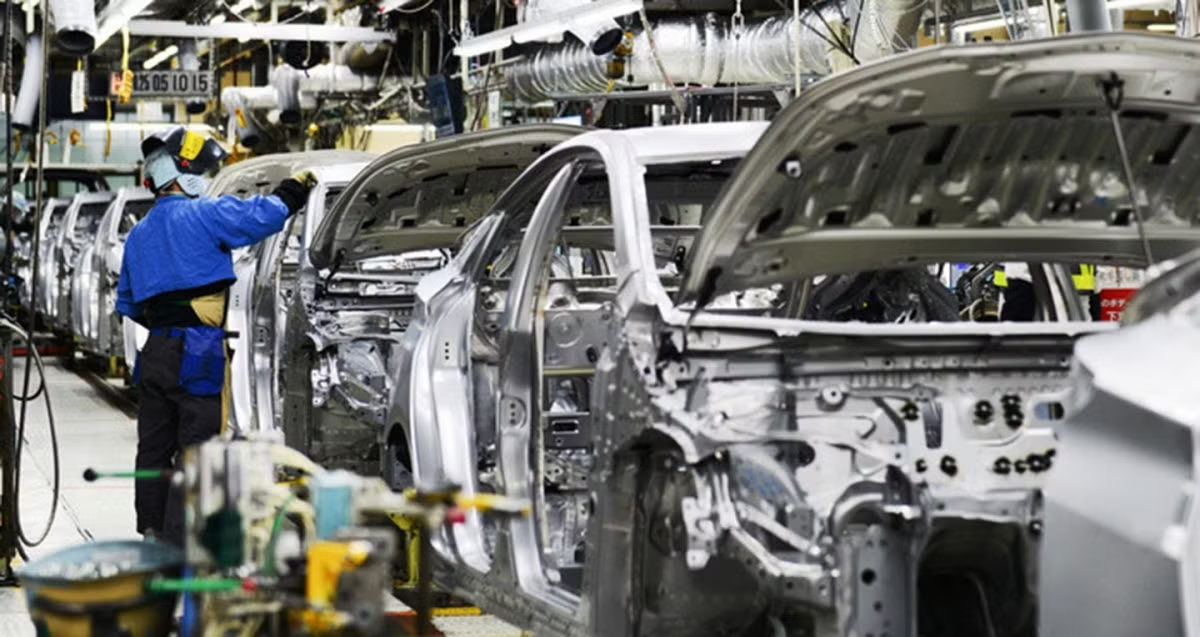
Truong Quang An, director of Tam Vu Dragon Fruit Cooperative in Long An province, states that the complex nature of the COVID-19 outbreak has prompted firms to reshape their production and business plans. In order to limit risks faced in the transportation of goods at seaports, Tam Vu has switched from exporting fresh to frozen fruit due to their longer preservation. Simultaneously, his enterprise has moved to take full advantage of e-commerce platforms to seek customers and markets.
“The biggest difficulty of our firm is the skyrocketing increase in transportation costs, coupled with slow customs clearance at border gates. This puts the business at a disadvantage as it will slashes our profit and more importantly it will blunt the competitive edge of Vietnamese goods,” says An.
To overcome these difficulties, he suggests that the country strive to implement a range of solutions, including building logistics centres for agricultural products in key production areas.
“Such centres are capable of storing and distributing goods for the whole region,” he adds.
In order for the economy to bounce back strongly in the year, economist Le Dang Doanh suggests that the State should first continue to support business recovery, remove barriers, apply market measures, and avoid administrative procedures in an attempt to improve the overall competitiveness of domestic businesses.
“Stronger reform is in dire need to make all economic activities more dynamic and easier in all contexts. Institutional reform needs to be carried out in a way that promotes dynamism,” Doanh recommends.
Moreover, economic expert Ngo Tri Long shares his view that companies not only require capital, but also need support from the State to help them improve their overall capacity through training programmes, communications, and advice.
“These factors will help the national economy to improve its competitiveness and keep pace with the world,” stresses Long.
Dr. Nguyen Trong Dieu, president of the Vietnam Private Entrepreneurs Association, points out that many businesses are currently in the process of recovering production and making good progress, although many are still facing challenges due to high input costs.
To limit these risks and improve competitiveness, businesses are making every effort to increase the added value for agricultural products and processed foods, whilst also promoting deep- and fine-processing industries. This marks a development trend moving forward that is expected to open up fresh opportunities for production restructuring.
“In order to do this, in addition to the efforts by businesses themselves, the Government, relevant ministries and agencies must offer preferential policies to attract investment in the processing industry, especially for focusing on a few key products,” suggests Dr. Dieu.