Cai Rang – A unique floating market in the Mekong Delta

The Cai Rang floating market is a unique market in the Mekong Delta that would attract tourists before the pandemic.

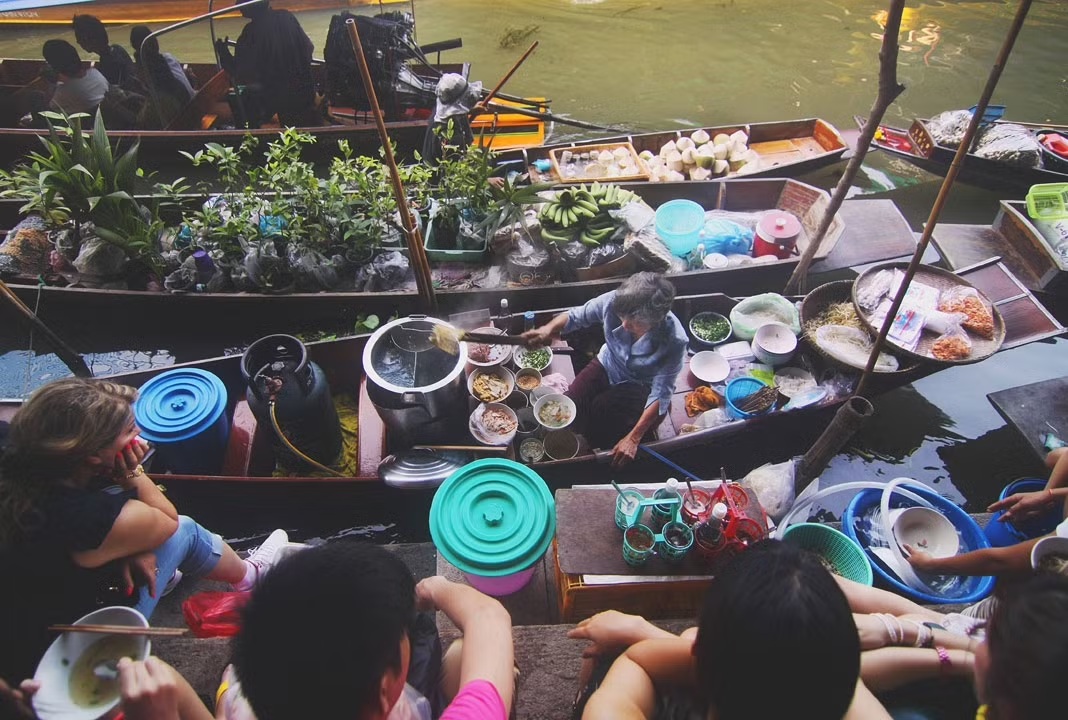
No shortage of floating eateries, which offer a variety of popular dishes

No shortage of floating eateries, which offer a variety of popular dishes

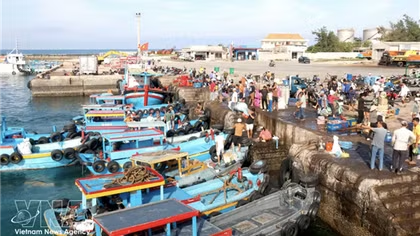
A myriad of colors, smells and flavors surround the Cai Rang floating market, the largest such market in the Mekong Delta, with hundreds of wooden boats. At this time of the year, people typically trade all day long as the traditional Vietnamese New Year approaches.

Market for the locals

It’s not uncommon to see people move from boat to boat to complete their sales or purchases – fruits, such as rambutan, mangoes, tangerines, grapefruits, watermelons, bean tubers, mangosteen, durian, and basic necessities – the boats have them all. If you don’t like what you see in one boat, you’re sure to find it in the next.

Most of the sellers are farmers. They have various specialties on offer, the most famous of which is the “Năm Roi” grapefruit from Vinh Long, the clementine from Lai Vung or the durian from Cai Mon.

Visitors are also immersed in the market atmosphere and can discover the river life of the inhabitants in their “mobile homes”, which come equipped with televisions, music players, film players, ornamental plants and motorcycles.

In addition to agricultural products, fresh food and consumer goods, the floating market also offers various services, from boat or ship repairs to gasoline supplies, clothes, cosmetics, salt and fish sauce, medicines, candies and drinks. And even lottery tickets!

There is no lack of floating eateries either, with many popular dishes – noodles such as pho and hu tieu, to meet the needs of sellers, buyers and tourists.

Located on the Can Tho River, the floating markets of Cai Rang and Phong Dien are hubs, with hundreds of boats arriving every day from early morning; people operating these markets usually wake up from 3 to 4 a.m. and trade until 6 or 7 a.m.

With 1001 flavors surrounding the floating market, maybe there is no need to visit the lush orchards!

The Cai Rang floating market is about 6 km from downtown Can Tho City. If you take a boat from the Ninh Kieu pier, you should reach the market in 30 minutes. But the floating market of Phong Dien is further from the city, about 17 km to the southeast, established in the early years of the 20th century.

From the Can Tho old market or a hotel, guests must first hire a motorcycle rider to transport them straight to the Cai Rang market along the road. Then, they need to hire a boat to transport them to the floating market located not far on the river. I did this, leaving my hotel at 5 a.m.

Famous chef passing by

You can see the vendors’ boats from a distance, often with cabbages, tomatoes or garlic hung on the mast of the bow – a very rudimentary advertising method but one that works – indicating what kind of produce the boat offers, making it easier for buyers to choose.

In 2013, world-class chef Gordon Ramsay toured Vietnam in a quest to understand southwestern Vietnamese cuisine. He was impressed with a bowl of noodles – hu tieu – which he ate at the Cai Rang floating market. The aroma of chives and cilantro, blended perfectly with other ingredients, created the most delicious flavor, he said.

In 2016, the Cai Rang floating market was awarded the title of “National Intangible Cultural Heritage” by the Vietnamese Ministry of Culture, Sports and Tourism.

It is a great place for those seeking to discover the colorful river life of the Mekong Delta region and experience the warmth of the people.

Not just Can Tho, but other provinces and cities in the southwest also boast of lively floating markets, such as the Cai Be floating market in Tien Giang; Phung Hiep, Hau Giang; and Chau Doc, An Giang.

Rivers play a vital role in the lives of the people of the Mekong Delta by connecting villages and cities, allowing people to move around and conduct trade.

However, what really sets the floating markets in southern Vietnam apart is that locals sell and buy items here, unlike other markets such as the Damnoen Saduak market in Thailand, which is exclusively for tourists and not the Thai people.
Saigon Times

Other News

Vietnam secure berth at FIFA U17 World Cup 2026 for first time

Vietnam secure berth at FIFA U17 World Cup 2026 for first time

Vietnam national U17 football team secured a place at the FIFA U17 World Cup 2026 for the first time after defeating United Arab Emirates national U17 football team 3-2 on in the final Group C match of the AFC U17 Asian Cup 2026 in Saudi Arabia on early May 14 (Vietnam time).

Vietnam’s most beautiful railway station twins with French counterpart

Vietnam’s most beautiful railway station twins with French counterpart

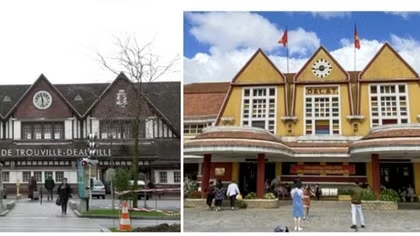
A twinning agreement between Da Lat Railway Station in Vietnam and Trouville-Deauville Railway Station in France was signed at the French Embassy in Vietnam on May 7, creating new opportunities for cooperation in station management and operations, as well as cultural and tourism promotion between the two sides.

Hanoi gains two more craft villages in World Crafts Cities network

Hanoi gains two more craft villages in World Crafts Cities network

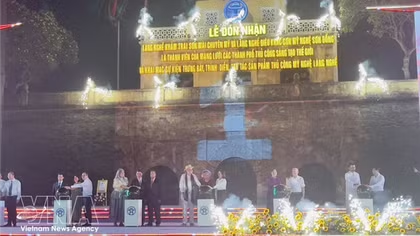
The recognition of Chuyen My and Son Dong craft villages as members of the World Crafts Cities network represents international acknowledgement of the cultural value, artisanal techniques, creativity and sustainable vitality of Vietnam’s traditional craft villages, he said.

Thang Long - Hanoi Festival 2026 to return in September

Thang Long - Hanoi Festival 2026 to return in September

Co-hosted by the municipal People’s Committee, the Department of Culture and Sports, and domestic and foreign agencies, the whole spectacle is meant to honour the city’s millennia-old heritage while reafffirming its strategy of establishing culture as a development engine.

Spreading Vietnamese cultural identity in digital space

Spreading Vietnamese cultural identity in digital space

In the context of deep international integration, cultural identity serves as both a “shield” against assimilation and a defining marker of a nation’s image. Protecting and promoting uniquely Vietnamese cultural values has therefore become a pressing task, particularly in an increasingly complex digital environment.

ITE HCMC 2026 to promote Vietnam’s tourism on global map

ITE HCMC 2026 to promote Vietnam’s tourism on global map

With its large scale, the ITE HCMC 2026 aims to promote tourism cooperation between Vietnam and priority markets such as Northeast Asia, Western Europe, North America, Southeast Asia, and Oceania while also boosting visitor arrivals from the Indian market

Vietnamese puppetry seeks renewal amid preservation challenges

Vietnamese puppetry seeks renewal amid preservation challenges

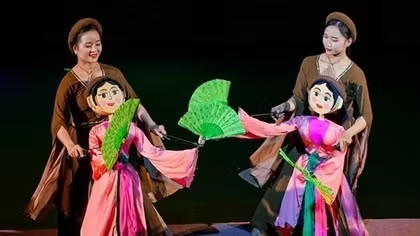
Although widely regarded as a cultural “speciality” attracting tourists, Vietnamese puppetry is facing multiple challenges in preservation and development, requiring renewed efforts to both safeguard its identity and adapt to contemporary cultural currents.

Project on digital transformation in cultural sector approved

Project on digital transformation in cultural sector approved

By 2030, the project targets the establishment of shared digital platforms across 100% of cultural sectors. All digitised cultural heritage will be standardised under the national data framework and shared in accordance with regulations, while 80% of public digital heritage assets are expected to receive digital identifiers to clarify ownership and management, encouraging organisations and individuals to do the same and support market development.

Vietnam eyes becoming region’s leading tourism destination

Vietnam eyes becoming region’s leading tourism destination

Vietnam has in recent years undergone a notable transformation in its tourism development strategy, placing a strong emphasis on nature-based and eco-tourism. This shift is not merely aligned with global trends, but represents a necessary step towards safeguarding valuable natural resources, while appealing to a growing segment of environmentally conscious travellers.