Certain conditions outlined for foreign visitors to Vietnam

Foreign travelers wishing to visit Vietnam are required to be fully vaccinated against COVID-19, have a negative COVID-19 test, book package tours, and have travel insurance, according to policies put forward by the Ministry of Culture, Sports and Tourism.

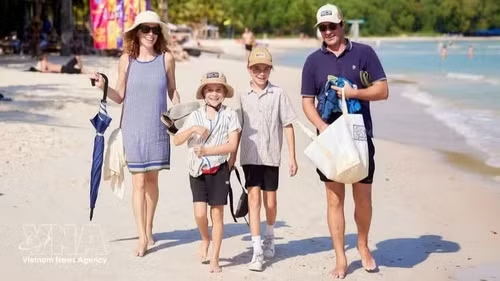
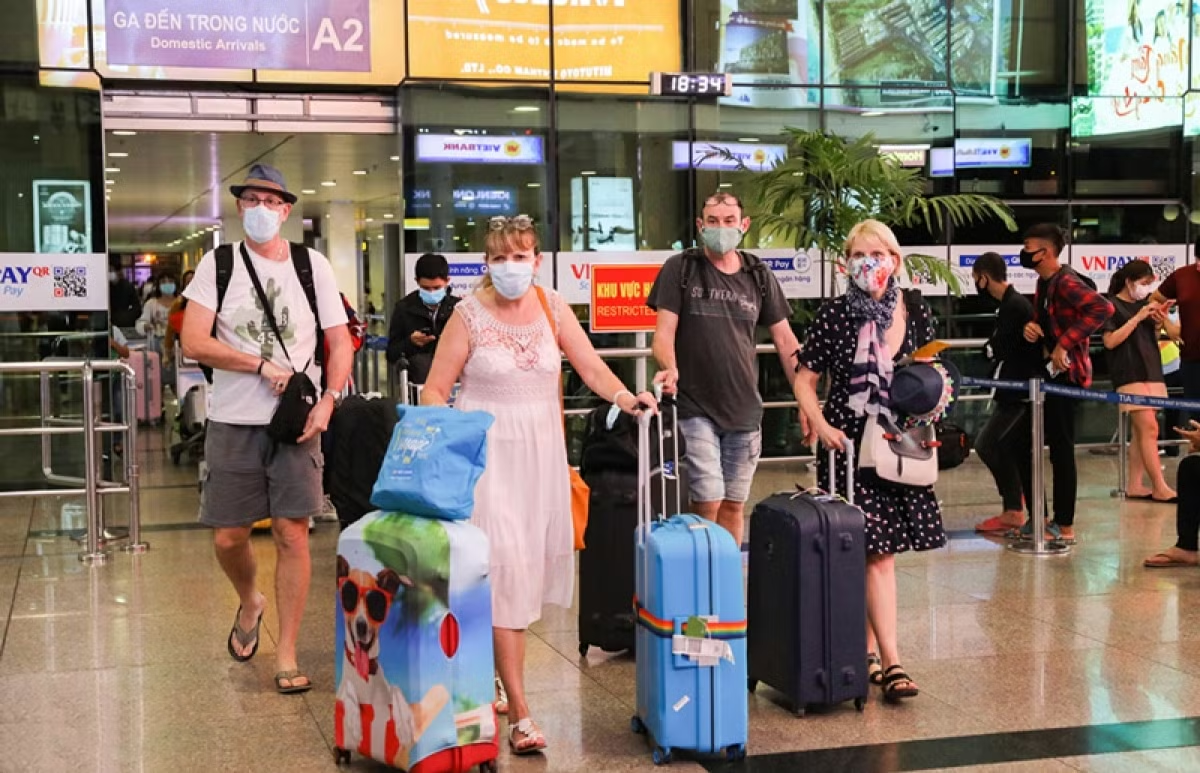
Foreign travellers must meet some certain conditions if they want to visit Vietnam in the coming months. (Illustrative image)

Foreign travellers must meet some certain conditions if they want to visit Vietnam in the coming months. (Illustrative image)

The Ministry on November 5 issued fresh instructions for localities wishing to welcome the return of foreign travelers through a pilot scheme. It set some conditions for foreign visitors if they want to spend their holidays in the country.

First of all, foreign travelers must present a certificate to prove that they are fully vaccinated against COVID-19, with the vaccines being recognised by competent Vietnamese authorities.

Secondly, visitors must show a negative COVID-19 test by the RTPCR/RT-LAMP method within 72 hours before departure. In addition, this certificate must be issued by competent authorities in the country where the test was performed.

Thirdly, visitors are required to have medical insurance in order to cover the cost of any COVID-19 treatment at a minimum spending level of US$50,000 in the event that they are infected with the virus.

Fourthly, visitors must follow package tours arranged by the travel agency.

Upon arriving in Vietnam, travelers will be tested on both the first and seventh days in the event that they book a tour of more than seven days. In all other cases, they are recommended to self-test every two to three days using a rapid test kit.

During the course of their stay, visitors are required to strictly follow Vietnamese COVID-19 guidelines and prevention measures, including wearing a face mask and avoiding large gatherings in public places.

For the time being, the pilot scheme will be implemented this month in Phu Quoc, Khanh Hoa, Quang Nam, Da Nang, and Quang Ninh, all of which are home to internationally recognised tourist destinations.

Phu Quoc alone is set to welcome its first foreign visitors on November 20. The  island city in the south has set a target of receiving between 3,000 and 5,000 foreign visitors in the first phase. Notably, overseas travelers to Phu Quoc are exempt from entry visas.

The Vietnamese Government has approved the Ministry of Culture, Sports and Tourism’s proposal to reopen the country to international visitors through a three phase scheme, with the first phase starting in November, second phase from January 2022, and the third phase probably starting in June 2022.

Vietnam has closed its borders to foreign travelers since April 2020, when the SARS-CoV-2 virus initially spread rapidly across the country. It has since experienced four waves of the COVID-19 pandemic, dealing a heavy blow to all local tourism services.

According to economic experts, Vietnam cannot keep its borders closed any longer or it will risk losing out to other regional countries in terms of economic and tourism development. 

The country is currently transitioning into a stage of safe and flexible adaptation and effective control of COVID-19. Due to this shift in policy, the Government has allowed the tourism sector to welcome back foreign visitors from destinations with a high level of safety.

Tour operators have stated they are ready to receive the first foreign visitors as soon as detailed guidelines are issued.

VOV

Other News

Ta Xua named Asia's leading emerging tourism destination 2026

Ta Xua named Asia's leading emerging tourism destination 2026

In recent years, Ta Xua, dubbed "the paradise of clouds", has emerged as one of the mountainous destinations attracting strong interest from young travellers, particularly for its spectacular sea of clouds stretching across the mountains in the northwestern region.

Digital transformation key to preserving, promoting ethnic cultural values

Digital transformation key to preserving, promoting ethnic cultural values

Training local young people in filming, audio recording, digital storytelling, data preservation and responsible use of AI can help build a new generation of cultural custodians. This, in turn, can help transform cultural heritage into a resource for economic development while contributing to the country’s broader development.

Indigenous culture becomes tourism asset in northern highlands

Indigenous culture becomes tourism asset in northern highlands

With growing recognition of indigenous knowledge, customs and cultural values as unique assets, ethnic communities in the northern mountainous region are shifting from simply providing tourism services to becoming creators and owners of tourism products, confidently telling their own cultural stories

UNESCO ready to work with Vietnam to implement International Decade of Culture for Sustainable Development initiative: Representative

UNESCO ready to work with Vietnam to implement International Decade of Culture for Sustainable Development initiative: Representative

Jonathan Wallace Baker, UNESCO Representative to Vietnam, noted that the official proclamation of the 2027–2036 period as the "International Decade of Culture for Sustainable Development" comes at a particularly important moment. As the international community works to accelerate progress towards the 2030 Agenda while beginning to consider what comes after 2030, the Decade provides a ten-year framework to strengthen the place of culture in development.

Traditional culture finds new life in contemporary Vietnam

Traditional culture finds new life in contemporary Vietnam

Under Resolution 80-NQ/TW, dated January 7, 2026, November 24 was designated Vietnam Culture Day, to be observed annually. The occasion aims to give the public opportunities to participate in, create and enjoy cultural activities, helping spread positive values and foster pride in Vietnamese culture.

Vietnam prioritises MICE tourism as strategic product

Vietnam prioritises MICE tourism as strategic product

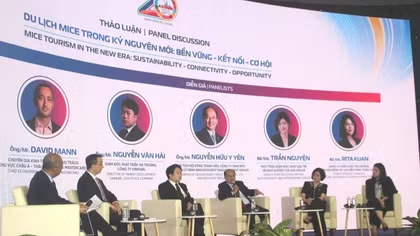
For the MICE tourism sector in both Ho Chi Minh City and Vietnam, growth can no longer be driven merely by increasing the number of events; instead, the focus must shift to enhancing the value of each event and the competitiveness of each destination.

Potential of ethnic minority women's football

Potential of ethnic minority women's football

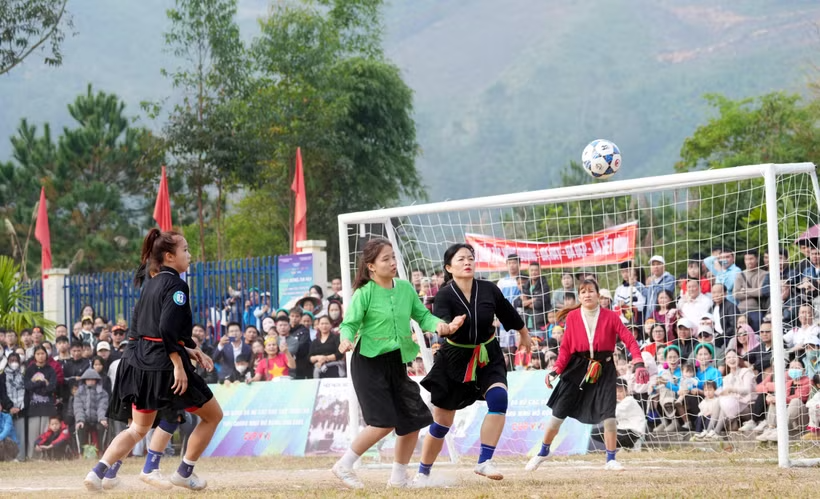
Women’s football movements in local communities have been quietly growing, but they’ve now built up enough momentum to inspire organisers to launch the first Vietnam Ethnic Minority Women’s Football – VTV Cup in 2026.

Phong Nha - Ke Bang named among Vietnam's 11 most beautiful destinations

Phong Nha - Ke Bang named among Vietnam's 11 most beautiful destinations

According to the magazine, boat trips into Phong Nha Cave and strolls through Paradise Cave (both family-friendly) offer a tantalising glimpse of their astonishing scale, but the real adventure lies deeper within the park, where cavers wade through underground rivers and weave among stalagmites.

Tourism seeks new growth momentum under Resolution 26

Tourism seeks new growth momentum under Resolution 26

Tourism effectiveness should be measured not only by visitor numbers and revenue, but also by spending, length of stay, repeat visits, job quality, visitor satisfaction and environmental carrying capacity, said experts.

Vietnam welcomes nearly 2 million international visitors in August, up 19.7% from July and 18.4% year-on-year. (Illustrative photo: VNA)

Vietnam tourism maintains strong growth, expands international markets

The National Statistics Office under the Ministry of Finance reported that Vietnam welcomed nearly 2 million international visitors in August, up 19.7% from July and 18.4% year-on-year. The figure represented 63.6% of the tourism sector’s full-year target of 25 million arrivals.

First ladies of Vietnam, Myanmar visit Van Phuc silk village

First ladies of Vietnam, Myanmar visit Van Phuc silk village

Ngo Phuong Ly, the spouse of General Secretary of the Communist Party of Vietnam Central Committee and President To Lam, said the two countries share similarities in silk weaving and can enrich their cultural heritage through exchanges and experience sharing.