Coconut candy - the edible chewing gum

Palm sugar and coconut combine in one of Vietnam's most famous bonbons.

    Known nationwide as the coconut capital, the southern province of Ben Tre amazes visitors with a menu full of coconut dishes, such as co hu dua (the soft edible part at the top of the coconut tree), duong dua (coconut larvae) and the most famous one, coconut candy made out of coconut flesh.
    Known nationwide as the coconut capital, the southern province of Ben Tre amazes visitors with a menu full of coconut dishes, such as co hu dua (the soft edible part at the top of the coconut tree), duong dua (coconut larvae) and the most famous one, coconut candy made out of coconut flesh.
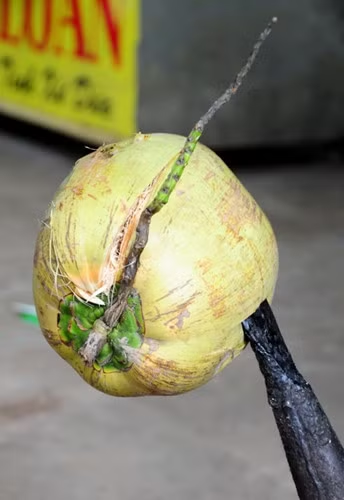
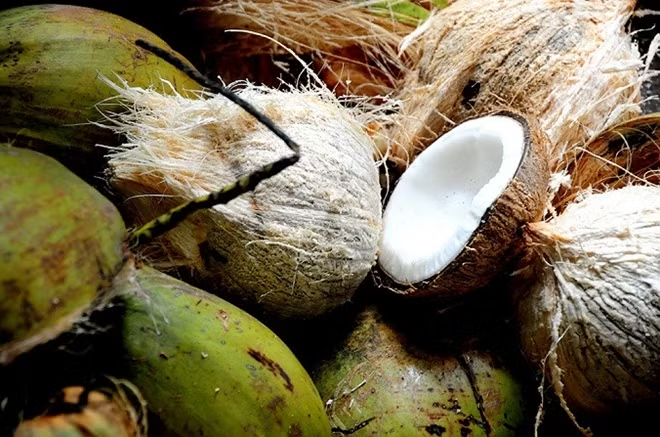
    Coconut candy has its root firmly set in a district of Ben Tre, and can be traced back decades. Originally, the candy was made simply with coconut milk cooked with sugar. The coconuts chosen to make candy are the old ones with harder and thicker flesh. The young ones give better coconut water and wax-like flesh.
    Coconut candy has its root firmly set in a district of Ben Tre, and can be traced back decades. Originally, the candy was made simply with coconut milk cooked with sugar. The coconuts chosen to make candy are the old ones with harder and thicker flesh. The young ones give better coconut water and wax-like flesh.
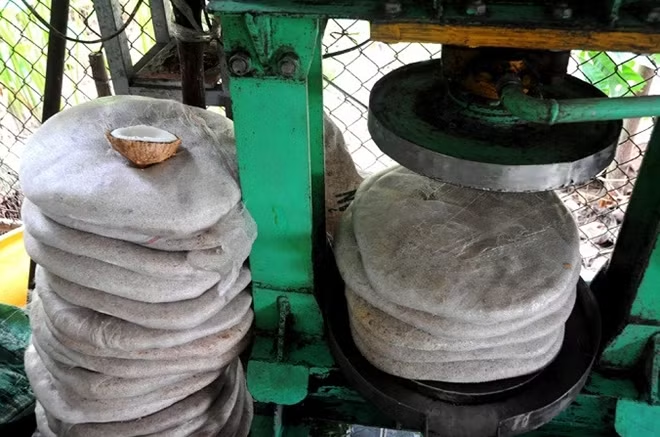
    As time has past, coconut candy has evolved. The flesh used to be hand-grated and hand-squeezed before we had machines. Now minimal human labor is required. The coconut milk is used to make the candy, and the leftover is put back into the pressing machine to be squeezed once more for coconut oil, a product used in the cosmetics industry.
    As time has past, coconut candy has evolved. The flesh used to be hand-grated and hand-squeezed before we had machines. Now minimal human labor is required. The coconut milk is used to make the candy, and the leftover is put back into the pressing machine to be squeezed once more for coconut oil, a product used in the cosmetics industry.
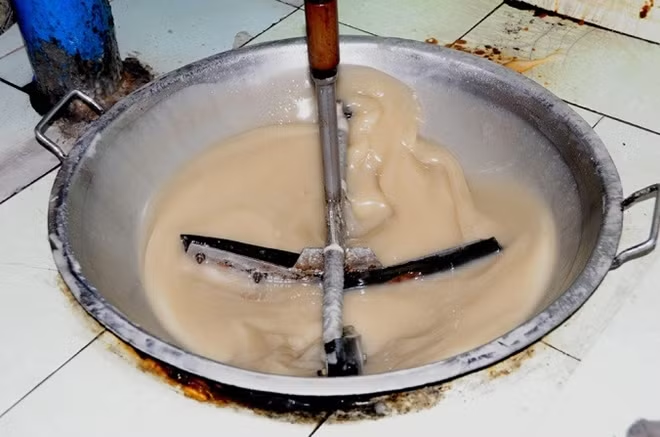
    Freshly squeezed coconut milk is then mixed with sugar-cane (or palm) sugar and boiled. Before we had machines, laborers needed to stand by a burning stove to stir the mixture for hours.
    Freshly squeezed coconut milk is then mixed with sugar-cane (or palm) sugar and boiled. Before we had machines, laborers needed to stand by a burning stove to stir the mixture for hours.
    The coconut shells are not wasted but dried and used to fuel the boiling process. A closed circle with all parts of the coconut put to good use.
    The coconut shells are not wasted but dried and used to fuel the boiling process. A closed circle with all parts of the coconut put to good use.
    After being boiled, the coconuts and sugar are reduced to lumps of raw candy.
    After being boiled, the coconuts and sugar are reduced to lumps of raw candy.
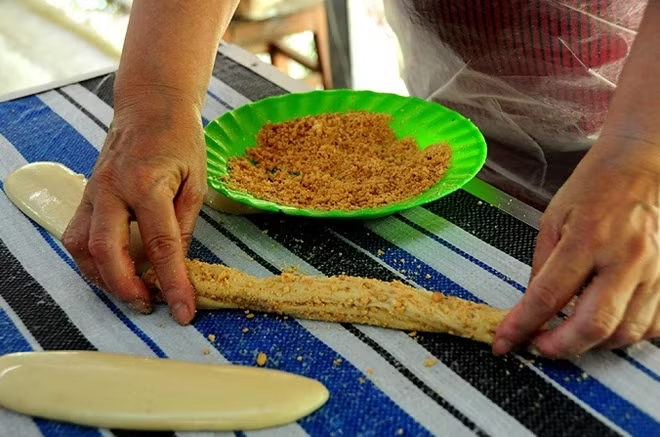
    The coconut candy is mixed with roasted peanut on site to serve visitors.
    The coconut candy is mixed with roasted peanut on site to serve visitors.
    The end-product: fresh coconut candy.
    The end-product: fresh coconut candy.
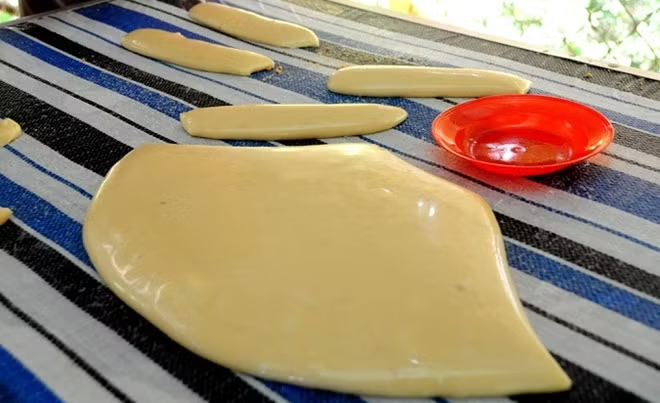
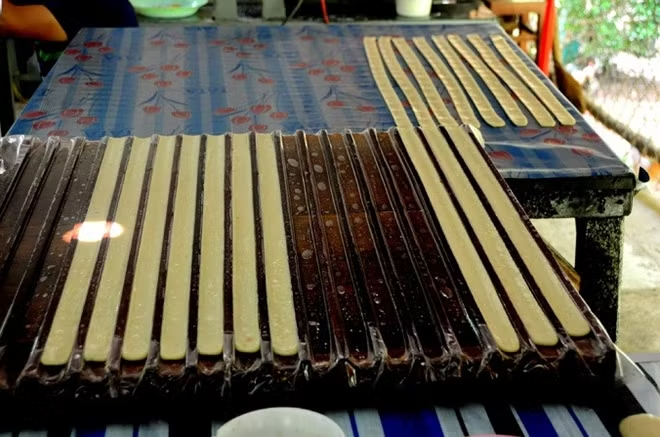
    For long-term use, fresh coconut candy is poured into molds and left to dry.
    For long-term use, fresh coconut candy is poured into molds and left to dry.
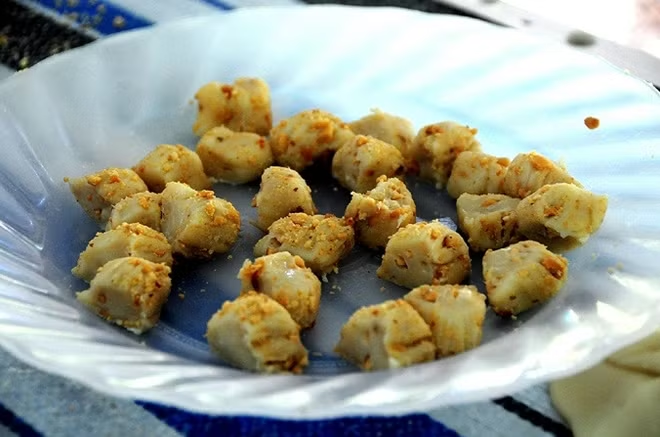
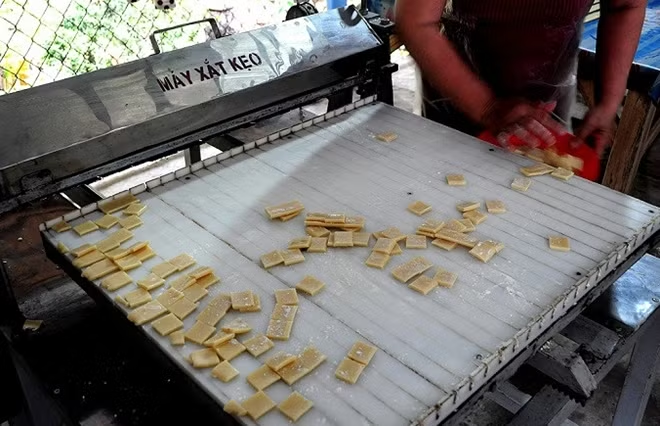
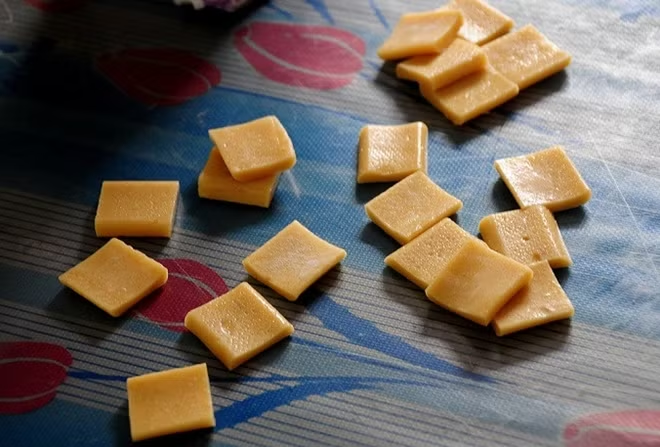
    The candy is then cut into bite-size pieces.
    The candy is then cut into bite-size pieces.
    The perfect coconut candy must be both dry and chewy, but doesn’t stick to the teeth, though this annoyance is sometimes a good way to kill time.
    The perfect coconut candy must be both dry and chewy, but doesn’t stick to the teeth, though this annoyance is sometimes a good way to kill time.
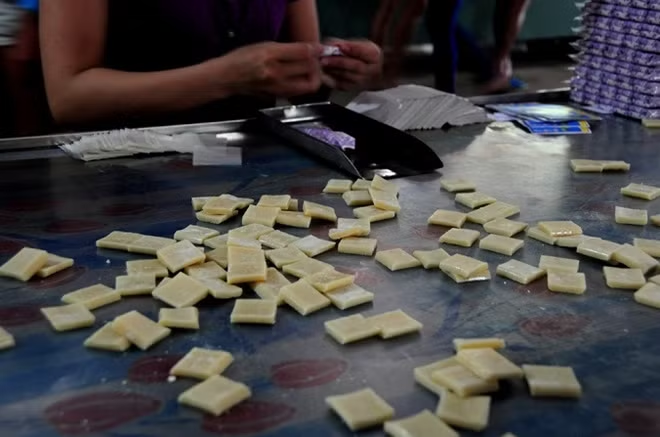
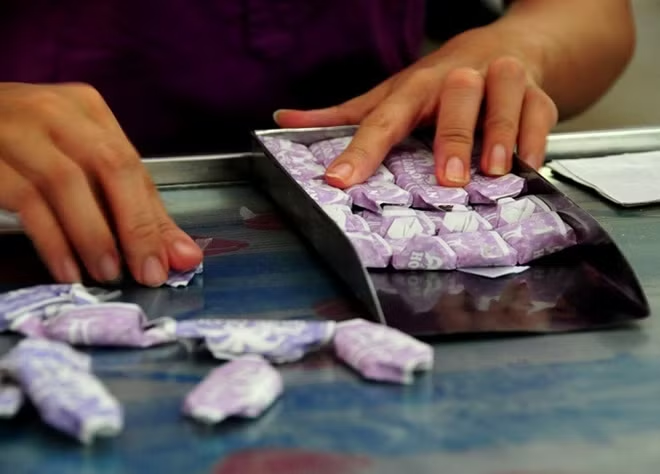
    Coconut candy used to be wrapped in paper, but this method caused the candy to melt and spoil. The candy makers in Ben Tre came up with a thin transparent banh trang (rice papers) to wrap the sweet treats instead. The banh trang is totally edible, however, many still think it’s a normal wrapper and throw it away.
    Coconut candy used to be wrapped in paper, but this method caused the candy to melt and spoil. The candy makers in Ben Tre came up with a thin transparent banh trang (rice papers) to wrap the sweet treats instead. The banh trang is totally edible, however, many still think it’s a normal wrapper and throw it away.
    These days coconut candy comes in many flavors with durian, pineapple leaves and coffee added to offer customers more choice. At VND30,000 (US$1.3) for a 300 gram pack of candy, it is one of the most popular souvenirs in Ben Tre and has earned a reputation outside the province.
    These days coconut candy comes in many flavors with durian, pineapple leaves and coffee added to offer customers more choice. At VND30,000 (US$1.3) for a 300 gram pack of candy, it is one of the most popular souvenirs in Ben Tre and has earned a reputation outside the province.
    VOV

    Other News

    Vietnam secure berth at FIFA U17 World Cup 2026 for first time

    Vietnam secure berth at FIFA U17 World Cup 2026 for first time

    Vietnam national U17 football team secured a place at the FIFA U17 World Cup 2026 for the first time after defeating United Arab Emirates national U17 football team 3-2 on in the final Group C match of the AFC U17 Asian Cup 2026 in Saudi Arabia on early May 14 (Vietnam time).

    Vietnam’s most beautiful railway station twins with French counterpart

    Vietnam’s most beautiful railway station twins with French counterpart

    A twinning agreement between Da Lat Railway Station in Vietnam and Trouville-Deauville Railway Station in France was signed at the French Embassy in Vietnam on May 7, creating new opportunities for cooperation in station management and operations, as well as cultural and tourism promotion between the two sides.

    Hanoi gains two more craft villages in World Crafts Cities network

    Hanoi gains two more craft villages in World Crafts Cities network

    The recognition of Chuyen My and Son Dong craft villages as members of the World Crafts Cities network represents international acknowledgement of the cultural value, artisanal techniques, creativity and sustainable vitality of Vietnam’s traditional craft villages, he said.

    Thang Long - Hanoi Festival 2026 to return in September

    Thang Long - Hanoi Festival 2026 to return in September

    Co-hosted by the municipal People’s Committee, the Department of Culture and Sports, and domestic and foreign agencies, the whole spectacle is meant to honour the city’s millennia-old heritage while reafffirming its strategy of establishing culture as a development engine.

    Spreading Vietnamese cultural identity in digital space

    Spreading Vietnamese cultural identity in digital space

    In the context of deep international integration, cultural identity serves as both a “shield” against assimilation and a defining marker of a nation’s image. Protecting and promoting uniquely Vietnamese cultural values has therefore become a pressing task, particularly in an increasingly complex digital environment.

    ITE HCMC 2026 to promote Vietnam’s tourism on global map

    ITE HCMC 2026 to promote Vietnam’s tourism on global map

    With its large scale, the ITE HCMC 2026 aims to promote tourism cooperation between Vietnam and priority markets such as Northeast Asia, Western Europe, North America, Southeast Asia, and Oceania while also boosting visitor arrivals from the Indian market

    Vietnamese puppetry seeks renewal amid preservation challenges

    Vietnamese puppetry seeks renewal amid preservation challenges

    Although widely regarded as a cultural “speciality” attracting tourists, Vietnamese puppetry is facing multiple challenges in preservation and development, requiring renewed efforts to both safeguard its identity and adapt to contemporary cultural currents.

    Project on digital transformation in cultural sector approved

    Project on digital transformation in cultural sector approved

    By 2030, the project targets the establishment of shared digital platforms across 100% of cultural sectors. All digitised cultural heritage will be standardised under the national data framework and shared in accordance with regulations, while 80% of public digital heritage assets are expected to receive digital identifiers to clarify ownership and management, encouraging organisations and individuals to do the same and support market development.

    Vietnam eyes becoming region’s leading tourism destination

    Vietnam eyes becoming region’s leading tourism destination

    Vietnam has in recent years undergone a notable transformation in its tourism development strategy, placing a strong emphasis on nature-based and eco-tourism. This shift is not merely aligned with global trends, but represents a necessary step towards safeguarding valuable natural resources, while appealing to a growing segment of environmentally conscious travellers.