Cosmopolitan, an international magazine for women, has picked up 19 places to visit in Vietnam in 2019, to help you figure out how to get the most out of your next trip to the S-shaped country.

Pauline Lacanilao, a writer from Cosmopolitan magazine named Saigon Opera House the number one location among the 19 places to visit in Vietnam in 2019.
“Ho Chi Minh City, also known as Saigon, has a lot to offer in the way of historical and cultural sites. So even if you aren’t interested in watching a show here, it’s still worth stopping by as you explore downtown Saigon,” Pauline Lacanilao wrote.
Ranking the second is Bitexco Financial Tower. If you’re looking for a more modern marvel, stop by the Bitexco Financial Tower in Ho Chi Minh City. With 68 floors, this skyscraper, one of the tallest buildings in Vietnam, has an observation deck that offers a 360-degree view of the city.
Dong Khoi Street is the 3rd in the list. For a sensory experience of Saigon’s vibrant energy, stop by Dong Khoi Street day or night. The lights, sounds, smells, and tastes are dizzying in the best way. Whether you want to shop, enjoy a break at a cute cafe, admire the colonial architecture, or take in the beauty of the Saigon River—Dong Khoi Street has got you covered.
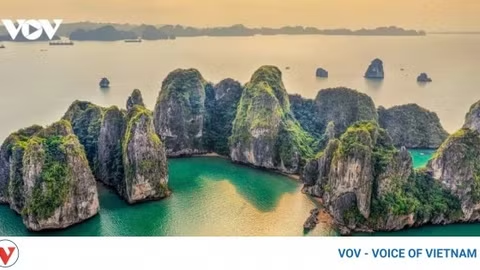
Saigon Opera House is followed by Bitexco Financial Tower, Dong Khoi street, Evason Ana Mandara, Pilgrimage Village, Kon Tum, Hang Nga’s Guesthouse, Bach Ma National Park, Phong Nha-Ke Bang National Park, Ha Long Bay, etc.
Vietnam welcomed more than 12 million foreign holidaymakers in the first ten months of 2018, a 22.4% increase from the same period last year, according to the Vietnam National Administration of Tourism (VNAT). In October alone, the number of foreign visitors arrived in Vietnam is estimated at 1.2 million, representing an on-year jump of 17.6%.
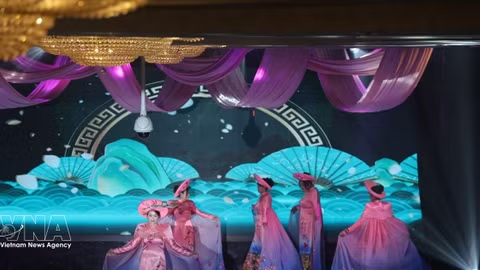
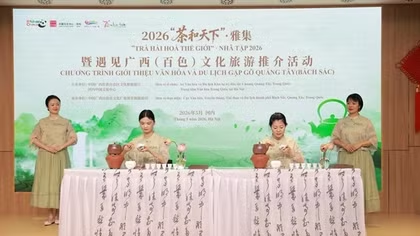
The Tea for Harmony: Yaji Cultural Salon and tourism promotion event themed Meet Guangxi (Baise) brought distinctive Chinese cultural features to the capital through activities organised by the Department of Culture and Tourism of Guangxi Zhuang Autonomous Region.
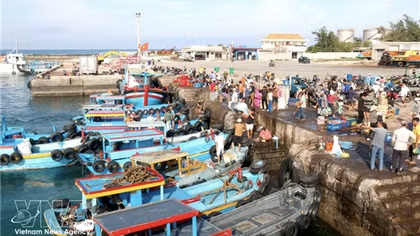
The Phu Quy special zone, an island district off the south-central coast of Vietnam, is capitalising on its strong marine economy potential, particularly in tourism and fisheries, to transform the island’s economy, improve local livelihoods and position itself as a key sea-based economic hub.

Vietnam national U17 football team secured a place at the FIFA U17 World Cup 2026 for the first time after defeating United Arab Emirates national U17 football team 3-2 on in the final Group C match of the AFC U17 Asian Cup 2026 in Saudi Arabia on early May 14 (Vietnam time).
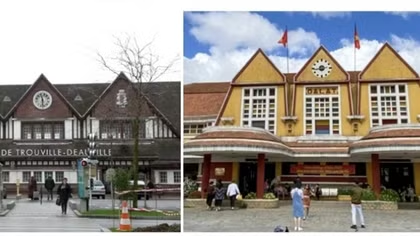
A twinning agreement between Da Lat Railway Station in Vietnam and Trouville-Deauville Railway Station in France was signed at the French Embassy in Vietnam on May 7, creating new opportunities for cooperation in station management and operations, as well as cultural and tourism promotion between the two sides.
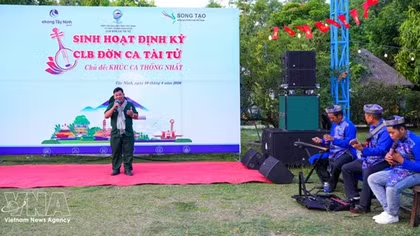
As Tay Ninh identifies tourism as a crucial economic pillar, integrating Don ca tai tu into tourism offerings is seen as a strategic move.
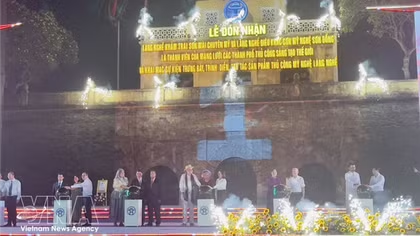
The recognition of Chuyen My and Son Dong craft villages as members of the World Crafts Cities network represents international acknowledgement of the cultural value, artisanal techniques, creativity and sustainable vitality of Vietnam’s traditional craft villages, he said.
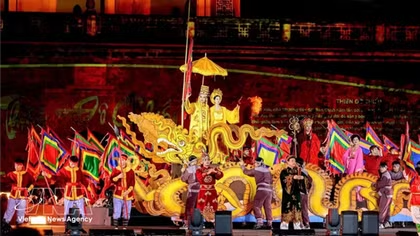
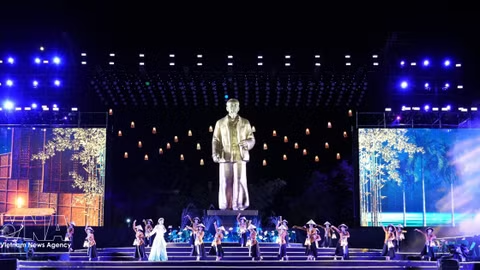
Co-hosted by the municipal People’s Committee, the Department of Culture and Sports, and domestic and foreign agencies, the whole spectacle is meant to honour the city’s millennia-old heritage while reafffirming its strategy of establishing culture as a development engine.
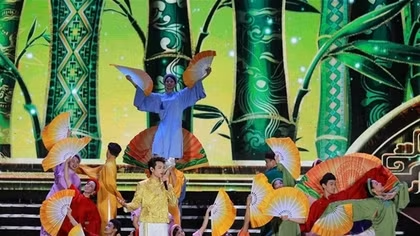
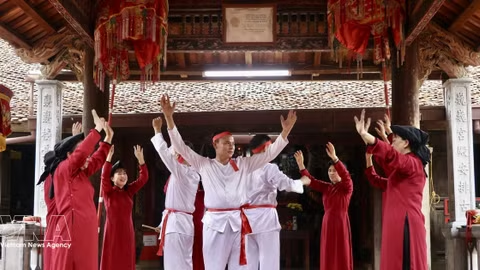
In the context of deep international integration, cultural identity serves as both a “shield” against assimilation and a defining marker of a nation’s image. Protecting and promoting uniquely Vietnamese cultural values has therefore become a pressing task, particularly in an increasingly complex digital environment.
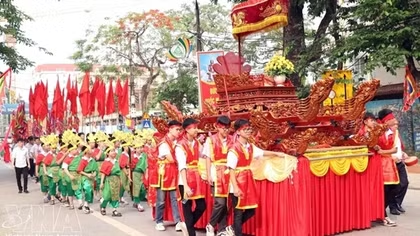
In Ho Chi Minh City, leaders, residents, overseas Vietnamese, students and pupils offered incense and flowers in tribute to the Hung Kings and Nguyen Huu Canh, credited with opening up the Sai Gon – Gia Dinh area.
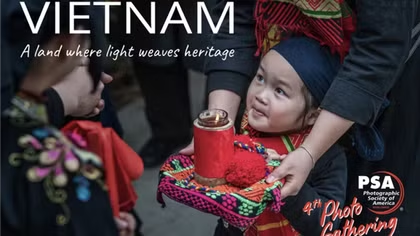
The gathering offers a platform for photographers worldwide to exchange ideas and share experiences, marking the fourth edition of the event.
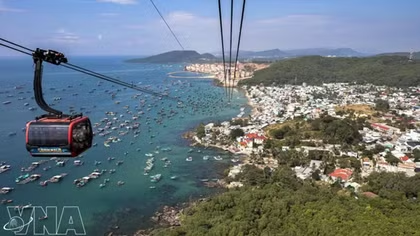
A survey by booking.com shows that around 33% of Vietnamese respondents are planning short domestic trips for the upcoming Hung Kings Commemoration Day and Reunification Day (April 30)–May Day (May 1) holidays, while 22% are opting for longer international journeys compared to last year.
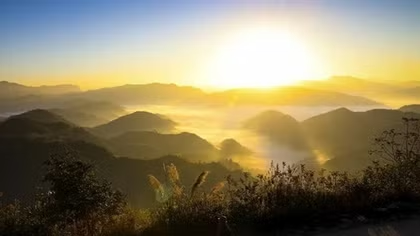
In the first quarter of 2026, Vietnam posted the fastest tourism growth in the region, welcoming 6.76 million international arrivals, up 12.4% year-on-year. Key markets such as China, the Republic of Korea and Taiwan continued to underpin demand.
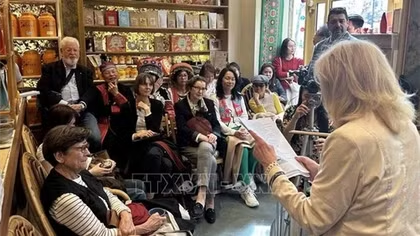
From the moment attendees entered the exhibition space in Paris, visitors were enveloped in a harmonious blend of sensory experiences, with the delicate aroma of tea, the robust notes of coffee, and the vivid colours of Vietnamese handicrafts.
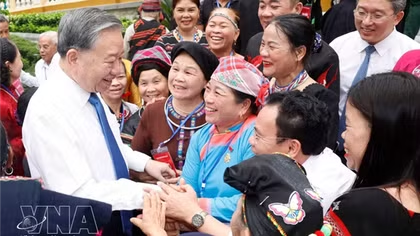
Only when culture is nurtured basing on the self-awareness and pride of each individual can it exist and develop sustainably, remarked Party General Secretary and State President To Lam.
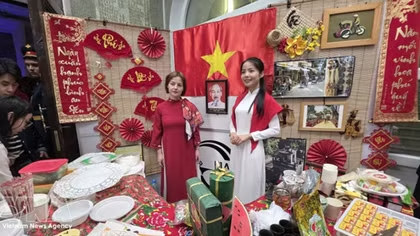
This year’s festival drew the participation of 15 representatives from embassies in Russia, along with a large number of students from countries, including Vietnam, Kazakhstan, Uzbekistan, Tajikistan, Kyrgyzstan and Haiti.
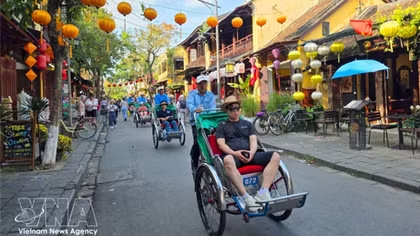
With its large scale, the ITE HCMC 2026 aims to promote tourism cooperation between Vietnam and priority markets such as Northeast Asia, Western Europe, North America, Southeast Asia, and Oceania while also boosting visitor arrivals from the Indian market
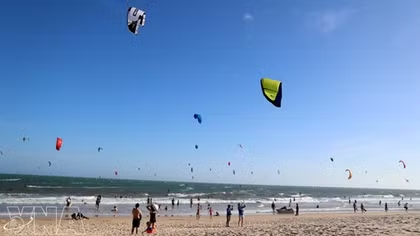
Mui Ne’s appearance in global trend reports signals a new movement, where destinations can no longer rely solely on scenery but must tell their own stories and craft distinctive and personalised experiences.
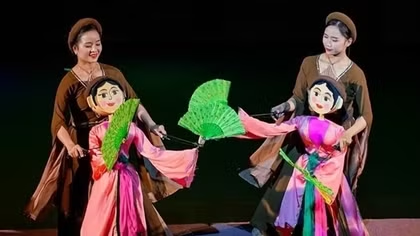
Although widely regarded as a cultural “speciality” attracting tourists, Vietnamese puppetry is facing multiple challenges in preservation and development, requiring renewed efforts to both safeguard its identity and adapt to contemporary cultural currents.
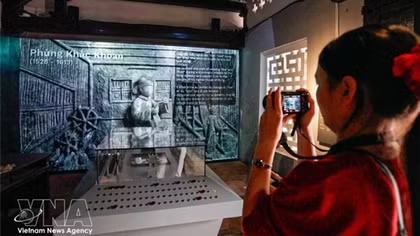
By 2030, the project targets the establishment of shared digital platforms across 100% of cultural sectors. All digitised cultural heritage will be standardised under the national data framework and shared in accordance with regulations, while 80% of public digital heritage assets are expected to receive digital identifiers to clarify ownership and management, encouraging organisations and individuals to do the same and support market development.
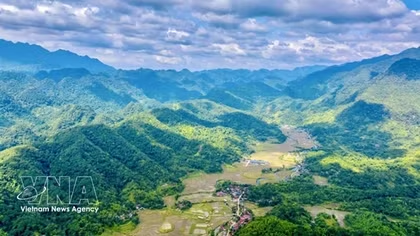
Vietnam has in recent years undergone a notable transformation in its tourism development strategy, placing a strong emphasis on nature-based and eco-tourism. This shift is not merely aligned with global trends, but represents a necessary step towards safeguarding valuable natural resources, while appealing to a growing segment of environmentally conscious travellers.