From poor man’s meal to dish fit for kings

If you are going to the central city of Hue, don’t miss the imperial citadel, the tombs, the Thien Mu pagoda and, of course, the clam rice, a mouthwatering delicacy that began as a humble breakfast dish for the poor centuries ago.

The dish took shape at a time when most residents of Vietnam’s former imperial capital could not afford regular morning meals. Most families would simply cook up leftovers and whatever else they could get their hands on. That always meant the rice left over from the previous night’s dinner was a key ingredient. Traditionally, more rice is cooked than needed so people can sleep on a full stomach after a hard day, or in case a guest arrives unexpectedly at dinner time.
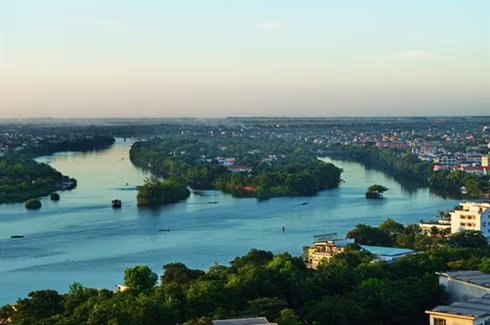
Vital ingredient: Con Hen, where the best clams in the city are found.
Vital ingredient: ​Con Hen, where the best clams in the city are found.

Tired of eating leftover rice with fish sauce mixed with red chilli powder, local residents started collecting clams from the Huong River and boiling and adding them to the rice. The clams dramatically improved the quality of their breakfast – it had a lovely flavour, it improved the nutritional value because of the protein in the clams, and the hot liquid from boiling clams softened the hard, dry leftover rice, making it easier to eat.

People did not stop there, though. Soon they started adding vegetables and herbs that they grew in their gardens, which included thin slices of taro plants – a plant pig breeders grew to feed the animals - or banana plantain and a type of mint leaves. Locals believed that for food to be healthy, its yin (cold) and yang (hot) elements must be in harmony, so all ingredients were chosen accordingly. Thus, taro plant gave the dish the yang element to neutralize the strong yin from the clams.

Soon, clam rice - made with leftover rice, clams, thin slices of taro or banana plantain, mint, Hue shrimp paste, salt and chilli powder - became a popular breakfast dish among residents of old Hue. The popularity of the dish drew the attention of chefs serving the Nguyen Dynasty (1802-1945), who introduced it in the royal cuisine with the addition of pork crunches and steamed peanuts.

Some documents claim the royal clam rice also incorporated some expensive ingredients that are no longer available today, making it a dish fit for the kings. But with these additions, the documents said, the clam rice made in the royal kitchens lost the original flavours and smells of the layperson’s clam rice, which actually tastes better. Leftover rice, for instance, is an irreplaceable item as hot, newly cooked rice further swells when mixed with hot clam stock and ruins the taste.

In the other hand, rice cooked the previous night does not dissolve in the clam stock. Similarly, pork crunches fried in pig fat – cooking oils were not popular then and refined peanut oil was unaffordable – and left for a while absorb more pig fat and taste better.

As time passed, improved living standards and the influence of the royal kitchens made steamed peanuts and pork crunches key ingredients in the basic clam rice.

Today, Hue clam rice is served all day in street food stalls across the city, especially on Nguyen Cong Tru and Truong Dinh streets, and in Con Hen, an islet on Huong River where the best clams in the city are served. The dish is also found on the menus of specialty restaurants and in almost all hotel kitchens.
VNA

Other News

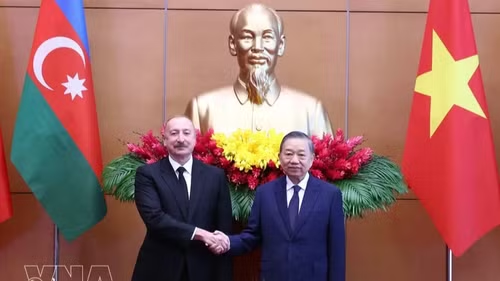
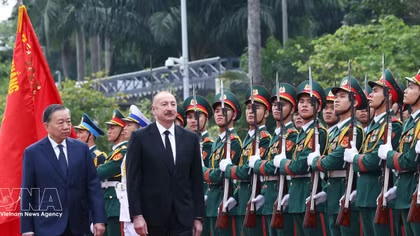
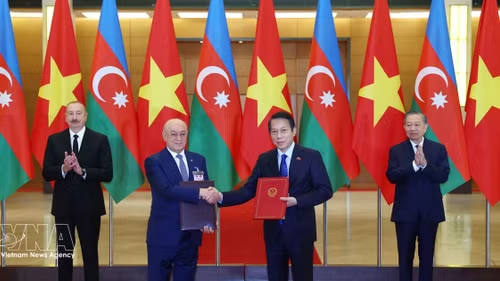
Welcome ceremony held for Azerbaijani President

Welcome ceremony held for Azerbaijani President

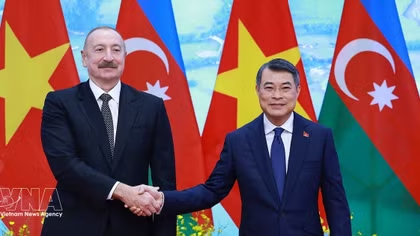
The two leaders walked along the red carpet to the ceremonial podium as military bands performed the national anthems of Azerbaijan and Vietnam. They then reviewed the Guard of Honour of the Vietnam People's Army and introduced members of their respective high-level delegations.

Vietnam builds on APEC 2026 outcomes towards hosting APEC 2027: Foreign minister

Vietnam builds on APEC 2026 outcomes towards hosting APEC 2027: Foreign minister

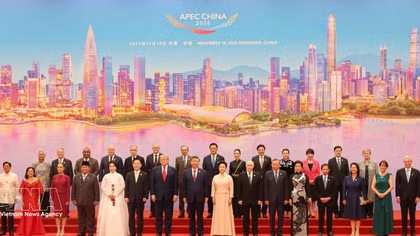
Vietnam participated in APEC 2026 not only as an active and proactive member but also with the responsibility of the host of APEC 2027. Its engagement reflects the country's consistent foreign policy, ambitious and sustainable development goals in the new era, and desire to make greater contributions to the common future of the Asia-Pacific region.

Vietnam, China share experience in personnel affairs

Vietnam, China share experience in personnel affairs

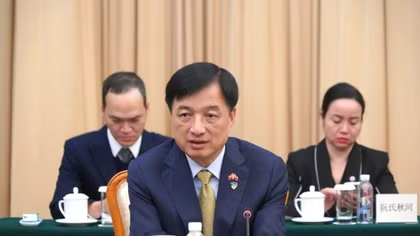
Vietnam treats human capital, science - technology, innovation and digital transformation as drivers of national development, prompting new demands for personnel affairs, including the need for officials with technical expertise and stronger leadership capabilities across Party committees, Head of the Communist Party of Vietnam (CPV) Central Committee’s Organisation Commission Nguyen Duy Ngoc said, adding that Vietnam wants to draw on Yunnan’s experience in this regard.

NA President meets Azerbaijani President in Hanoi

NA President meets Azerbaijani President in Hanoi

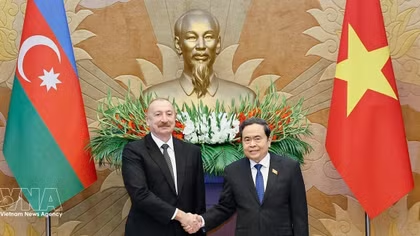
The two sides vowed to expand parliamentary cooperation, education - training, culture, tourism and people-to-people exchanges, and ease travel and cooperation for their citizens and companies, for the two peoples’ interests and for peace, stability and development.

Azerbaijan seeks expanded cooperation with Vietnam

Azerbaijan seeks expanded cooperation with Vietnam

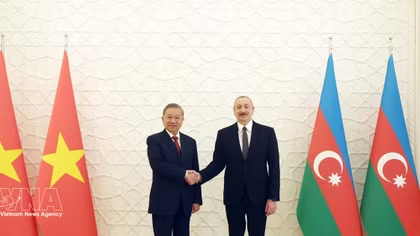
Vietnam is one of Azerbaijan’s important partners in Southeast Asia, Azerbaijani President Ilham Aliyev said, expressing his desire to further develop bilateral cooperation across fields in line with their traditional friendship and established strategic partnership.

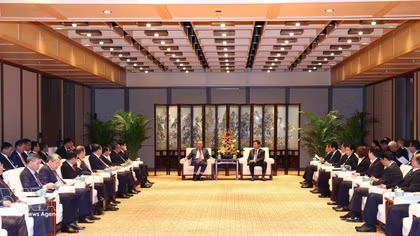
Top leader attends Vietnam-Southwest China Development Strategy Connectivity Forum

Top leader attends Vietnam-Southwest China Development Strategy Connectivity Forum

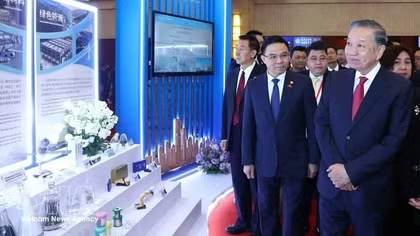
Southwest China has a vast market and increasingly strong industrial and innovation capabilities, while Vietnam boasts a dynamic economy, extensive international integration and seaports connecting it to major global shipping routes. By bringing into full play these advantages, the two sides can create shared development opportunities, linking inland areas with the sea, China with Southeast Asia and both with global markets.

Madame Ngo Phuong Ly attends gathering of APEC's spouses

Madame Ngo Phuong Ly attends gathering of APEC's spouses

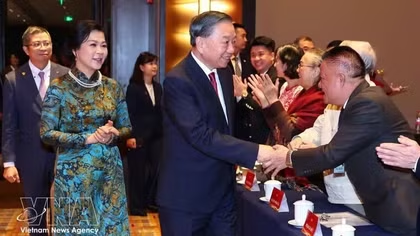
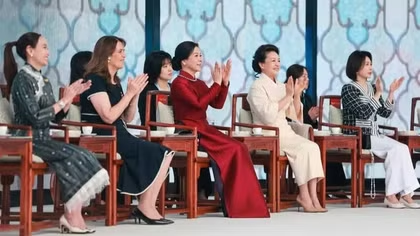
Madame Ngo Phuong Ly, spouse of General Secretary of the Communist Party of Vietnam Central Committee and President To Lam, attended a gathering of spouses of leaders and representatives of APEC economies in Shenzhen on November 19, using the occasion to spread Vietnam’s image on the sidelines of the APEC 2026 Economic Leaders’ Week.

President of Azerbaijan and spouse begin official visit to Vietnam

President of Azerbaijan and spouse begin official visit to Vietnam

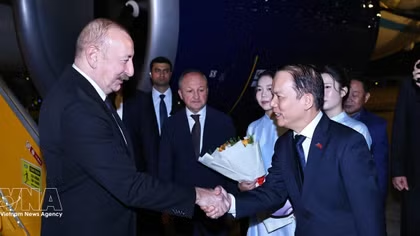
President of Azerbaijan Ilham Aliyev’s visit carries particular significance. It offers high-ranking leaders a chance to reinforce political trust, review the full range of relationship-building directions and set concrete steps to realise the Strategic Partnership, adding new momentum across politics, diplomacy, economy, trade, investment, energy, education, science-technology, and people-to-people exchanges.

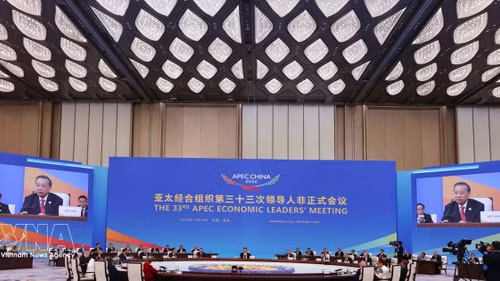
Vietnam officially takes over as APEC 2027 host

Vietnam officially takes over as APEC 2027 host

The top Vietnamese leader noted that hosting APEC for the third time marks an important milestone in Vietnam’s integration and development. The country pledges to be a dedicated host, listening to build consensus and connecting members to expand cooperation and deliver lasting results.