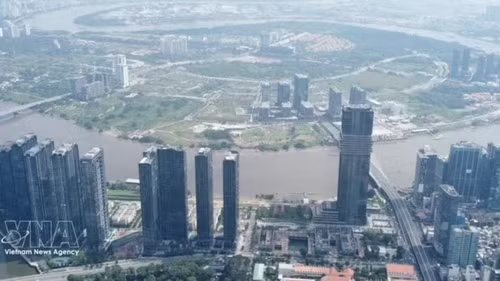
The ICT (information and communication technology) reference framework for the development of smart cities (version 1.0) has been issued by the Ministry of Information and Communications as a basis for localities and businesses to develop smart city projects.

The ICT reference framework is a set of functions to link smart regions, applications, and urban services to ensure consistency and synchronisation in smart city development, according to Decision 829/QD-BTTTT on the ICT reference framework issued on May 31 by the Ministry of Information and Communication.
The ICT reference framework for developing smart cities is the basis for building and implementing smart city plans, smart city development investment projects, plans on leasing smart city services and the ICT architecture of smart city development.
Building of the ICT reference framework is one of the tasks included in Decision 950/QD-TTg on sustainable development of smart cities in 2018-25, issued on August 1, 2018 by the Prime Minister.
Priority fields and services for smart city development include smart city management, water systems, waste collection and treatment systems, grids, lighting systems, traffic systems, education and healthcare.
In recent years, many provinces and cities in Vietnam have started plans to build pilot projects on smart city development such as Ho Chi Minh City, Hanoi, Da Nang, Thua Thien-Hue, Binh Duong, Da Lat, Thai Nguyen, Hai Phong, Quang Ninh and Can Tho.
However, the localities have not been able to draw upon standards like the ICT reference framework in the process of developing their smart city projects.
Vietnam has taken the first steps on the journey towards smart cities, according to Savills Vietnam, a foreign property service provider in Vietnam.
“At the city level, there have efforts made by local authorities to create a smart city, including utilities, power and public facilities,” said Matthew Powell, Director of Savills Vietnam’s Hanoi branch.
“At the project level, developers and buyers have shown strong interest in how to make buildings safe and smart from the management and operation perspective, including security systems, internet connectivity, electricity and environmental factors. Within the home itself, we of course have internet of things and integrated smart assistants provided by third parties.”
Powell believes learning, research and testing are necessary to building smart cities successfully and sustainably.
“In my opinion, it is about looking regionally and working with an international consultant to find the right direction and products for development.”
“Developers have a lot of options regarding where and how smart technology could be applied, but not all of them are useful and suitable for the property and Vietnamese customers. As such, developers need to do their research and examine these smart features to find the right supplier for hardware and software, with long term technological impacts for the property product, the project and customers, not a frivolous gimmick for marketing or sales purposes.”
According to Jones Lang LaSalle Incorporated (JLL) Vietnam, a commercial real estate services firm, the smart townships launched by developers have achieved high sale rates. Since it first launch in 2016, the Hanoi property market has welcomed more than 10,000 smart units with a sale rate of approximately 70 percent on an average.
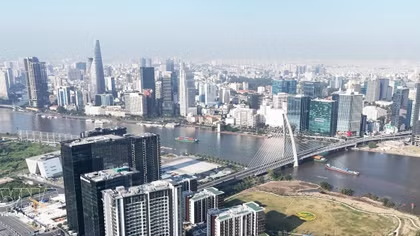
JLL expects more smart township projects to come to the market in the near future. These include BRG Smart City in Hanoi, Ecopark Smart City in Huong Yen province, Dragon Smart City in Da Nang and Thu Thiem Eco Smart City in HCM City.
These projects promise all types of convenience – smart landscape planning with advanced IT infrastructure to build a smart and eco-friendly neighbourhood where residents can enjoy integrated services within a walkable distance.
Undeniably, smart townships are gaining significant popularity that has directly led to a series of changes in Vietnam’s property market. While it could be a good option for investors and individual buyers, the latter should be aware that different developers are providing different technology solutions to varying degrees.
The Vietnamese property market is starting its journey where both public and private sectors are changing the urban landscape to incorporate technology that could enhance the living environment, it said.
JLL expects that for future real estate developments, “stay smart” will not just be a trend but also a “must-have”.
The adoption of new technology platforms generates new and more easily-accessible market data, which is key for overall real estate transparency in Vietnam, it said.
HCM City and Hanoi have some of the youngest and most tech-savvy populations in the world. The country’s population is young, with 70 percent of its citizens below the age of 35, while they are highly literate with a 98.5 percent literacy rate among those aged 15 to 35, JLL said.
The Visa Consumer Payment Attitudes Study found that 84 percent of Vietnamese respondents shop online at least once a month, trailing closely behind Thailand at 85 percent. Developers of new residential projects are leveraging this trend and building smart townships to attract young buyers, according to JLL.

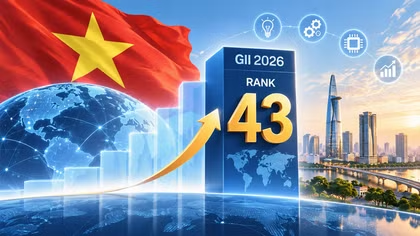
By 2030, Vietnam aims to rank among the world’s top 40 in the GII; raise total social investment in R&D to at least 2% of GDP, with non-State funding accounting for over 60%; increase international scientific publications by an average of 10% annually; and raise the number of patent applications and granted patents by an average of 16-18% annually.

The State Bank of Vietnam set the daily reference exchange rate at 25,624 VND/USD on October1, down 3 VND from the previous day.

Quang Ninh's GRDP grew 15.04% in the third quarter, also leading the country.

Vietnam needs flexible incentives and specialised green financial instruments, stronger inter-sectoral coordination, improved local governance capacity and a more complete MRV data system, said Ramla Khalidi, Resident Representative of the United Nations Development Programme (UNDP) in Vietnam.
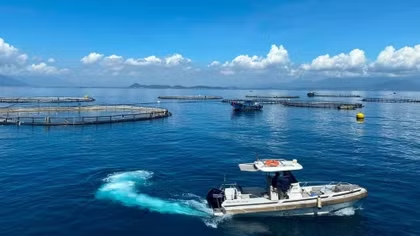
As the country enters a new development phase with greater demands for stronger marine-economy growth, institutional bottlenecks have emerged and need to be addressed.
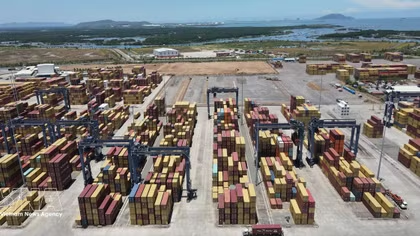
Experts from the Institute of Vietnam and World Economy under the Vietnam Academy of Social Sciences noted the quality of recent growth as the high growth rate has been recorded against an increasingly higher comparative base.

Vietnam's Halal exports remain modest at around 900 million USD a year, accounting for less than 1% of the global market. Most exports are still raw agricultural and seafood products. Only around 1,000–1,300 Vietnamese businesses obtained or maintained Halal certification during 2024–2026.
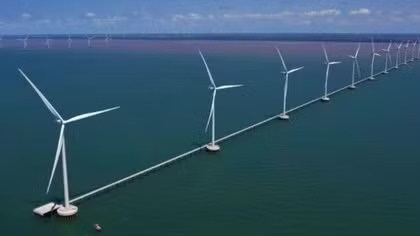
Vietnam needs a comprehensive policy framework to remove legal and procedural bottlenecks and create conditions for offshore wind power projects to access long-term investment capital, helping to unlock the country’s substantial offshore wind potential, said insiders.
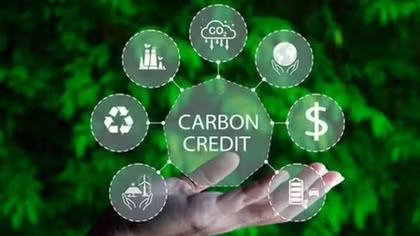
Under a decision of the municipal People’s Committee on establishing an inter-agency working group, departments and agencies are responsible for identifying facilities subject to greenhouse gas inventories, developing emissions-reduction plans and studying projects capable of generating carbon credits.
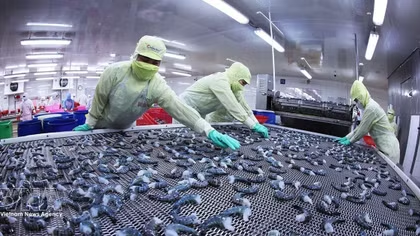
According to data from the Vietnam Customs cited by the Vietnam Association of Seafood Exporters and Producers (VASEP), shrimp exports reached 478.5 million USD in August, up 4.2% from the same month last year. The eight-month total stood at 3.3 billion USD, representing a year-on-year increase of 12%.

Vietnam is seen as a potential market, with considerable room for growth in real estate, particularly commercial property, compared with some regional markets. Strong Vietnam-Russia ties and opportunities to establish foreign-invested enterprises are also considered favourable for Russian investors.
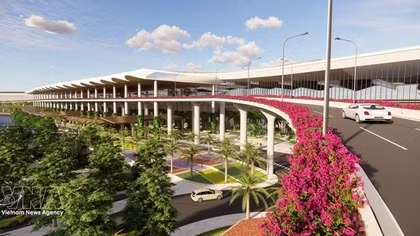
For 2021-2030, the Civil Aviation Authority of Vietnam proposed bringing forward the investment in a parallel taxiway system and a connecting taxiway north of Runway No. 2 at Phu Quoc International Airport, in order to connect with the aircraft maintenance and repair facility (hangar) planned for the northern area of the airport.
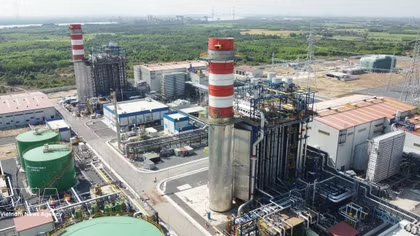
For LNG-fired power to fulfill its role in Vietnam’s energy transition, bottlenecks in institutions, infrastructure, electricity pricing, PPAs, power dispatch and financing must be addressed together.
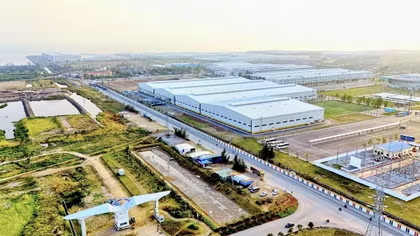
From policy and infrastructure to industrial real estate, Vietnam’s FDI advantages are broadening towards a more integrated production ecosystem, offering investors a stronger combination of conditions for high-value, technology-intensive and long-term projects.
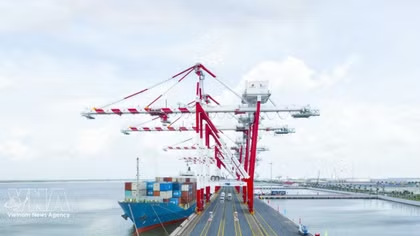
As trade expands, systemic bottlenecks across transport networks, warehousing, ports, border gates, and industrial zones are becoming more apparent. Experts emphasise the need to shift from a fragmented, project-by-project approach toward strategic management structured around trade corridors and integrated supply chains.

The company will buy non-performing loans from credit institutions and foreign bank branches, recover and dispose of debts and collateral, restructure loans and support lenders in resolving bad debts.
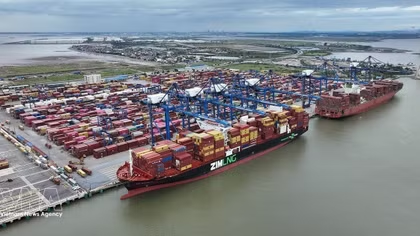
Do Ngoc Hung, Trade Counsellor and head of the Vietnam Trade Office in the US, said what stands out is not only the growth in trade volume but also the increasingly deep economic ties between the two countries.
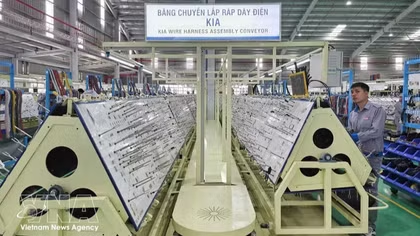
According to the Ministry of Finance, State budget revenue in the first eight months of 2026 was estimated at 2.02 quadrillion VND (77.7 billion USD), equivalent to 80% of the annual estimate and up 16% year-on-year. Domestic revenue reached 1.75 quadrillion VND, accounting for 86.6% of total revenue and rising 16.6%.

Hanoi aims to achieve average annual export growth of at least 12% during 2026-30, with the city seeking to diversify export markets, boost high-tech and value-added products and reduce reliance on traditional markets.
Great reliance on the state budget and conventional bank lending could put considerable pressure on the financial system, making it necessary to develop new and sustainable sources of funding from both domestic and international capital markets.