With a population numbering more than 40,000, the Cham ethnic minority group in Binh Thuan province boasts a treasure trove of cultural heritage items. Over the years, the province has paid due regard to promoting Cham culture in tandem with developing local tourism.
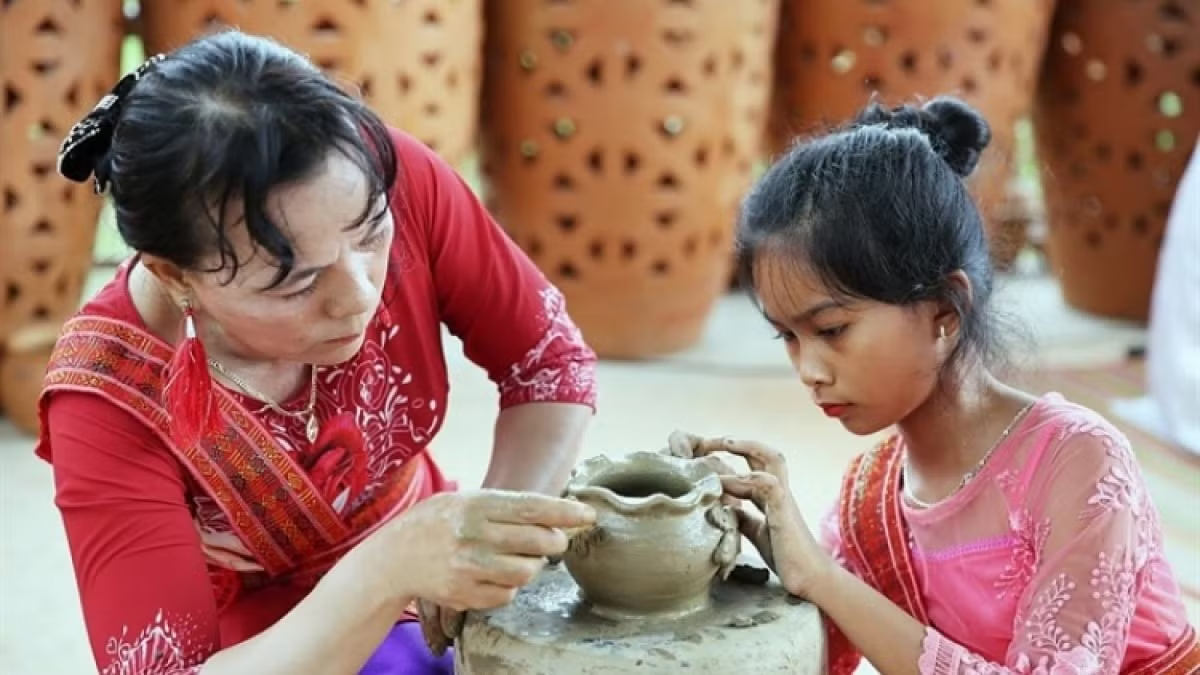
Cham pottery products are mainly household utensils, religious objects, and fine art works, including jars, pots, trays, and vases. They are made by women and viewed as an expression of individual creativity based on the knowledge transmitted within the community. Instead of using a turntable, the women revolve around the piece to shape it.
The pottery is not glazed but fired outdoors with firewood and straw for seven to eight hours, at a temperature of about 800 degrees Celsius. Raw materials (clay, sand, water, firewood and straw) are collected locally, and the knowledge and skills are passed on to younger generations within families through hands-on practice.
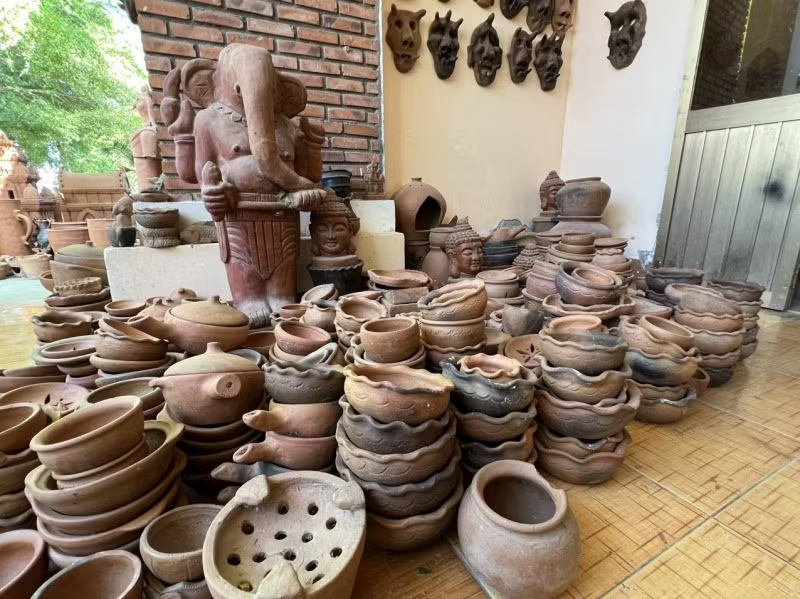
Earlier, a ceremony was held in the south-central province of Ninh Thuan on June 15 to receive the UNESCO certificate, which inscribes the art of pottery making of Cham people on the list of intangible cultural heritage in need of urgent safeguarding.
The UNESCO recognition is an affirmation of Vietnam’s cultural identity in the world’s cultural heritage treasure. It also shows respect for women’s role in the modern society. From now on, the art becomes a common asset of humanity.
Meanwhile, with their industriousness and endless creativity, local residents have successfully grown many high-yield grape varieties, turning Ninh Thuan into a magnet of experience tourism for travelers.
Within the framework of the project on developing community-based tourism on heritage in Bau Truc village, carried out by the British Council in collaboration with the Department of Culture, Sports and Tourism of Ninh Thuan province, villagers have provided with guidance, training to welcome tourists, introduce products, teach tourists how to make cakes and traditional dishes of Cham people.
The art of pottery making of Cham ethnic people was inscribed in the list of intangible cultural heritage in need of urgent safeguarding by UNESCO on November 29.
All-level authorities, sectors, and the entire society are asked to join hands in upholding UNESCO-recognised cultural heritage pieces as well as others so that the fine traditional cultural values will accompany the country on the development path and contribute to the world’s culture.
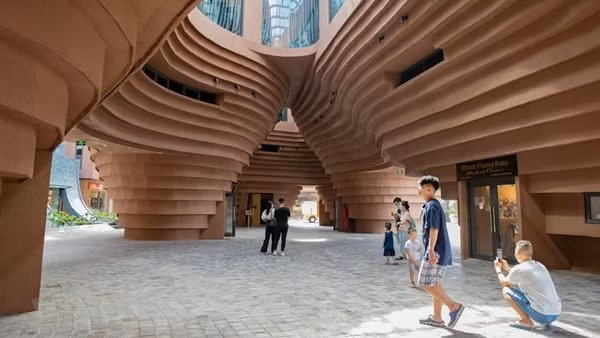 Exploring Bat Trang pottery museum in Hanoi: In photos
 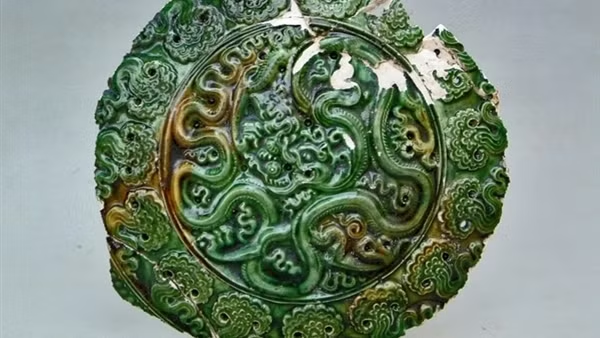 Seminar deciphers Thang Long's culture through imperial pottery