Endowed with natural advantages for sea and island tourism, the northeastern province of Quang Ninh is working to promote its tourism brand abroad and become an international tourism hub by 2030.
The province has called for investment in infrastructure projects and mobilised resources for key tourism services like ports, wharfs, accommodations, high-end resorts and entertainment complexes, among others.
An array of projects have created a new look for the province, including BIM Group’s 230-hectare Ha Long Marina urban area. The group earmarked US$2 billion for the complex, which comprises Halong Marine Plaza shopping centre, a CGV cinema, a children’s entertainment zone, beaches, pools, apartment blocks and rows of shop houses and townhouses.
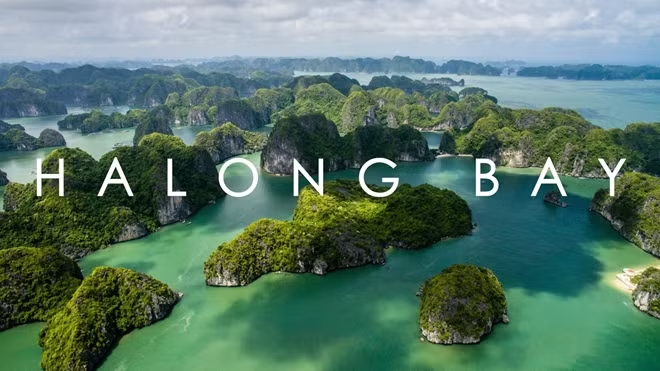 |
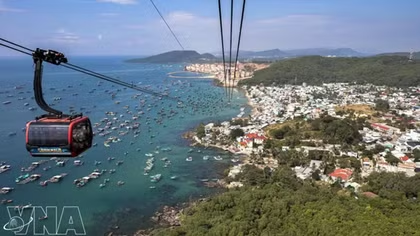
Meanwhile, the 214-hectare Sun World Ha Long Complex developed by SunGroup has become one of the main local tourist attractions. Riding a sea-crossing cable line or the 215m-high Sun Wheel in the complex, visitors can enjoy the view of Ha Long Bay, Ha Long city, Bai Chay bridge and Cuu Luc river.
Real estate developer Vingroup has invested in different types of properties in Ha Long, ranging from healthcare, resorts and shopping malls to new urban areas. Following the opening of its Vincom shopping mall in 2015, the group has poured more than VND12 trillion (US$528 million) into the 64ha Vinhomes Dragon Bay urban area and VND1.135 trillion in the 384-room Vinpearl Ha Long resort. The group is also building a Vinmec hospital in the city.
FLC Group has also given a facelift to the city with its FLC Ha Long complex with a golf course, villas, condotels and a modern international conventional centre spanning 224 hectares in Hong Hai, Hong Ha, Ha Lam and Ha Trung wards. The group plans to construct a 50-storey twin tower complex in the city’s centre.
According to Chairman of the provincial People’s Committee Nguyen Duc Long, Quang Ninh has been successful in attracting investors by removing bottlenecks in administrative procedures. The investors have significantly contributed to changing the face of Quang Ninh’s tourism.
Under the Overall Plan for Tourism Development, the province prioritises developing two projects, namely Van Don International Airport and a resort complex with a casino.
Along with expanding the sea and island eco-tourism area of Van Don, Co To and Mong Cai, the province is branching out tourism products like Yen Duc countryside tourism, Binh Lieu eco-tourism, discovering Ha Long Bay by kayaks and seaplanes and Ha Long Park.
Also, tourism promotion campaigns in key markets like China, Japan, Singapore and the UK have been paid due attention, coupled with human resource training in line with the standards set by the Ministry of Culture, Sports and Tourism.
Local tourism has created a lasting impression on both domestic and foreign investors. They said they were impressed by the excellent products, vibrant cultural activities and hospitable and professional tour guides.
Last year, some 9.87 million tourists visited the province, including 4.28 million foreigners. More than 70% of the tourists took in sea and island tours. The province raked in nearly VND18 trillion (US$792 million) from tourism.
In the first five months of the year, the province served more than 7 million visitors, including 2.5 million foreigners. It expects to welcome 12 million holidaymakers by the end of this year, 5 million of them are foreigners.
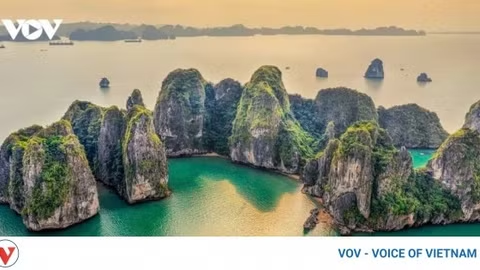
The province has a coastline of more than 250 kilometres and some 2,000 islets, two-thirds of the total in Vietnam. The spectacular stretch of coast connects the UNESCO-recognised World Heritage Site of Ha Long Bay with majestic natural scenery, Bai Tu Long Bay, Van Don and Co To islands and Tra Co beach with Cat Ba National Park in the northern port city of Hai Phong.
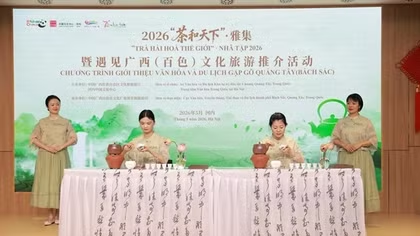
The Tea for Harmony: Yaji Cultural Salon and tourism promotion event themed Meet Guangxi (Baise) brought distinctive Chinese cultural features to the capital through activities organised by the Department of Culture and Tourism of Guangxi Zhuang Autonomous Region.
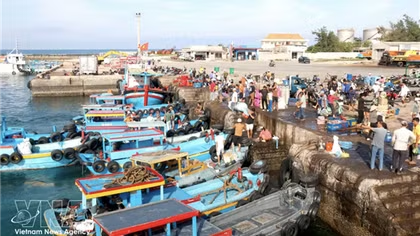
The Phu Quy special zone, an island district off the south-central coast of Vietnam, is capitalising on its strong marine economy potential, particularly in tourism and fisheries, to transform the island’s economy, improve local livelihoods and position itself as a key sea-based economic hub.

Vietnam national U17 football team secured a place at the FIFA U17 World Cup 2026 for the first time after defeating United Arab Emirates national U17 football team 3-2 on in the final Group C match of the AFC U17 Asian Cup 2026 in Saudi Arabia on early May 14 (Vietnam time).
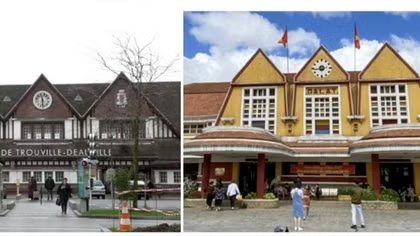
A twinning agreement between Da Lat Railway Station in Vietnam and Trouville-Deauville Railway Station in France was signed at the French Embassy in Vietnam on May 7, creating new opportunities for cooperation in station management and operations, as well as cultural and tourism promotion between the two sides.
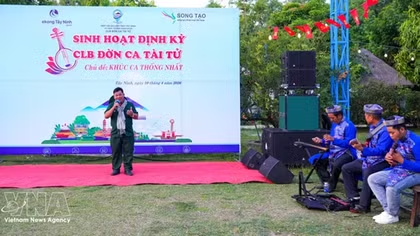
As Tay Ninh identifies tourism as a crucial economic pillar, integrating Don ca tai tu into tourism offerings is seen as a strategic move.
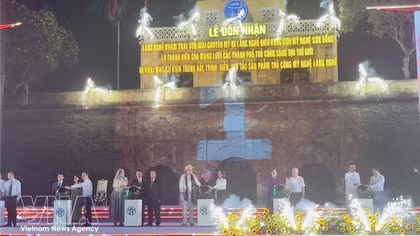
The recognition of Chuyen My and Son Dong craft villages as members of the World Crafts Cities network represents international acknowledgement of the cultural value, artisanal techniques, creativity and sustainable vitality of Vietnam’s traditional craft villages, he said.
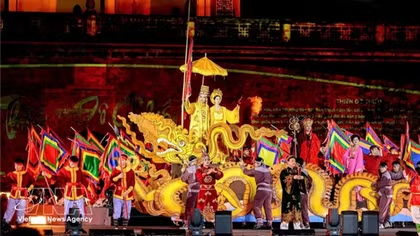
Co-hosted by the municipal People’s Committee, the Department of Culture and Sports, and domestic and foreign agencies, the whole spectacle is meant to honour the city’s millennia-old heritage while reafffirming its strategy of establishing culture as a development engine.

In the context of deep international integration, cultural identity serves as both a “shield” against assimilation and a defining marker of a nation’s image. Protecting and promoting uniquely Vietnamese cultural values has therefore become a pressing task, particularly in an increasingly complex digital environment.
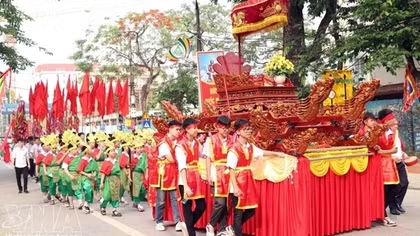
In Ho Chi Minh City, leaders, residents, overseas Vietnamese, students and pupils offered incense and flowers in tribute to the Hung Kings and Nguyen Huu Canh, credited with opening up the Sai Gon – Gia Dinh area.
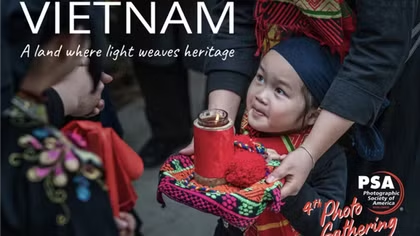
The gathering offers a platform for photographers worldwide to exchange ideas and share experiences, marking the fourth edition of the event.
A survey by booking.com shows that around 33% of Vietnamese respondents are planning short domestic trips for the upcoming Hung Kings Commemoration Day and Reunification Day (April 30)–May Day (May 1) holidays, while 22% are opting for longer international journeys compared to last year.

In the first quarter of 2026, Vietnam posted the fastest tourism growth in the region, welcoming 6.76 million international arrivals, up 12.4% year-on-year. Key markets such as China, the Republic of Korea and Taiwan continued to underpin demand.

From the moment attendees entered the exhibition space in Paris, visitors were enveloped in a harmonious blend of sensory experiences, with the delicate aroma of tea, the robust notes of coffee, and the vivid colours of Vietnamese handicrafts.
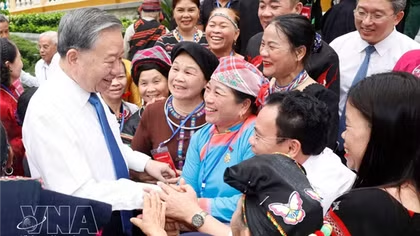
Only when culture is nurtured basing on the self-awareness and pride of each individual can it exist and develop sustainably, remarked Party General Secretary and State President To Lam.
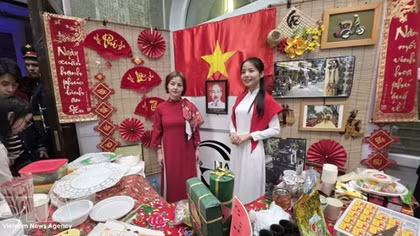
This year’s festival drew the participation of 15 representatives from embassies in Russia, along with a large number of students from countries, including Vietnam, Kazakhstan, Uzbekistan, Tajikistan, Kyrgyzstan and Haiti.
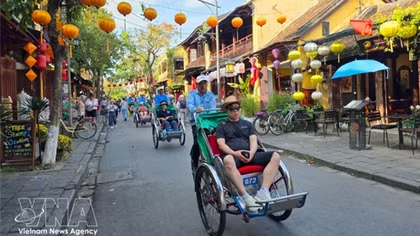
With its large scale, the ITE HCMC 2026 aims to promote tourism cooperation between Vietnam and priority markets such as Northeast Asia, Western Europe, North America, Southeast Asia, and Oceania while also boosting visitor arrivals from the Indian market
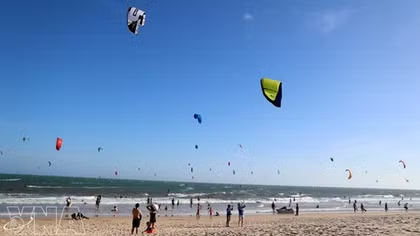
Mui Ne’s appearance in global trend reports signals a new movement, where destinations can no longer rely solely on scenery but must tell their own stories and craft distinctive and personalised experiences.

Although widely regarded as a cultural “speciality” attracting tourists, Vietnamese puppetry is facing multiple challenges in preservation and development, requiring renewed efforts to both safeguard its identity and adapt to contemporary cultural currents.
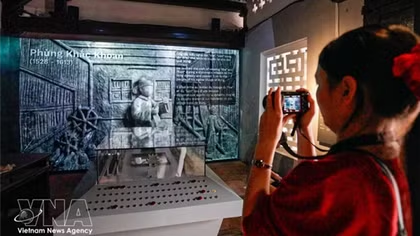
By 2030, the project targets the establishment of shared digital platforms across 100% of cultural sectors. All digitised cultural heritage will be standardised under the national data framework and shared in accordance with regulations, while 80% of public digital heritage assets are expected to receive digital identifiers to clarify ownership and management, encouraging organisations and individuals to do the same and support market development.
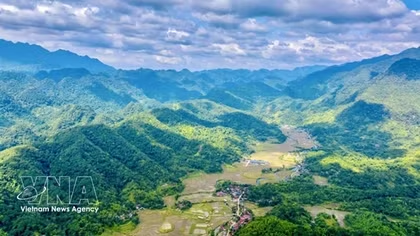
Vietnam has in recent years undergone a notable transformation in its tourism development strategy, placing a strong emphasis on nature-based and eco-tourism. This shift is not merely aligned with global trends, but represents a necessary step towards safeguarding valuable natural resources, while appealing to a growing segment of environmentally conscious travellers.