The Hue Monuments Conservation Center will restore, rehabilitate and embellish the relic of Thai Mieu (Royal Temple of Nguyen Lords), one of the five important temples of the Nguyen Dynasty, which was built to worship the ancestors of the emperors.
In the first phase of the restoration project, the Hue Monuments Conservation Center will renovate and restore some parts of the relic including Thai Mieu, Thai Mieu gate, system of courtyards, paths, trees, lawns and technical infrastructure.
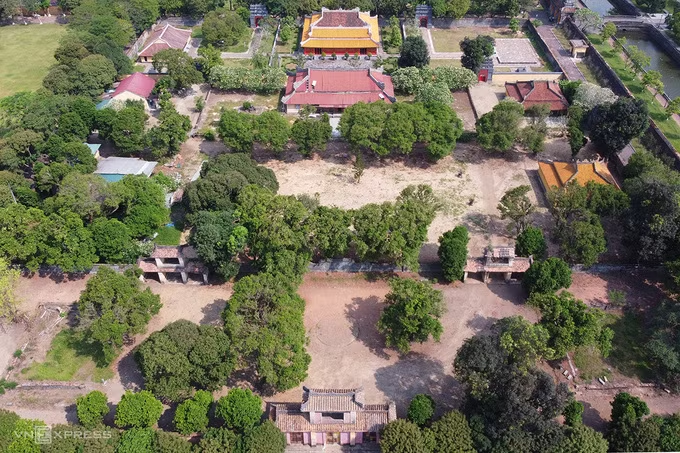
According to Mr. Phan Thanh Hai, Director of the Thua Thien Hue Provincial Department of Culture and Sports, Thai Mieu is a complex of works built under Emperor Gia Long’s reign.
Although it has undergone many renovations, the works in relic complex, especially Thai To Mieu, still retains the typical architectural and decorative style under Emperor Gia Long’s reign. The plan of restoring and rehabilitating the works must preserve these unique characteristics.
In particular, Thai Mieu will be restored and rehabilitated based on the viewpoint of keeping the original components of the relic intact, which means preserving architectural vestiges and landscapes under Emperor Gia Long’s reign.
The restoration will make changes and additions to decorations, colors and materials under the later emperors; downgrade wrongly positioned items, components and details during the previous repair and expansion projects; while prioritizing the use of traditional engineering materials and processes.
In the process of designing, renovating and constructing, the original elements constituting the monument must be strictly respected. Parts and components must be restored only when there is enough scientific data. The replacement and restoration of architectural components must ensure the authenticity, aesthetics as well as processing technology of materials.
According to Dr. Phan Tien Dung, Chairman of the Thua Thien Hue Provincial Historical Science Association, Thai Mieu is such a large-scale architectural work that it is necessary to study additional options on materials and technical issues.
At the same time, priority should be given to the use of traditional materials and manual methods. During the implementing process, it is essential to ensure keeping the approved principles, and having accurate scientific data.