Ancient people believed that sacred animals were the embodiment of natural phenomena, mysterious forces, or supernatural power that could influence human life and the universe.
In fact, the animals were created by people and used as cultural symbols, with the aim of presenting their beliefs, religions and perspectives on life. These objects were described in mythology, legend and presented on statues, paintings, worshipped objects and architecture.
Vietnamese people created or adopted the symbols from other countries, which reflect the spiritual life of people, as well as their cultures. Each animal presents its notion of cultural identity and its characteristics from historical periods.
The Vietnam National Museum of History is the home to the most valuable collection of Vietnam’s sacred animals, dating from the Dong Son culture (the first millennium BC) to the Nguyen dynasty (1802-1945).
The collection includes 100 objects featuring 27 types of sacred animals, such as dragons, kylins, tortoises, phoenixes and 12 oriental zodiac animals.
In Vietnam, the image of dragon appeared at the beginning of the period of states of Van Lang - Au Lac (2524-179 BC) and became sacred symbols related to the ancestors and origin of the nation through the legend that Vietnamese people are children of the Fairy and the Dragon. Through more than 2,000 years, dragons in Vietnamese art have changed in style as they displayed different traits. They also became symbols of royal power in feudal times.
While the dragon symbolizes powerful men in feudal times, the phoenix represented the queen and princess, as well as noble women. In Vietnam, the phoenix has become a popular decorative motif in different arts throughout the history. Legend has it that the phoenix is the king of the birds, bearing dozens of good characteristics and virtues. The phoenix only appears in peaceful times, and disappears in wartime. Therefore, its image symbolizes peace and prosperity.
The dog is familiar to the spiritual life of the Vietnamese people to expel evil spirits and pray for blessings; stone dog statues were often placed in front of residential houses, temples and prefectures. Dog statues used in houses were smaller than those found at religious monuments. Also, the dog worshipping custom has been popular in many regions.
The tiger is an animal associated with Mother Goddess worship. In the temples of this religion can be found altars containing five tigers with five colors – yellow, blue, red, black, white – which characterize five basic elements and the five guardians of five directions. The tiger is also considered to be the lord of the forest. For this reason, it has been deified and become a symbol of power and strength.
The tiger was often depicted on the front door of ancient buildings, as was the kylin. The kylin is also called by a different name in Vietnam: nghe. Since the Tran dynasty (1225-1400), the kylin was used as a symbol of royal power, as Confucianism began to develop. The kylin also appeared in many different art forms, with different styles and meanings.
Few people know that the snake is also a sacred object in Vietnamese culture. It rarely appears in artworks. It is a symbol of the god of water, and is representative of the two opposite characteristics: bad and good. In the Vietnamese original belief, snake worshipping was very popular, connected with the rivers and water of agricultural populations. The image of a couple of snakes twisted together were symbols of fertility, as well as birth and life.
There are four countries in Asia that use images of the 12 zodiac animals to represent the 12 months in the lunar calendar, based on the cycle of lunar phases. Zodiac animals have been used to consider those factors related to human fate and life. Vietnam is the only country that used the cat to represent the fourth zodiac animal, instead of sheep or rabbits as in Japan, China and Korea. That is an example of the creativity and opinions of the Vietnamese people when they adopted a cultural symbol from other countries.
Many mythical animals from Vietnamese culture were adopted from foreign countries during centuries of trading. Pegasus is a prime example. It was adopted beginning in the 15th century when traders from Western countries came to Vietnam and ordered local craftsmen to produce Pegasus statues.
Local craftsmen expressed their interest in this object. They began creating similar products, based on samples provided by Westerners. Beside a winged horse, Vietnamese people even created winged fish, lions and tigers.
Garuda is a mythical bird creature originating in India and often described as a humanoid bird, which symbolized truth and power. In Vietnam, garuda appeared in Champa arts as a Hindu divinity, Vishnu's vehicle, from the Ly dynasty (11th-13th centuries) to the Mac dynasty (16th century). The garuda image became a sacred creature depicted as a guardian at the stupa corners, supporting pedestals or ridge poles for pagoda roofs. Garuda is also a representative of the cultural interaction and exchanges between Dai Viet (the former name of Vietnam) and Champa cultures.
Some mythical animals adopted from China are named bo lao (Pulao), si van (Chiwen), tich ta (Jiaotu) and thao thiet (taotie). From these original versions, Vietnamese people created objects bearing their own names and used them in their ordinary lives.
Pulao likes loud sounds. Pulao was also very afraid of the whale. Whenever the whale struck him, pulao would roar loudly. Therefore, ancient people often made bells with a pulao on top, and a bell-striker in the shape of a whale.
Jiaotu is legendary and characterized by his laziness, as he often sleeps in a curled-up position and does not like to be bothered by strangers in his domain. Jiaotu was often carved on front doors to protect the lord of the house and warn strangers not to break in.
Taotie is a creature that was very gluttonous. Therefore, taotie is described as being frontal, with only its head and two forelegs showing, making it both fierce and having a superb appearance.
Originally, taotie was displayed on dinner-sets in order to remind people to eat and drink politely. Afterwards, taotie appeared on several different utensils and became a symbol of prosperity and sustainability.
Chiwen is a marine animal described as having a bending and circular tail. Whenever chiwen's tail beats the waves, it starts to rain. That's why the chiwen has often been placed on ridge poles of roofs, in a bid to guard against fire. In Vietnam, chiwen is also called kim, and has different appearances, such as a dragon-headed beast or a dragon with a fish tail.
The carp transforming into a dragon is part of mythology, seen through the generations in Vietnam. It became part of the tale of the carp that passed the dragon gate, related to Confucian school examinees. The tale reflects the persistence of examinees on the path to success, and the theme "carp transforming to dragon" appeared beginning in the Tran dynasty (13th-14th century).
The crane is a sacred Taoist creature, symbolising nobility and immortality. However, the crane image has become a common symbol of Buddhism because of the acculturation of religions in Vietnam. The crane has often been described as standing on the tortoise's back or as the divinity of a fairy, which is a common decorative theme in communal houses.
In Buddhist mythology, the monkey is a sincere disciple of Buddha. In Vietnam, many statues of monkeys were found at the Chuong Son stupa site in the northern province of Nam Dinh which dates to the Ly dynasty. The statues of the three wise monkeys, include one covering his eyes, one covering his mouth and one covering his ears. These refer to the three principles of Buddhism: see no evil, hear no evil and speak no evil.
Pictures of the most valuable collection of Vietnam’s sacred animals at the Vietnam National Museum of History in Hanoi:
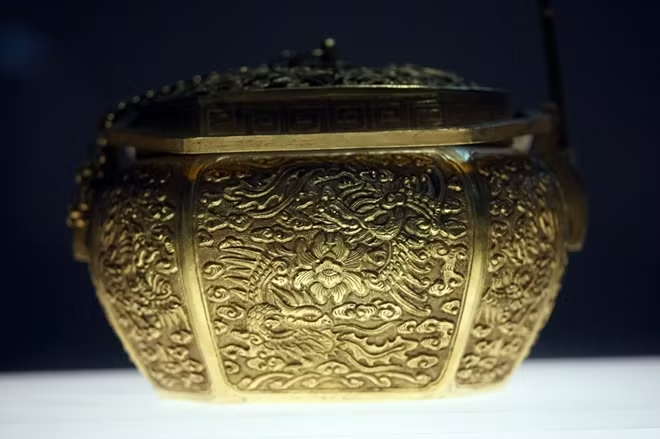 |
| Phoenixes on a betel box of the Nguyen Dynasty |
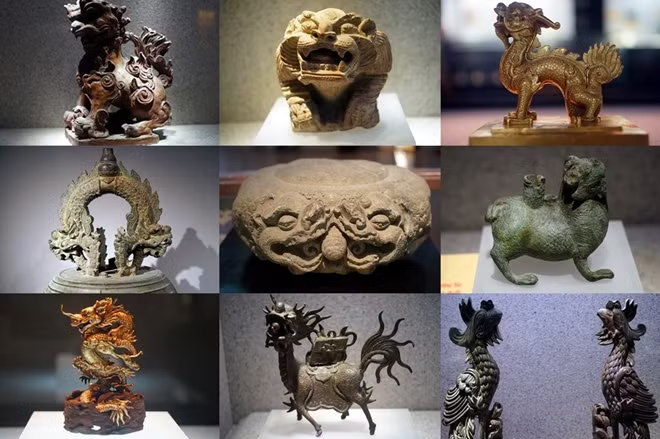 |
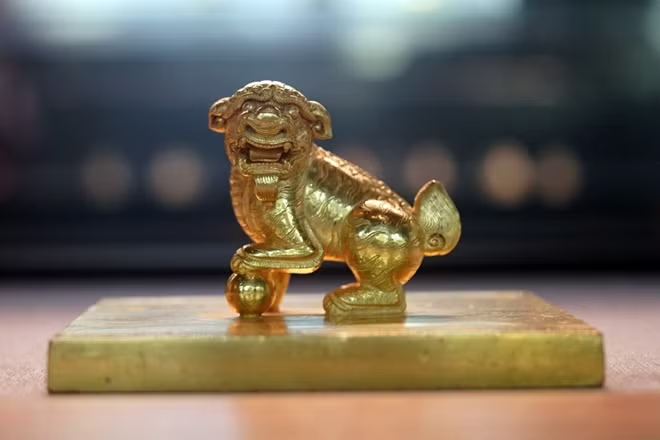 |
| Lion seal of the 18th century |
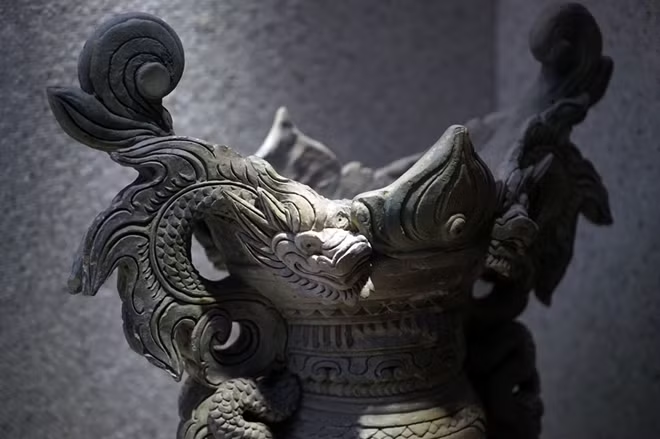 |
| Dragons on an incense burner of the 17th-18th century. |
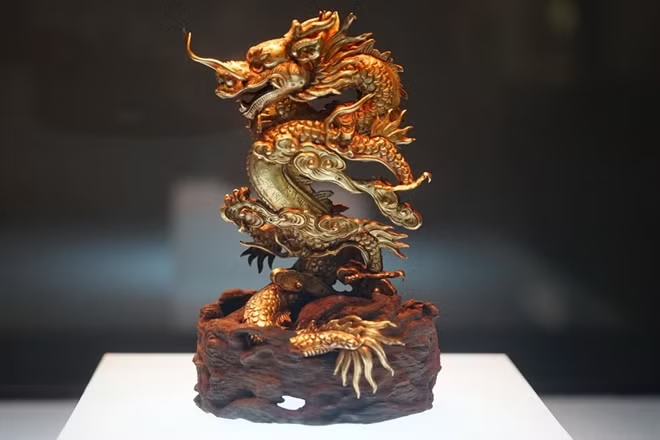 |
| Gold dragon of the Nguyen Dynasty, 19th-20th century |
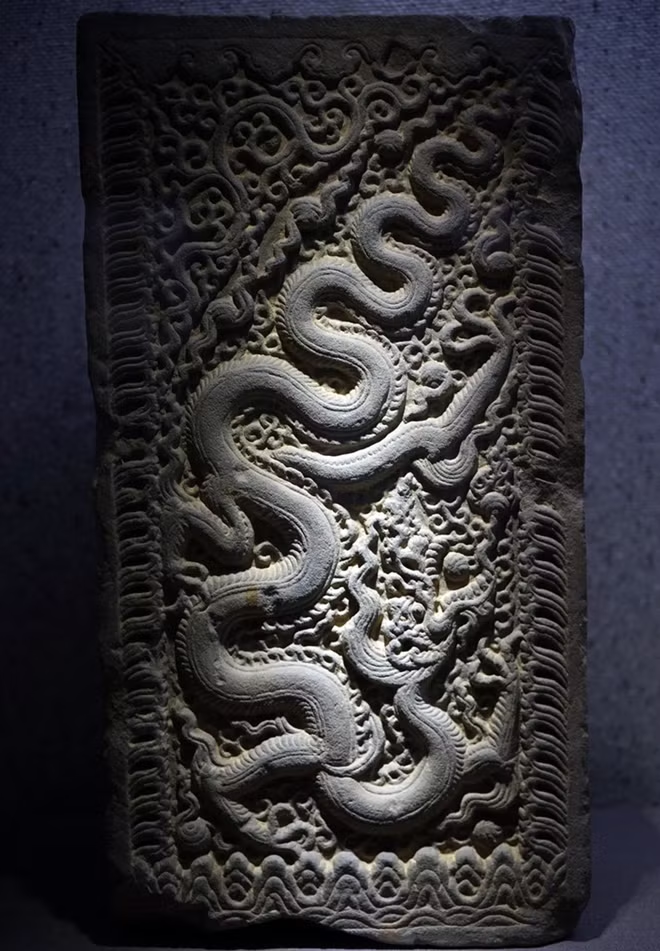 |
| Dragon carved on stone (1057), discovered at Phat Tich pagoda in Bac Ninh Province |
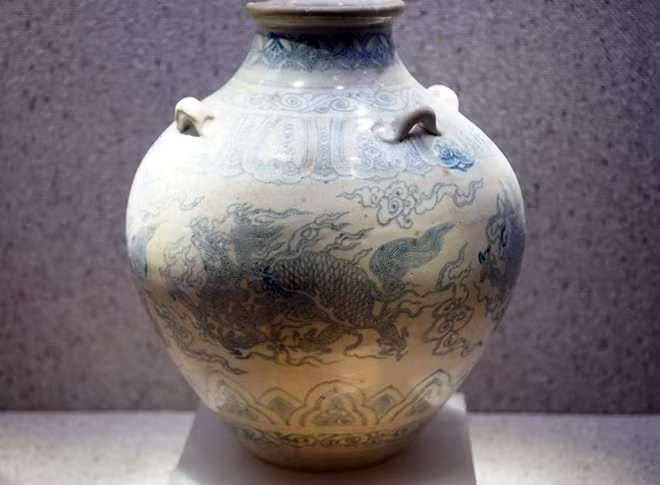 |
| Kylyn on a ceramc jar of the 15th century |
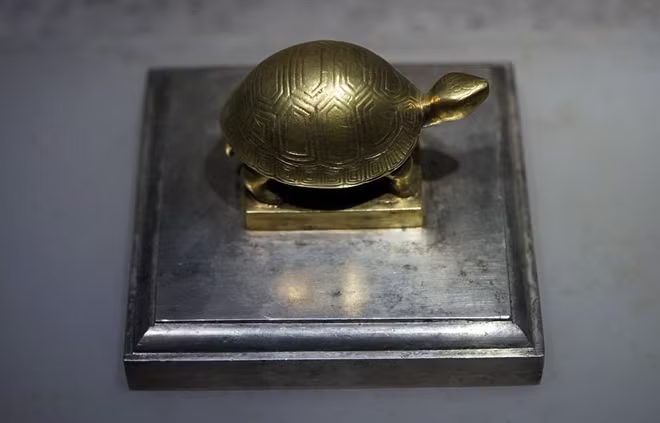 |
| Turtle seal of the Nguyen Dynasty (1802) |
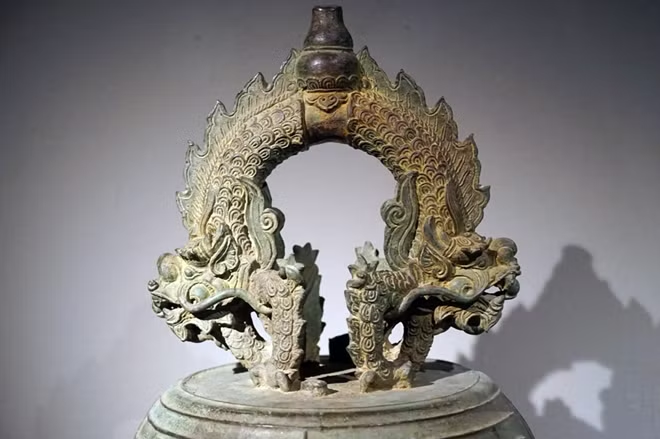 |
| Bo lao (two-head dragon) on a bell of the 18th century |
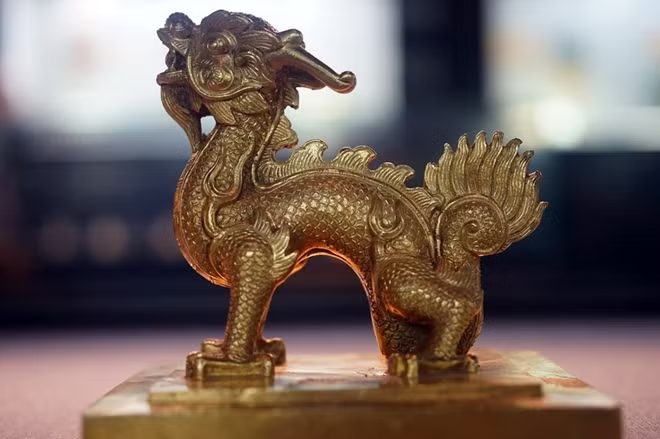 |
| Gold dragon seal of the Nguyen Dynasty (1847) |
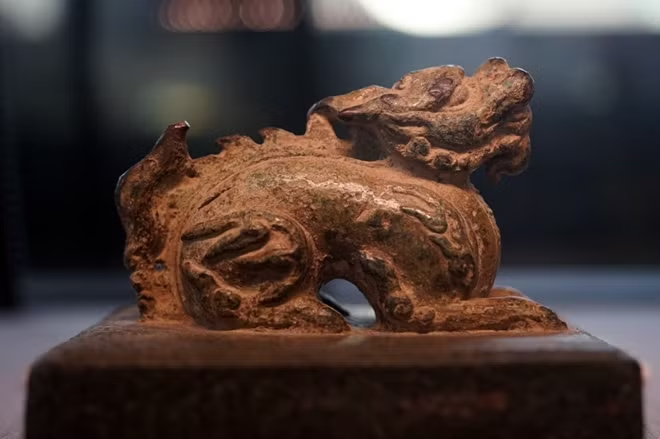 |
| Kylyn seal of the 15th century |
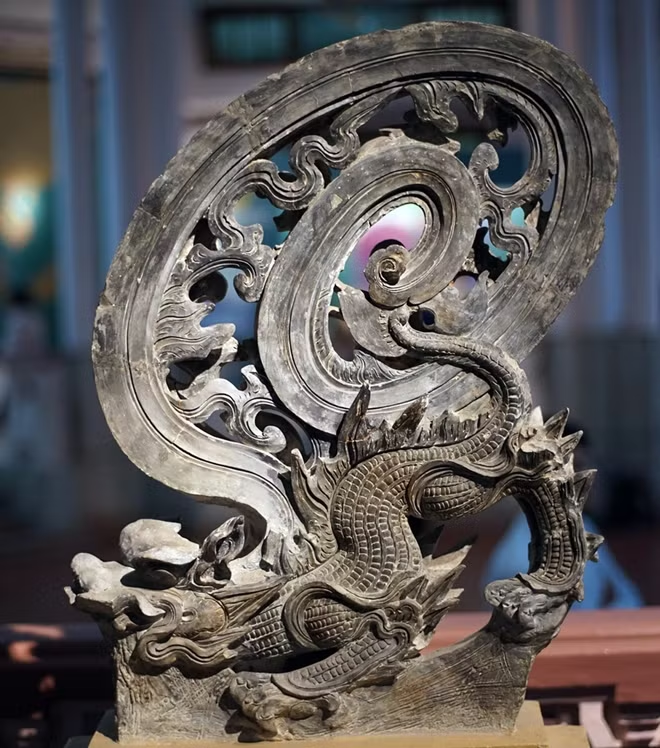 |
| Kim - 17th-18th century |
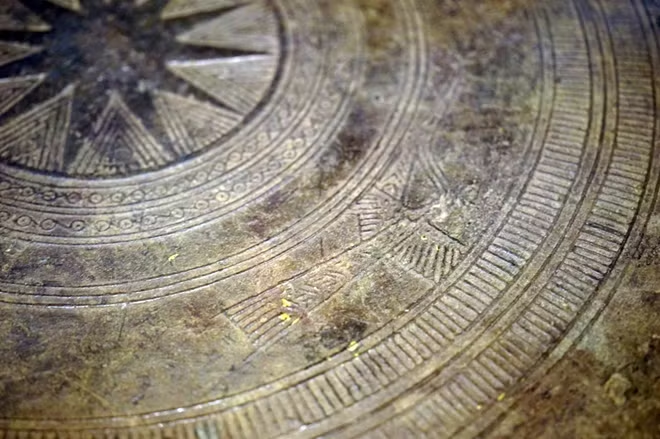 |
| Lac birds on Dong Son bronze drum |