Located about 30 kilometres from Hà Nội, Chàng Sơn is a typical village in northern Việt Nam. Arriving at the village during the busy harvesting seasons, visitors can easily catch sight of the local farmers working industriously on the vast fields, piling up the straw while drying the golden paddy rice along the entrance roads.
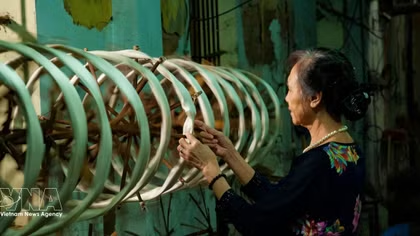
However, nearly all families have someone staying home, absorbed in making one part of the traditional fans. As the rice is left to dry on the ground, fans of different shapes, sizes and colours can be seen hanging above or piled up alongside, also waiting to dry or to be packed up.
It is common to see a huge fan on the wall of nearly every household, for decoration, or on their altar to worship the traditional trade of their ancestors.
“Though it is not our main job, making traditional fans still offers us a stable income and comfortable living standards,” says Ngô Thị Hải, who has been producing traditional fans for over 30 years and is currently the manager of one of the biggest workshops in the village.
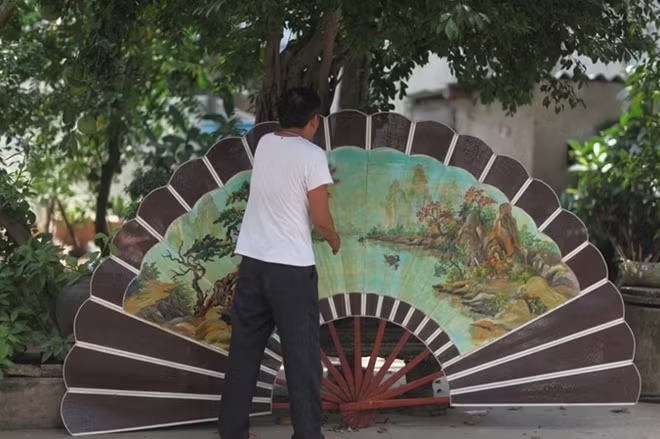 |
| Villager Đoàn cleans his 5-m long decorative fan. VNS Photo Trần Hoàng Nam |
According to Hải, Chàng Sơn villagers have made fans for centuries. Their products are not limited to daily use to dispel the summer heat, but also festive and decorative fans that have made their traditional trade famous not only nationwide but also abroad.
It is noted in local history that in the 19th century, French colonists used to bring Chàng Sơn fans to Paris for exhibition. Additionally, villagers demonstrating excellent skills in making the fans could be nominated for the position of feudal honorary rank conferred on notable or rich men.
Regardless of the weather, villagers are busy making fans all year round. As the paper fans are consumed in great number over the hot summer days, the festive or decorative silk fans can be in demand at any time of the year, especially in festive periods like March.
Hải says all the materials have to be prepared beforehand after the Lunar New Year. The process of making a fan, despite not being exhausting, still has many requirements.
The bamboo for making fan frame has to be pretty straight with few knots and of a decent age. The bamboo is then sawed into parts of various lengths, depending on the size of the fan, and soaked in water for about six months to protect the wood from termites and mould.
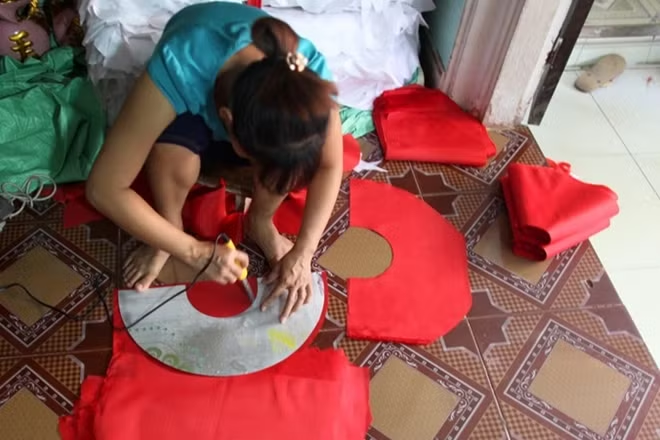 |
| Precision: A fan maker cuts the silk into the shape of the fan. VNS Photo Trần Hoàng Nam |
After that, the bamboo will be fished out of the water, left to dry in the sun and split into thinner pieces before being stringed together to create the backbone of a fan.
The next step is to trim and dye those bamboo backbones, cut the paper or silk, and attach it to the bamboo. Chàng Sơn fans used to be made from traditional poonah paper in the northern province of Bắc Ninh and silk from Vạn Phúc Village or nearby Bùng Village, however, due to the rarity of the materials and high costs involved, the villagers have switched to industrial paper and silk that is cheaper, but also capable of creating high quality fans.
The final step is also one of the most difficult, as the fan maker has to take great care in sticking the materials together so that the paper or silk will not crumple, even when the fan is folded.
As per the customers’ request, the fan makers can print meaningful words or phrases onto the fan, decorate it with colourful edges or sparkling tinsel, or draw pictures on it. At this stage, the worker has become an artist himself. Under their dexterous hands, beautiful village scenes reappear whenever the fan is opened. However, the process is meticulous, as they have to calculate the dimensions of the image, so it is not disturbed by the folds of the fan.
The final products will then be dried again for a few days, before finally being packed and transported to markets nationwide.
Among the various kinds of fans made in Chàng Sơn Village, picture fans are the most difficult. Sizes and styles vary greatly, from the length of a hand to a huge picture hanging on the wall as a decorative item.
The techniques involved in picture fans are also more complicated than ordinary paper or silk fans. The picture is manually drawn directly onto silk or sometimes embroidered with lace, before being attached to the bamboo backbones. The choice of image is up to the customer, with popular pictures ranging from landscapes to folk tales, generally painted on a white background.
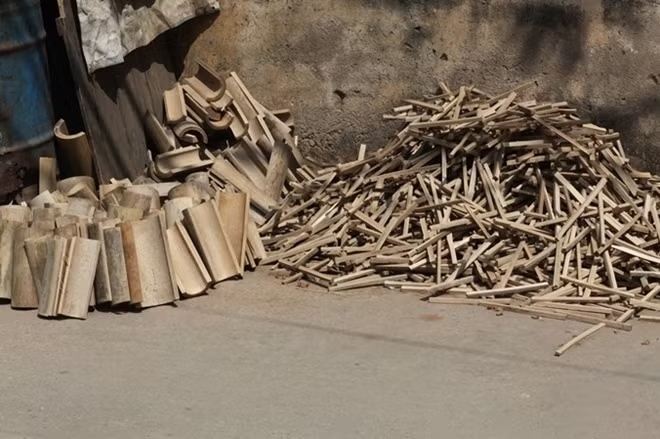 |
| Raw materials: Piles of bamboo pieces can be seen along the path of Chàng Sơn Village. VNS Photo Trần Hoàng Nam |
Due to their sophistication and high prices, decorative fans are only produced to order.
“Most of the steps are done manually, but have become quicker and simpler, while the products have become more beautiful and durable than in the past,” Hải says.
Another interesting feature in fan making in Chàng Sơn is that each household is specialised in making a different part of the fan, which has helped them to speed up production while maintaining a high quality. If the families next to the pond at the entrance of the village focus on soaking the bamboo in water, some will form the soaked bamboo into the backbones of the fan and others will be in charge of the final steps, like Hải’s family.
“On average, my workshop produces over 1,000 silk fans and about 5,000 paper fans everyday, but sometimes supply cannot meet demand,” she says. “I do not have to advertise my workshop, because most of my customers are regulars and they promote my products by word of mouth.”
“I always have to store at least 5,000 fans in order to serve big orders in time,” she adds.
Currently, Hải’s workshop is also providing jobs for over ten villagers focusing on making silk fans and another five local families focusing on paper fans. Each employee earns an average income of VNĐ4 million (US$190) per month.
Chàng Sơn fans are consumed nationwide, from Đồng Xuân market in Hà Nội to as far as Hồ Chí Minh City in the south. They have also appeared at various national festivals like Hùng Temple Festival in Phú Thọ Province, Bái Đính Pagoda in Ninh Bình Province, and Sầm Sơn Beach in Thanh Hóa Province.
Fame abroad
In order to introduce Chàng Sơn fans to international markets, some villagers are making great efforts to promote their traditional products to the world, notably Dương Văn Mơ’s family.
Mơ is also the co-creator of the biggest wooden fan in Việt Nam, which was accepted by the Vietnam Records Book Centre in 2009. Spanning a length of 9 metres and a height of 4.5 metres, the fan features a rural market in Hà Nội, in the style of traditional Hàng Trống painting and was displayed during The Lunar New Year’s Flower Festival and festival of traditional trade held in Huế in 2009. Presently, the unique fan is being exhibited at Hoa Lư Exhibition Centre in Hà Nội.
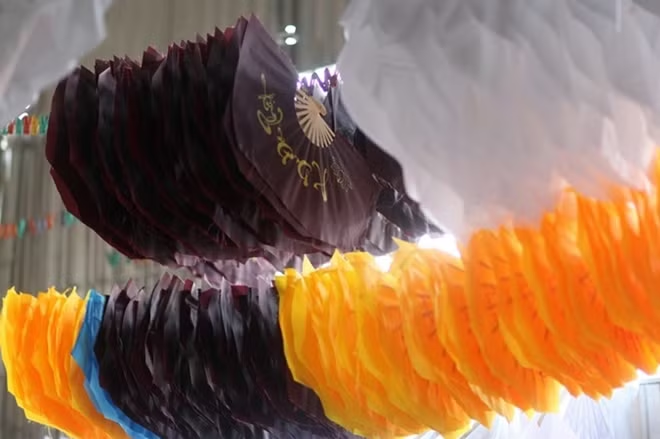 |
| Blowing in the wind: Fans of various colours are hung up for drying. VNS Photo Trần Hoàng Nam |
Dương Văn Đoàn, Mơ’s son, is continuing his father’s career, focusing on making large decorative fans. Some of his works are up to 5m long.
“Besides regular orders across the country, I have also received many orders from abroad, including from France and South Korea,” says Đoàn, adding that he has just received an order of over 1,000 paper fans for an upcoming traditional Japanese festival.
Additionally, as tourism has become one of Việt Nam’s main industries, Chàng Sơn fans, with their vivid paintings, have taken up a new mandate: introducing national culture to international friends.
Many domestic travel agencies or tourism enterprises have become regular customers of the village, like Resort Emeralda in the northern province of Ninh Bình, and Ana Mandara – Villas in the Central Highlands province of Lâm Đồng.
Chàng Sơn fans have become one of the tourists’ favourite souvenirs to bring back from their visit to the country.
“Some tourists have even returned and visited our village to order more fans,” Đoàn says.
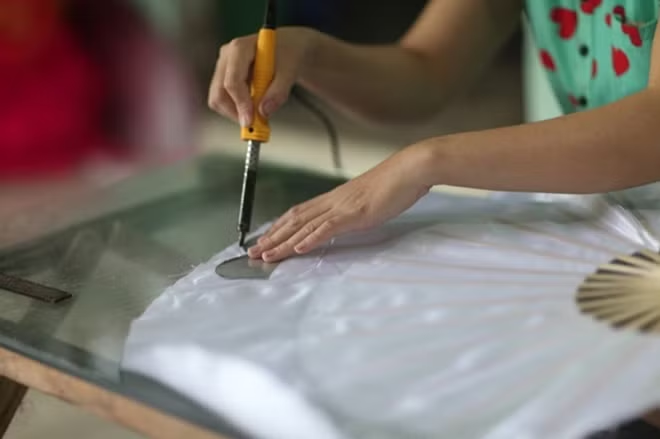 |
| Sticking together: The fan maker has to be careful with sticking the materials together so that the paper or silk will not crumple even when the fan is folded. VNS Photo Trần Hoàng Nam |
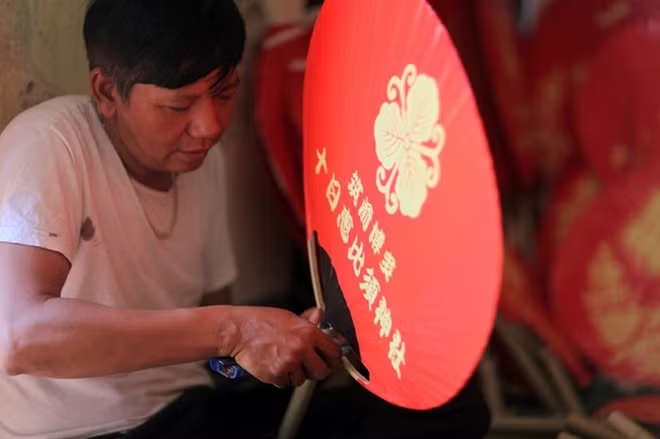 |
| Colourful craft: Villager Dương Văn Đoàn trims a fan ordered by customers in Japan. VNS Photo Trần Hoàng Nam |