Hanoi seeks to unlock night-time economy through culture, heritage

As the tourism sector seeks to increase visitor spending and extend stays, the development of the night-time economy is increasingly seen as a way to create new tourism products, enhance destination appeal and support sustainable urban growth.

vnanet-hanoi1.jpg
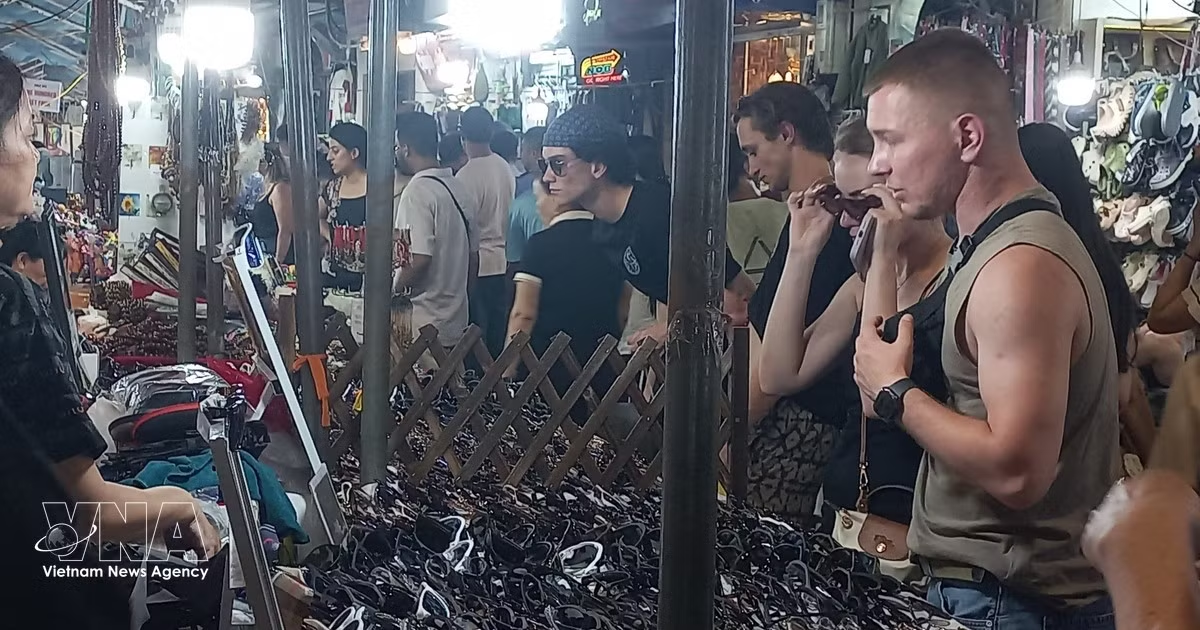
International tourists love shopping for souvenirs at Hanoi's Old Quarter night market (Photo: VNA)

As Vietnam’s political, cultural and tourism hub, Hanoi welcomes tens of millions of domestic and international visitors each year and has gained global recognition for its rich heritage, distinctive cuisine and strong cultural identity. However, tourism experts say the city’s night-time economy and visitor experiences have yet to fully match its potential.

Beyond Hoan Kiem Lake (Sword Lake), the Old Quarter and several weekend pedestrian streets, evening entertainment and cultural offerings remain limited. Many visitors end their exploration of Hanoi early, despite the fact that night-time activities are a major driver of tourism spending in many global destinations.

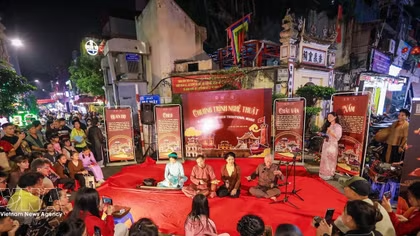
Existing products have already demonstrated Hanoi’s potential. Night tours at the Imperial Citadel of Thang Long and Hoa Lo Prison Relic Site, cultural performances and pedestrian spaces have shown that the city can create compelling after-dark experiences.

As the tourism sector seeks to increase visitor spending and extend stays, the development of the night-time economy is increasingly seen as a way to create new tourism products, enhance destination appeal and support sustainable urban growth.

Culture and heritage at the core

Assoc. Prof. Dr. Bui Hoai Son, a full-time member of the National Assembly’s Committee for Culture and Social Affairs, Hanoi possesses unique resources to tell its story at night, including its extensive heritage, cultural layers and historic architecture.
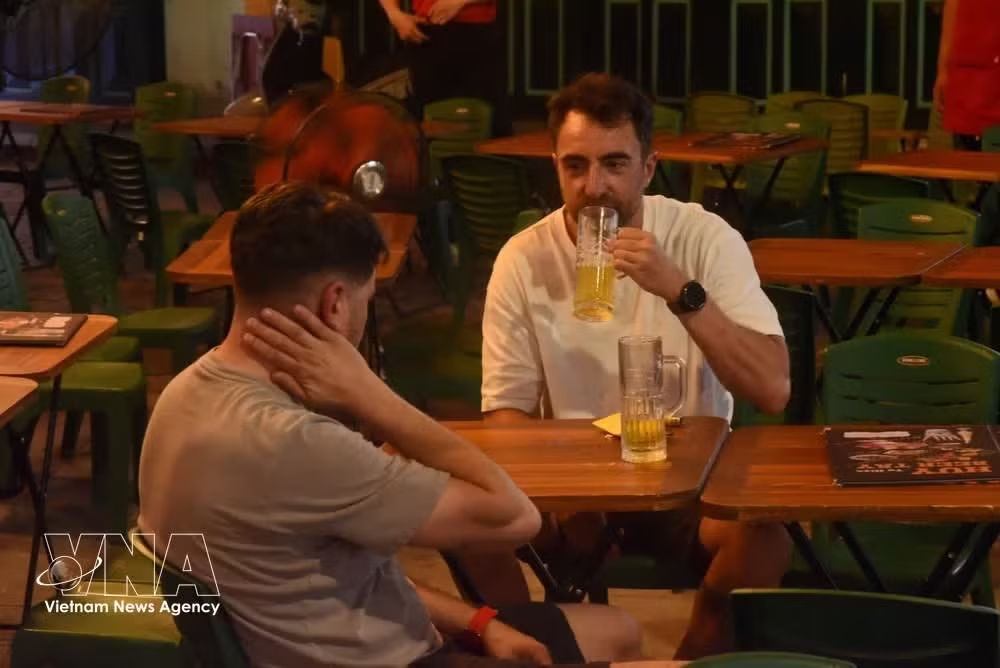
Tourists enjoy beer on Ta Hien Street in Hanoi (Photo: VNA)

When developed systematically, cuisine, arts and cultural activities can enrich visitor experiences and turn the night-time economy into a form of “soft power” that helps lengthen stays, increase spending and strengthen the capital’s competitiveness, he said.

Vu Van Tuyen, CEO of Travelogy Vietnam, said Hanoi’s greatest advantage lies not in vibrancy but in cultural depth.

“Hanoi’s night-time economy should be built on its thousand-year heritage rather than competing solely through sound and lighting effects,” he said, stressing that visitors need memorable experiences that encourage them to stay longer.

“If daytime allows visitors to see Hanoi, then nighttime should allow them to feel its soul,” he added.

Visitors have also expressed a desire for more diverse evening activities. Simon, a tourist from Germany, said more programmes encouraging interaction among travellers would help create a stronger sense of community. Meanwhile, Hanoi resident Hoang Minh Chien suggested expanding night-time entertainment options while ensuring activities remain closely linked to Vietnamese cultural identity and public security.

Removing bottlenecks for growth

Experts share the view that Hanoi needs more than additional late-night services. What is required is a comprehensive strategy with culture and heritage at its centre.

According to Tuyen, the city’s ongoing administrative restructuring presents an opportunity to redesign night-time tourism spaces. For years, activities have been concentrated around Hoan Kiem Lake, the Old Quarter and Ta Hien Street, creating localised overcrowding while leaving other areas underutilised.

He proposed developing functional clusters across the city. Hoan Kiem Lake and the Old Quarter could serve as heritage and cultural hubs; West Lake as a centre for festivals, arts and entertainment; and the Red River area as a new night-time economic corridor featuring outdoor events and tourism services. Outlying areas such as Son Tay, Ba Vi and Duong Lam could focus on agricultural and suburban tourism experiences.

Tuyen said Hanoi’s long-term goal should be to create a 24-hour urban experience ecosystem rather than simply extending opening hours. In today’s tourism market, destinations compete not only for visitor numbers but also for length of stay and spending per tourist.

Under a resolution recently adopted by the Hanoi People’s Council, the night-time economy is expected to contribute 7–8% of the city’s gross regional domestic product (GRDP) by 2035. Experts view the policy as not only an economic initiative but also a long-term cultural strategy, helping Hanoi tell a more compelling story and encouraging visitors to stay longer and explore more of the capital’s unique identity./.

VNA
en.vietnamplus.vn

Other News

Interactive sound exhibition breathes new life into cultural heritage

Interactive sound exhibition breathes new life into cultural heritage

One of the exhibition's highlights is the "Our Sound" installation, where visitors become part of the artwork itself. As multiple participants interact simultaneously, sound and light merge into a shared composition, conveying messages of connection, sharing and collective responsibility for building sustainable communities in harmony with nature.

Festival for Peace 2026 opens, featuring wide rage of activities

Festival for Peace 2026 opens, featuring wide rage of activities

Standing on the historic land of Quang Tri, alongside the Ben Hai River, the Quang Tri Ancient Citadel and the national martyrs’ cemeteries, people are reminded of the true value of peace and the sacrifices made for national independence, freedom and reunification.

Smart tourism takes hold nationwide

Smart tourism takes hold nationwide

Under the country’s 2026–2030 digital economy and digital society development programme, the sector has been identified as one of the priority ones for accelerating digital transformation to improve governance efficiency, service quality, and visitor experiences.

UAE grants visa-on-arrival for eligible Vietnamese citizens

UAE grants visa-on-arrival for eligible Vietnamese citizens

PSNews - The UAE Embassy in Vietnam also confirmed that Vietnamese citizens holding ordinary passports, and their eligible accompanying family members, are able to get a visa on arrival from June 25, 2026 as long as they meet the above requirements.

Hanoi festival celebrates cultural heritage of lotus

Hanoi festival celebrates cultural heritage of lotus

The festival is part of Hanoi's strategy to boost its cultural industries by transforming cultural heritage into a driver of socio-economic development while preserving and promoting the city's traditional cultural values.

Vietnam's Hidden Spa-Water Hope wins top jury prize at Architizer A+Awards 2026

Vietnam's Hidden Spa-Water Hope wins top jury prize at Architizer A+Awards 2026

Nestled among coastal sand dunes in Cam Ranh, the project was conceived with a strong commitment to respecting the natural landscape and harnessing water as its central element. Rather than creating a visually dominant structure, the design blends into the terrain, making use of sand layers, native vegetation and open spaces to strengthen the connection between people and nature.

Heritage resources fuel Hue's new growth ambitions

Heritage resources fuel Hue's new growth ambitions

Hue is simultaneously stepping up efforts to attract investment into tourism, services and cultural industries. In the first five months of 2026, the city secured more than 19 trillion VND in newly registered investment capital, with projects planned in coastal tourism, lagoon-based ecotourism, cultural spaces along the Perfume River, convention and exhibition centres, night-time economy projects and cultural innovation hubs.

Phu Tho moves to unlock tourism potential after administrative mergence

Phu Tho moves to unlock tourism potential after administrative mergence

With coordinated efforts in planning, infrastructure development, product diversification, human resources training, digital transformation and destination branding, Phu Tho is well-positioned to transform tourism into a spearhead economic sector and a new engine of sustainable growth in the years ahead.

AI ushers in a new era for digital art

AI ushers in a new era for digital art

As cultural industries and the creative economy gain momentum, AI is proving valuable in improving efficiency, streamlining operations and enabling creators to focus more on artistic content.

Green tourism charts a new course for Vietnam

Green tourism charts a new course for Vietnam

With its rich agricultural ecosystem, where each region boasts unique produce, culinary traditions, and farming practices, Vietnam is well positioned to develop and expand the farm-to-table model. Cities and provinces, such as Hanoi, Thai Nguyen, Da Nang, Hue, Can Tho, Lam Dong, and Vinh Long, are already embracing the model as part of their green tourism strategies.

Wildlife protection drive delivers encouraging conservation gains

Wildlife protection drive delivers encouraging conservation gains

Implemented under Plan 628, a joint initiative between the Ministry of Public Security and the Ministry of Agriculture and Environment, the campaign marks a shift towards a more coordinated and long-term approach to protecting wildlife and natural resources.

Vietnam seeks strong global presence for its children's books

Vietnam seeks strong global presence for its children's books

According to experts, Vietnam needs a systematic and long-term strategy to bring its children’s literature to the world. This includes strong support for authors, illustrators, editors, translators, and copyright specialists, as well as greater participation in international book fairs as part of a cultural industry development strategy.

Lotus Festival lights up Hue's summer

Lotus Festival lights up Hue's summer

Scheduled for June 19-21 at Bong Lai Islet on Tinh Tam Lotus Lake in Phu Xuan ward, one of Hue’s most renowned scenic landmarks and a symbol of royal garden art, the festival draws inspiration from the lotus’s enduring beauty in court culture. The event aims to honour local heritage while offering visitors a distinctive summer tourism experience.

ASEAN city leaders explore Hanoi's heritage sites

ASEAN city leaders explore Hanoi's heritage sites

At the Imperial Citadel of Thang Long, delegates visited the Doan Mon Gate and learnt about the formation and development of the ancient capital through different historical periods at display spaces. They also explored the Kinh Thien Palace’s Dragon Steps (large stone steps with dragon carvings), regarded as the political and ceremonial centre of the imperial citadel during successive Vietnamese dynasties.