U.N. Security Council imposes new sanctions on North Korea over missile test

The U.N. Security Council unanimously imposed new sanctions on North Korea on Friday for its recent intercontinental ballistic missile test, seeking to limit its access to refined petroleum products and crude oil and its earnings from workers abroad.

The U.N. resolution seeks to ban nearly 90 percent of refined petroleum exports to North Korea by capping them at 500,000 barrels a year and, in a last-minute change, demands the repatriation of North Koreans working abroad within 24 months, instead of 12 months as first proposed.

The U.S.-drafted resolution also caps crude oil supplies to North Korea at 4 million barrels a year and commits the Council to further reductions if it were to conduct another nuclear test or launch another ICBM.

North Korea on Nov. 29 said it successfully tested a new ICBM that put the U.S. mainland within range of its nuclear weapons.
Tension has been rising over North Korea’s nuclear and missile programs, which it pursues in defiance of years of U.N. Security Council resolutions, with bellicose rhetoric coming from both Pyongyang and the White House.

In November, North Korea demanded a halt to what it called “brutal sanctions”, saying a round imposed after its sixth and most powerful nuclear test on Sept. 3 constituted genocide.

U.S. diplomats have made clear they are seeking a diplomatic solution but proposed the new, tougher sanctions resolution to ratchet up pressure on North Korean leader Kim Jong Un.

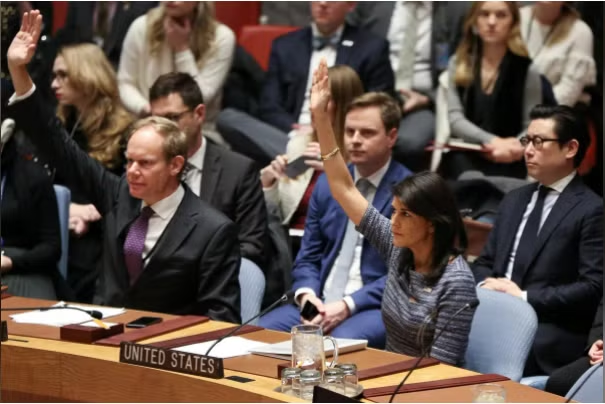
“It sends the unambiguous message to Pyongyang that further defiance will invite further punishments and isolation,” Nikki Haley, the U.S. ambassador to the United Nations, said after the 15-0 vote.

The North Korean mission to the United Nations did not immediately respond to a request for comment.

In a bid to further choke North Korea’s external sources of funding, the resolution also seeks to ban North Korean exports of food products, machinery, electrical equipment, earth and stone, wood and vessels.

It also bans exports to North Korea of industrial equipment, machinery, transport vehicles, and industrial metals as well as subjecting 15 North Koreans and the Ministry of the People’s Armed Forces to a global asset freeze and travel ban.

The resolution seeks to allow countries to seize, inspect and freeze any vessel they believe was carrying banned cargo or involved in prohibited activities.
Reuters

Other News

Vietnam supports UNESCO's people-centred approach, multilateral cooperation: official

Vietnam supports UNESCO's people-centred approach, multilateral cooperation: official

Van affirmed Vietnam’s support for the UNESCO80 reform roadmap, focusing on the organisation’s core mandate, priority areas, interdisciplinary approach, and the special status of the Vietnam National Commission for UNESCO, and UNESCO representative offices, alongside efforts to diversify resources and strengthen global partnerships to enhance the organisation’s effectiveness.

Regional media highlight significant step in Vietnam’s leadership structure

Regional media highlight significant step in Vietnam’s leadership structure

Under General Secretary and President Lam’s leadership, Vietnam is expected to maintain a balanced foreign policy, strengthen its regional standing and accelerate economic development, thereby improving living standards and creating new opportunities for international investors, according to the India-based platform Devdiscourse.

Laos identifies 10 key tasks to build independent, self-reliant economy

Laos identifies 10 key tasks to build independent, self-reliant economy

Laos will step up agricultural production to ensure food security, meet domestic demand and expand exports; encourage the development of agro-processing industries, including those related to rubber, aquatic products, cassava and sugarcane, as well as fertiliser and animal feed production, in order to increase added value and create jobs in rural areas.

Malaysia steps up cyber security resilience

Malaysia steps up cyber security resilience

To ensure accountability, Malaysia plans to finalise the Cybercrime Bill this year which addresses both cyber-dependent and cyber-enabled offences, introducing stricter penalties and prison terms to enhance deterrence.

US public opinion positive about PM Pham Minh Chinh’s visit

US public opinion positive about PM Pham Minh Chinh’s visit

Public opinion in the US is generally positive about Vietnamese Prime Minister Pham Minh Chinh’s trip to the US from September 17-23 to attend the 78th session of the United Nations General Assembly, which took place immediately after the upgrading of the Vietnam - US relations to a comprehensive strategic partnership on the occasion of US President Joe Biden’s official visit to Vietnam.