Unique rice cooking contest in Hanoi's Thi Cam village

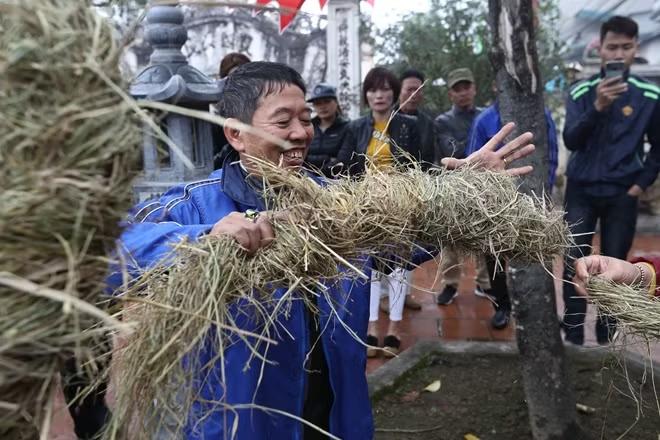
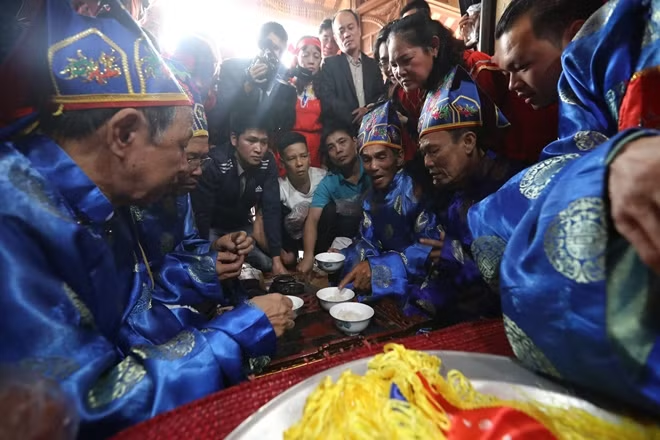
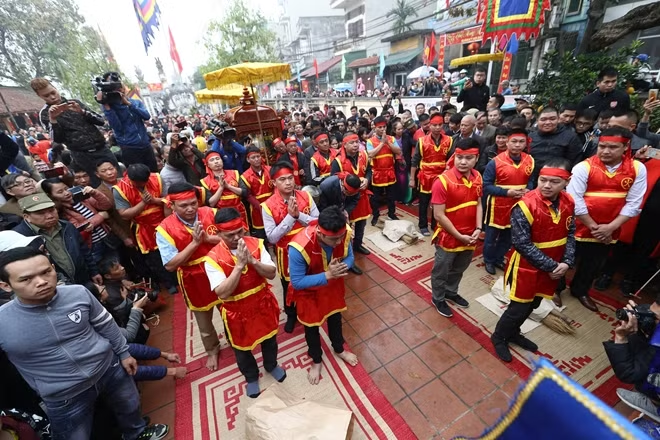
Thi Cam villagers in Xuan Phuong commune of Hanoi’s Tu Liem district gathered at the communal house on February 12 (the eighth day of the first lunar month) to take part in an annual traditional rice cooking contest .
An annual rice cooking contest was held in Thi Cam village, Xuan Phuong commune in the Hanoi outskirt district of Tu Liem on February 12 (the eighth day of the first lunar month), in commemoration of General Phan Tay Nhac, who is believed to have lived during the reign of 18th Hung King.
An annual rice cooking contest was held in Thi Cam village, Xuan Phuong commune in the Hanoi outskirt district of Tu Liem on February 12 (the eighth day of the first lunar month), in commemoration of General Phan Tay Nhac, who is believed to have lived during the reign of 18th Hung King. 
Legend has it that the General regularly launched the contest to find the best cook to serve his soldiers before going to battle. The event has been handed down through many generations as a fine tradition in early spring and attracts a large number of local residents and visitors each year.
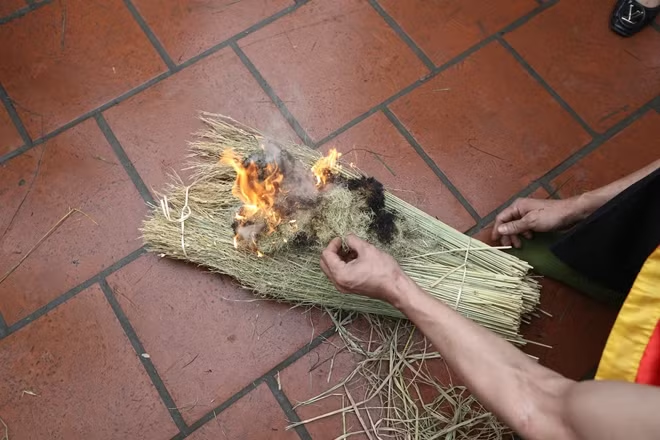
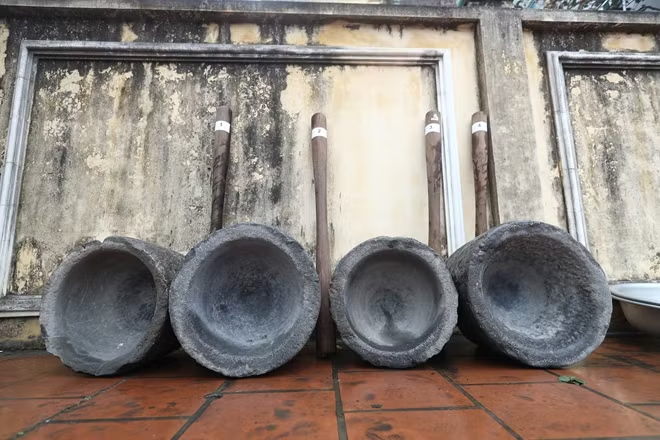
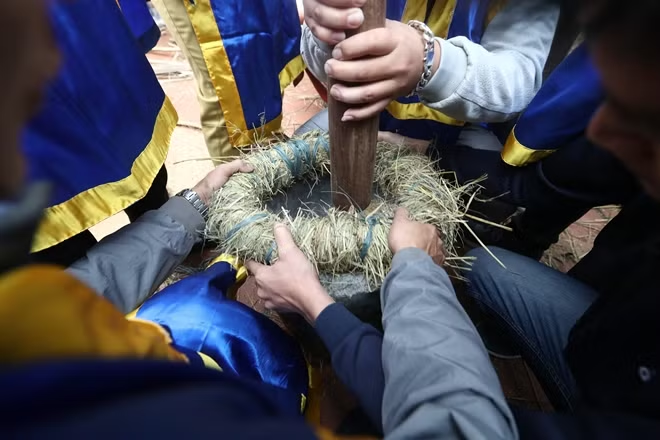
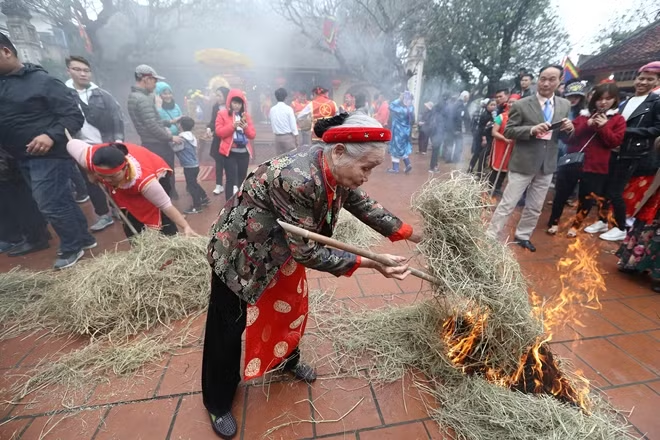
The rice cooking contest include 3 contents: water bringing exam, fire building exam and rice cooking contest. The rice cooking contents include rice pounding, white rice choosing and rice cooking.
The rice cooking contest include 3 contents: water bringing exam, fire building exam and rice cooking contest. The rice cooking contents include rice pounding, white rice choosing and rice cooking. 
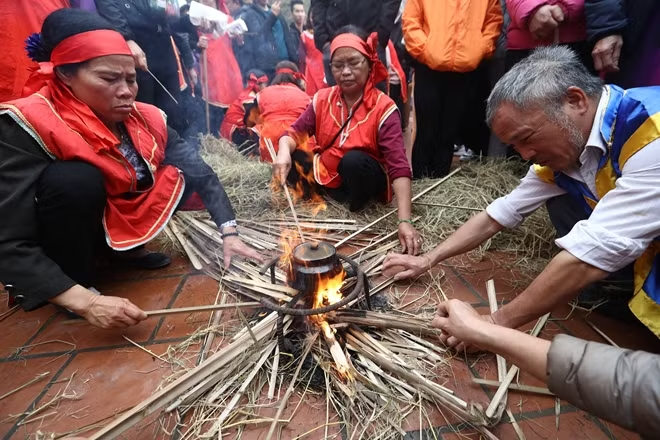
Traditionally, there are four teams taking the test, each team of 10 people with their own costumes and colours, regardless of male or female: 4 people mill and pound the rice, one person screens the rice, one brings water, two people build fire with bamboo, and 2 cook the rice.
Traditionally, there are four teams taking the test, each team of 10 people with their own costumes and colours, regardless of male or female: 4 people mill and pound the rice, one person screens the rice, one brings water, two people build fire with bamboo, and 2 cook the rice. 
As the rice is cooked in bronze pots only until the incense sticks burn out, the whole competition takes place within just one hour. Competitors often play a little trick on the organising board: they make many heaps of ash on the ground and hide their rice cooker in one of them so that the board’s member will take longer time to find their cooker, ensuring the rice will be well-cooked.
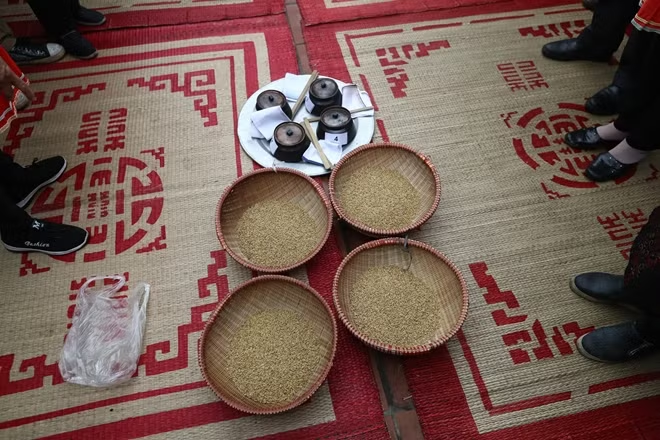
Contestants busy preparing rice, water and pot.
Contestants busy preparing rice, water and pot. 
The most unique feature of the competition is the rice cooking part. According to custom, the villagers cook rice with pots placed on a tripod over a fire of straw and wood, then the pot is buried in ash until it is finished.
Competitors often play a little trick on the organising board: they make many heaps of ash on the ground and hide their rice cooker in one of them so that the board’s member will take longer time to find their cooker, ensuring the rice will be well-cooked..
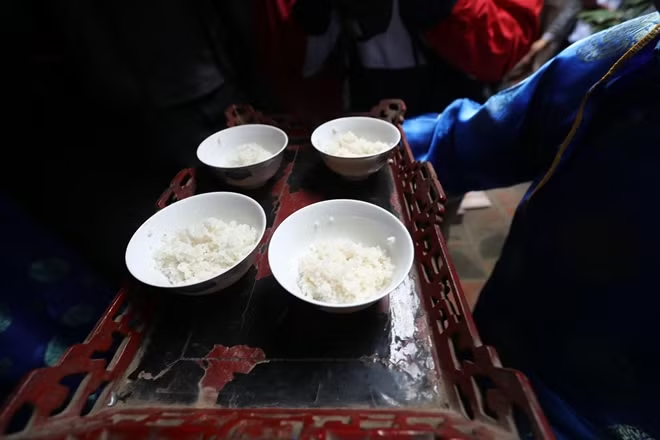
When all four rice cookers are found, they are offered to the village’s tutelary god before they are judged by the village’s elderly.
When all four rice cookers are found, they are offered to the village’s tutelary god before they are judged by the village’s elderly. 
When all four rice cookers are found, they are offered to the village’s tutelary god before they are judged by the village’s elderly. After the winning team is announced, the rice is delivered to all of the villagers to pray for a new year full of prosperity and peace.
By Thien Minh

Other News

Vietnam secure berth at FIFA U17 World Cup 2026 for first time

Vietnam secure berth at FIFA U17 World Cup 2026 for first time

Vietnam national U17 football team secured a place at the FIFA U17 World Cup 2026 for the first time after defeating United Arab Emirates national U17 football team 3-2 on in the final Group C match of the AFC U17 Asian Cup 2026 in Saudi Arabia on early May 14 (Vietnam time).

Vietnam’s most beautiful railway station twins with French counterpart

Vietnam’s most beautiful railway station twins with French counterpart

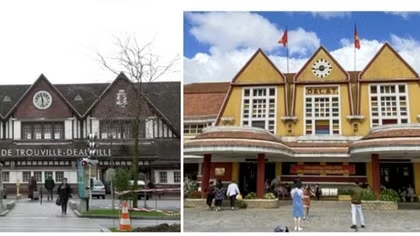
A twinning agreement between Da Lat Railway Station in Vietnam and Trouville-Deauville Railway Station in France was signed at the French Embassy in Vietnam on May 7, creating new opportunities for cooperation in station management and operations, as well as cultural and tourism promotion between the two sides.

Hanoi gains two more craft villages in World Crafts Cities network

Hanoi gains two more craft villages in World Crafts Cities network

The recognition of Chuyen My and Son Dong craft villages as members of the World Crafts Cities network represents international acknowledgement of the cultural value, artisanal techniques, creativity and sustainable vitality of Vietnam’s traditional craft villages, he said.

Thang Long - Hanoi Festival 2026 to return in September

Thang Long - Hanoi Festival 2026 to return in September

Co-hosted by the municipal People’s Committee, the Department of Culture and Sports, and domestic and foreign agencies, the whole spectacle is meant to honour the city’s millennia-old heritage while reafffirming its strategy of establishing culture as a development engine.

Spreading Vietnamese cultural identity in digital space

Spreading Vietnamese cultural identity in digital space

In the context of deep international integration, cultural identity serves as both a “shield” against assimilation and a defining marker of a nation’s image. Protecting and promoting uniquely Vietnamese cultural values has therefore become a pressing task, particularly in an increasingly complex digital environment.

ITE HCMC 2026 to promote Vietnam’s tourism on global map

ITE HCMC 2026 to promote Vietnam’s tourism on global map

With its large scale, the ITE HCMC 2026 aims to promote tourism cooperation between Vietnam and priority markets such as Northeast Asia, Western Europe, North America, Southeast Asia, and Oceania while also boosting visitor arrivals from the Indian market

Vietnamese puppetry seeks renewal amid preservation challenges

Vietnamese puppetry seeks renewal amid preservation challenges

Although widely regarded as a cultural “speciality” attracting tourists, Vietnamese puppetry is facing multiple challenges in preservation and development, requiring renewed efforts to both safeguard its identity and adapt to contemporary cultural currents.

Project on digital transformation in cultural sector approved

Project on digital transformation in cultural sector approved

By 2030, the project targets the establishment of shared digital platforms across 100% of cultural sectors. All digitised cultural heritage will be standardised under the national data framework and shared in accordance with regulations, while 80% of public digital heritage assets are expected to receive digital identifiers to clarify ownership and management, encouraging organisations and individuals to do the same and support market development.

Vietnam eyes becoming region’s leading tourism destination

Vietnam eyes becoming region’s leading tourism destination

Vietnam has in recent years undergone a notable transformation in its tourism development strategy, placing a strong emphasis on nature-based and eco-tourism. This shift is not merely aligned with global trends, but represents a necessary step towards safeguarding valuable natural resources, while appealing to a growing segment of environmentally conscious travellers.