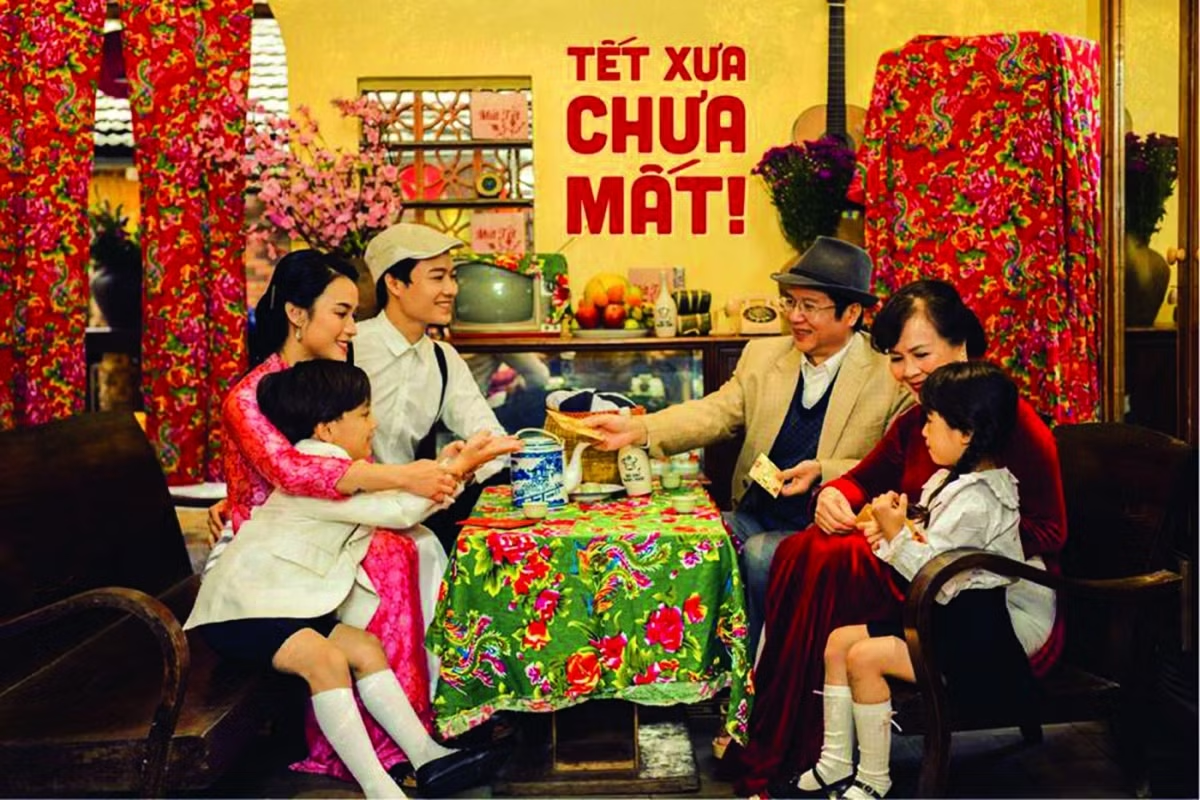
Whether in ancient times or in contemporary society, Tet remains the nation’s most significant traditional holiday.
Not only is it a sacred moment which marks the transition between the old year and the new, Tet also reflects Vietnamese people’s outlook on life, as well as their profound and unique customs and beliefs bearing the culture of different localities from across the country.
Before New Year’s Eve
For the people of Hanoi, the Tet period starts with a farewell ceremony held for Kitchen Gods which falls on the 23rd day of the last month of the lunar year. As the legend goes, the Land Genie and the Kitchen Gods will ride carps to Heaven on that day to deliver an annual report on each household’s activities to the God of Heaven.
From the 23rd to the 30th day of the last lunar month, family members gather together to visit the graves of ancestors, inviting them to celebrate Tet with their families. Indeed, during this time local people are busy cleaning and decorating their homes to prepare for Tet holiday.
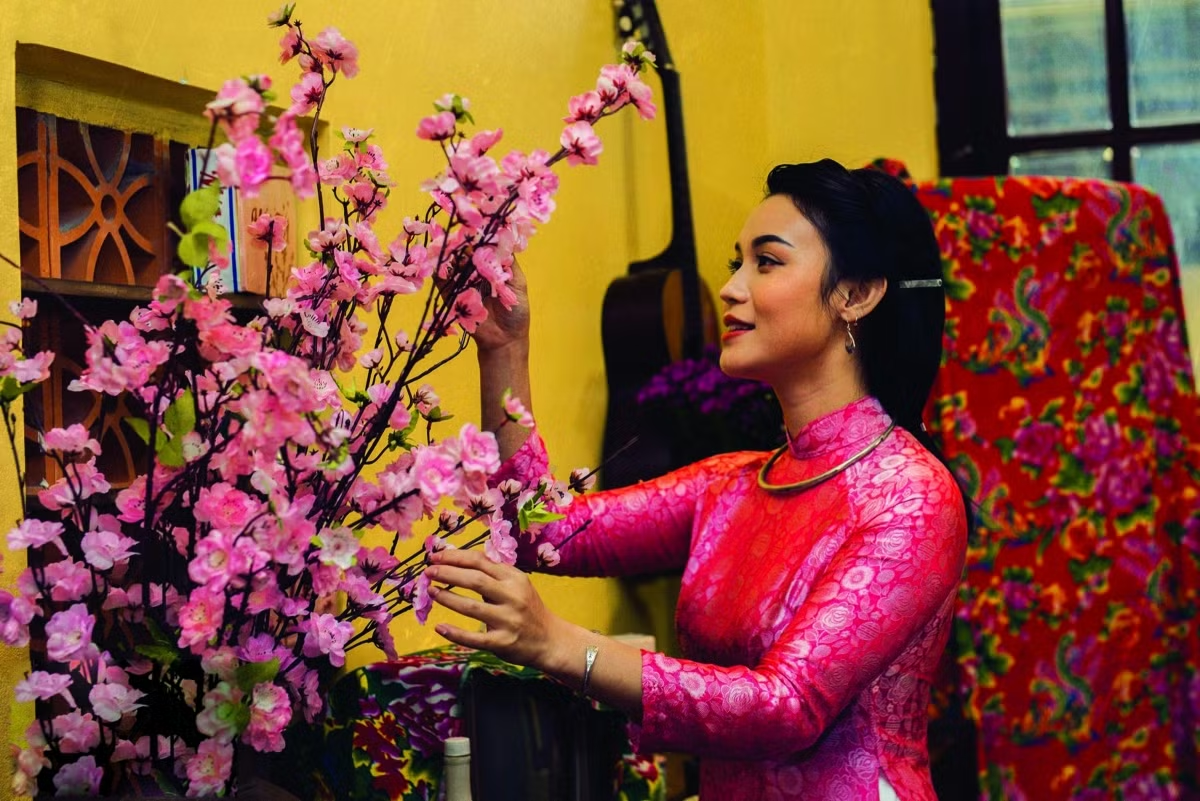
Peach and kumquat trees are among the most popular items among citizens during each Tet festival. Hang Luoc flower market, Nhat Tan peach village, and Tu Lien kumquat village are the top places to purchase these trees for decoration.
Along with two types of flowers which are typical for Tet, local residents buy other flowers as part of worshipping rituals, including roses, chrysanthemums, gladioli, and lilies.
Local people also often plenty of time going shopping early as they prepare dishes to offer on their ancestors’ altras over the festive period.
Banh Chung, a type of square glutinous rice cake, is an indispensable part of the Lunar New Year festival. Many families still continue the tradition of making the cake in order to create a festive atmosphere and provide a chance in which children can learn about such traditions.
Tet is also a time for families stay reunited. A traditional family gathering and a meal together during the final day of the lunar year, in addition to another on the first day of the first lunar month, is a long-standing tradition among many local families.
Families typically prepare trays of dishes, including a tray to offer items to the ancestors and other things for family gatherings. This requires a lot of work to cook various dishes, which include soup, stir-fried vegetables, and meat, especially chicken.
A “Mam Ngu Qua”, also known as a five-fruit tray, is an indispensable item for each family in Hanoi and is a requirement to decorate ancestral altars during the traditional Lunar New Year festival.
The tray symbolises the wholeheartedness and gratitude of the present generation towards their ancestors and the Genie of the Land during Tet.
A five-fruit tray is usually made up of several green bananas, a ripe pomelo, oranges, apples, whilst one can add mangoes and grapes from southern Vietnam, presenting a harmonious combination full of different colours of various fruits.
The New Year
The first days of the Lunar New Year usually involves people visiting family and friends. “Xong dat”, known as the first visitor, is a popular Tet tradition.
The first visitor of the New Year is an important member to many Vietnamese households as they believe that he or she will decide the luck of the host for the entire year. Usually the visitor is a member of the family or a close friend.
Giving children “Li xi”, also known as lucky money, is one of the most anticipated Tet customs, especially among young people. “Li xi” is a small amount of money put inside a red envelope and then given to children. It is believed that “li xi” can bring about good fortune, although it is certain that it will bring great happiness to the recipient.
Furthermore, activities such as visiting nearby pagodas and temples at the beginning of the Lunar New Year is a time-honoured tradition for many Vietnamese people.
Van Mieu-Quoc Tu Giam, also known as the Temple of Literature, is one of top places where Hanoians often visit where they ask for calligraphic works and pray for best wishes for the whole year.
A word serves as a spiritual present given by the calligrapher, often a Confucian scholar, and this will convey a New Year message to the recipient. The most popular words symbolise blessings, happiness, longevity, peace, virtue, and prosperity.
Moreover, locals also choose to visit The Four Sacred Temples, known as Thang Long Tu Tran locally, in the capital as it is believed to protect the city from evil spirits.
Each of the four temples points in a direction and worships a different deity, including the Tran Vu Deity in the north (Quan Thanh Temple), the Bach Ma Deity in the east (Bach Ma Temple), the Linh Lang Deity in the west (Voi Phuc Temple), and the Cao Vuong Deity in the south (Kim Lien Temple).
Through various ups and downs throughout history, many customs have more or less fallen into oblivion or have been significantly changed. But no matter where they are, Hanoians continue to be aware of maintaining their traditional customs and passing them down through generations.