Vietnam taps community tourism potential for sustainable development

The tourism market is shifting from sightseeing towards living and connecting with destinations. Visitors increasingly seek authentic and locally rooted experiences, interaction with local people, culture and nature, as well as small-group and personalised trips with limited environmental impact and clear benefits for communities.

Ho Chi Minh City (VNA) – Vietnam has strong potential to develop sustainable tourism, particularly through community-based and agricultural tourism that preserves local culture, creates livelihoods and delivers lasting value to both visitors and communities, experts and local officials said at the ongoing 20th Ho Chi Minh City International Travel Expo (ITE HCMC 2026).

download-11.png
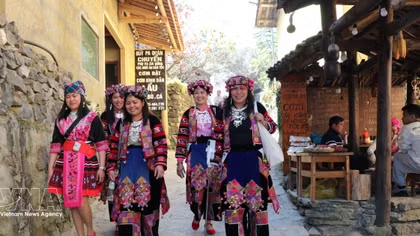
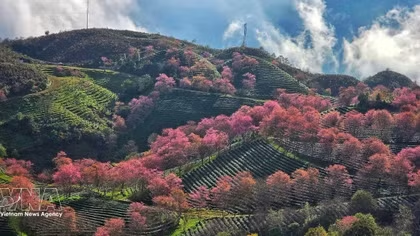
A view of the Lo Lo Chai community tourism village in Tuyen Quang province (Photo: VNA)

The event, taking place from August 27-29, has featured discussions on sustainable tourism and the potential of Vietnamese destinations to meet the standards of the Best Tourism Villages by UN Tourism.

The tourism market is shifting from sightseeing towards living and connecting with destinations. Visitors increasingly seek authentic and locally rooted experiences, interaction with local people, culture and nature, as well as small-group and personalised trips with limited environmental impact and clear benefits for communities.

Experts said this trend means community-based tourism can turn local residents from beneficiaries into active stakeholders in destination development, while preserving culture by bringing it into everyday life and linking agriculture, handicrafts, cuisine, nature and accommodation.

A survey conducted by Booking.com found that 85% of travellers prioritise sustainability, while 30% choose green destinations. Travelers are also paying greater attention to environmental and community impacts and favouring responsible travel experiences.

Nguyen Thi Huyen, head of the Tourism Management Division under the Tuyen Quang provincial Department of Culture, Sports and Tourism, said a key challenge for community-based destinations is turning existing community assets into quality products that can reach the market while preserving local identity and ensuring tangible benefits for residents.

Tuyen Quang currently has 54 potential community cultural tourism villages, including 28 meeting standards for serving tourists. Ten villages and community tourism models have also been recognised as three- to four-star OCOP products.

Several destinations have gradually established their brands. Lo Lo Chai was recognised by UN Tourism as one of the Best Tourism Villages 2025, while Nam Dam has received ASEAN tourism awards several times. The Pa Vi Mong ethnic community cultural tourism village was honoured at the Vietnam Tourism Awards 2025, while Tha, Khau Trang and Nam Hong villages have also developed distinctive tourism products.

Tra Su cajuput forest in An Giang province attracts visitors with its rich biodiversity (Photo: VNA)

These experiences show that community tourism villages cannot follow a single model, Huyen said, noting that each community needs to identify its unique values, the experiences it can offer and what will make visitors remember the destination and want to return or recommend it.

Vo Pham Tan, Deputy Director of the Dong Thap provincial Department of Culture, Sports and Tourism, said linking agriculture with tourism and promoting cultural values can increase the value of agricultural products, create livelihoods and open up a green, sustainable and distinctive tourism development orientations.

In the first eight months of 2026, Dong Thap welcomed about 3.6 million tourists, including around 1.25 million visitors to agricultural and craft village tourism models. Its tourism revenue reached approximately 1.9 trillion VND (72.8 million USD).

Experts said agricultural tourism associated with culture is not merely a trend but a suitable direction for sustainable tourism development. Rather than creating more destinations, the priority should be to turn existing assets into products with compelling stories and experiences, connect them to markets, and develop them into tourism routes and tours.

Vu Nam, an expert from the Swiss Tourism for Sustainable Development in Vietnam” (ST4SD) project, said developing sustainable community tourism destinations under the Best Tourism Villages by UN Tourism standards can contribute to rural development, heritage conservation and sustainable development.

Drawing on the Swisstainable tourism model of Switzerland, the ST4SD project encourages destinations to upgrade themselves through a pathway from pre-commitment and commitment to implementation and readiness to apply for recognition.

As of 2026, more than 1,000 applications had been submitted to the Best Tourism Villages programme, with 319 villages recognised and 83 villages from 65 countries participating in the upgrading programme./.
VNA
en.vietnamplus.vn

Other News

Ho Chi Minh City to host a wide range of activities celebrating Viet Nam Culture Day

Ho Chi Minh City to host a wide range of activities celebrating Viet Nam Culture Day

PSNews – As Viet Nam prepares to celebrate its first nationwide Viet Nam Culture Day on November 24, Ho Chi Minh City is gearing up for a diverse series of cultural, artistic, sporting and tourism activities across its 168 wards, communes and special zones, aiming to honor national cultural identity and promote the spirit of great national unity.

Lung Cu tourism development requires coordinated infrastructure investment

Lung Cu tourism development requires coordinated infrastructure investment

Tourism growth has brought more visitors to Lung Cu, prompting accommodation establishments and restaurants to operate at high capacity and driving up demand for electricity and water. However, some infrastructure facilities have yet to keep pace, affecting business operations and visitors' experiences.

Sa Pa: A mountainous land blossoming in all four seasons

Sa Pa: A mountainous land blossoming in all four seasons

Alongside efforts to preserve the cultural identity of local ethnic communities, Sa Pa ward in the northern mountainous province of Lao Cai is accelerating digital transformation, developing smart urban services and upgrading infrastructure and public spaces to build a green, culturally distinctive and smart urban area.

Mong women turn traditional craft into destination appeal

Mong women turn traditional craft into destination appeal

Alongside local cuisine, traditional attire, and folk games, linen weaving has become a crucial asset in enhancing Lung Tam commune's tourism appeal, creating new livelihood opportunities, and inspiring locals to preserve their heritage.

Top leader attends ceremony marking Quoc Tu Giam's 950th anniversary

Top leader attends ceremony marking Quoc Tu Giam's 950th anniversary

General Secretary of the CPV Central Committee and President To Lam called for preserving the Van Mieu – Quoc Tu Giam heritage and putting its spirit into daily school life. He asked Hanoi to work closely with culture, education and research agencies to complete open digitised materials on the relic soon.

Hanoi Creative Design Festival 2026 opens, targets creative economy

Hanoi Creative Design Festival 2026 opens, targets creative economy

Running from November 13-28, the festival features 150 activities across five cultural, heritage and creative clusters and draws nearly 1,000 domestic and foreign artisans, artists, designers and experts, including nearly 100 foreign artists and overseas Vietnamese from 21 countries.

Traditional attire reflects Cham Muslim cultural identity

Traditional attire reflects Cham Muslim cultural identity

The Cham, one of Vietnam’s 54 ethnic groups, have a rich cultural heritage, with Muslim communities concentrated in An Giang province and other southern localities. Their traditional clothing, distinguished by diverse styles, colours and fabrics, reflects Islamic beliefs, modesty and aesthetics while preserving a cultural identity passed down through generations.

UNESCO expects Vietnam to lead cultural cooperation initiatives

UNESCO expects Vietnam to lead cultural cooperation initiatives

Lidia Brito, UNESCO Assistant Director-General for Priority Africa and External Relations, praised Vietnam’s contributions to education, science, culture and information, describing the 50-year partnership between Vietnam and UNESCO as a sustained and increasingly substantive journey.

UNESCO recognizes 'Pho Hien Steles' and 'Ma Nhai Inscriptions on Non Nuoc Mountain'

UNESCO recognizes 'Pho Hien Steles' and 'Ma Nhai Inscriptions on Non Nuoc Mountain'

On the afternoon of November 5, at the 11th Session held in Jakarta, Indonesia, the Memory of the World Committee for Asia and the Pacific (MOWCAP) under UNESCO approved the inscription of the "Pho Hien Steles" from Hung Yen Province and the "Ma Nhai Inscriptions on Non Nuoc Mountain" from Ninh Binh Province into the Asia-Pacific Regional Register of Documentary Heritage.

Vietnamese community in the UK preserves cultural identity

Vietnamese community in the UK preserves cultural identity

In February 2027, Tet culture and the Vietnamese language are expected to feature for the first time as the main focus on the central stage of the annual Lunar New Year event at the National Maritime Museum in the UK, part of the Maritime Greenwich World Heritage Site. The 2027 London Ao Dai Week is also expected to go ahead.

Da Nang named among Lonely Planet's 'Best in Travel 2027' list

Da Nang named among Lonely Planet's 'Best in Travel 2027' list

Located in central Vietnam, Da Nang is “blessed with mountains, a long city beach and a cool vibe”. The Son Tra Peninsula offers peaceful natural surroundings and panoramic sea views, while the city’s beaches provide opportunities for swimming, relaxation and outdoor activities.

Foreign diplomats experience tea picking in Thai Nguyen

Foreign diplomats experience tea picking in Thai Nguyen

VOV.VN - Foreign diplomats in Vietnam have tried their hand at picking and pan-firing tea leaves in Vietnam’s northern Thai Nguyen province, gaining first-hand insight into the traditional craft behind the distinctive flavour of Tan Cuong tea.