A beautiful communal house rises from rubble in north Vietnam

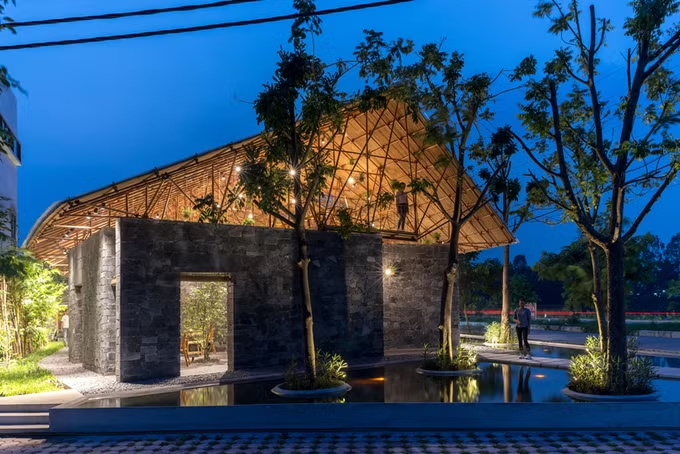
Using mountain debris and abandoned scaffolding, a group of creative architects have built a stunning public building in Ha Nam.

The mega recycling has also cut construction costs by 40 percent.

It uses rubble from the famous Kem Trong eco-tourism area which has already lost a chunk of its mountain to illegal exploitation.
Photos by Nguyen Tien Thanh 

Photos by Nguyen Tien Thanh 

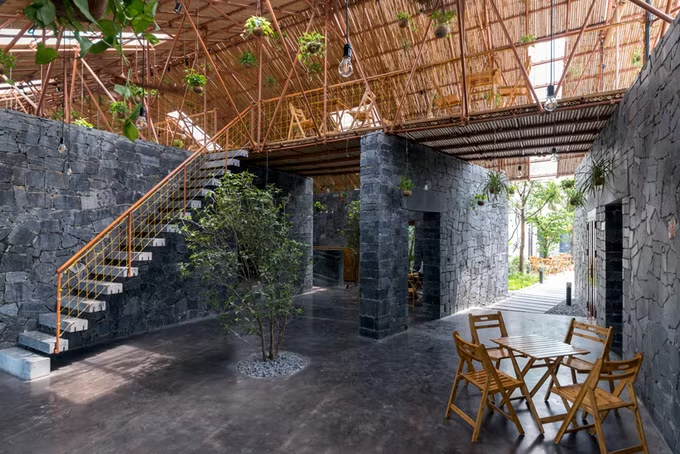
The building, which has a mezzanine floor, offers open, natural and aesthetically pleasing spaces for community activities, including culture and art shows, not to mention a great coffee shop ambience in Dong Van Town, Ha Nam Province.

Located in a recently developed urban area with high construction density, about 1 km from a large industrial park, this is a great place for locals to relax and enjoy fresh air.
- 1

The national heritage site of Kem Trong (located between Ha Nam and Ninh Binh provinces) is being illegally exploited, and one side of one of its mountains has already disappeared.

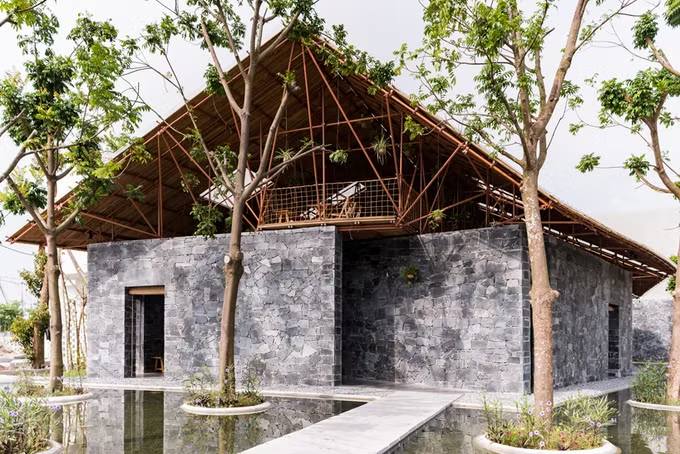
The loss prompted architect Doan Thanh Ha and colleagues at H & P Architects to gather the pieces of stone left behind, waste from craft villages and construction sites as the materials for the new building.
- 2

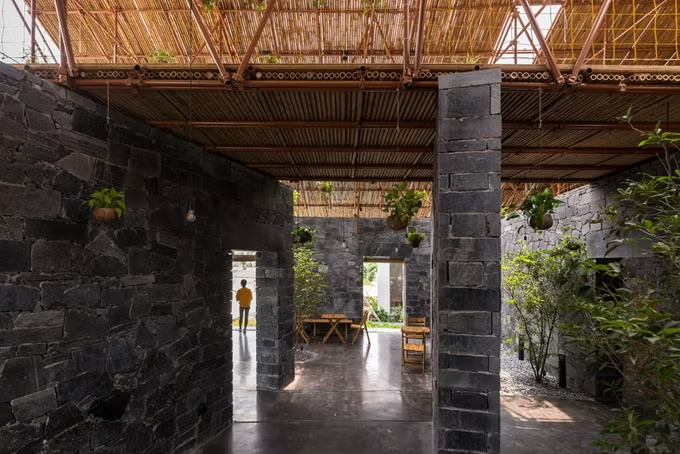
In addition to mountain debris, the facility has also reused steel scaffolding pipes and bamboos. This massive recycling effort has reduced the total cost of the building, which has area of 300 square meters and a garden of 420 square meters, to just over 1 billion ($43,111), about 60 percent of average construction costs in the market today. 
- 3

It took a year and a half for the architects and contractors to design, build and decorate the building.
- 4

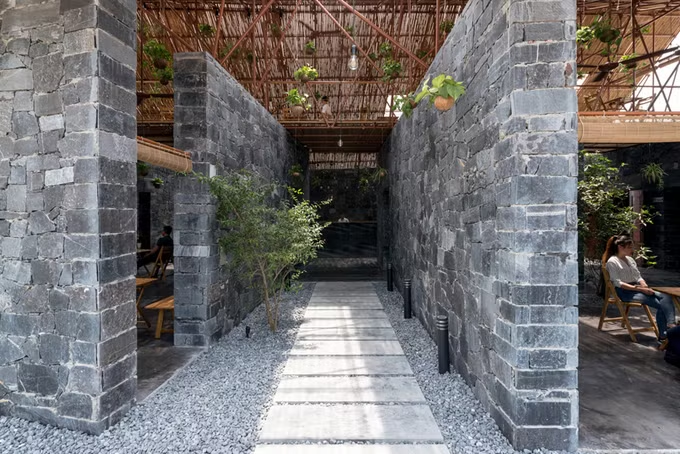
The walls are 0.4m thick and 3.4m tall.
- 5

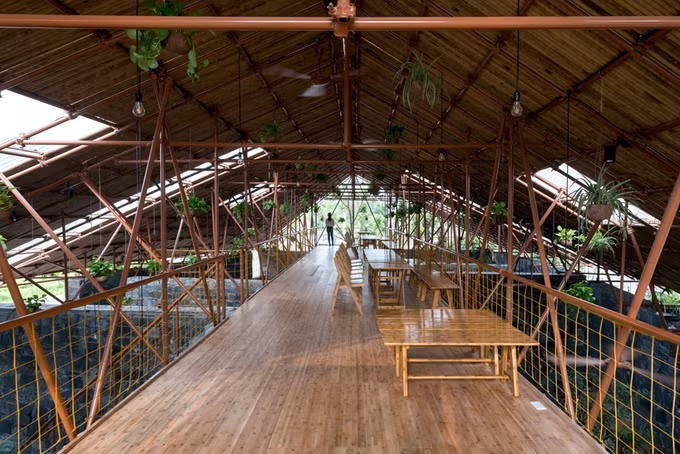
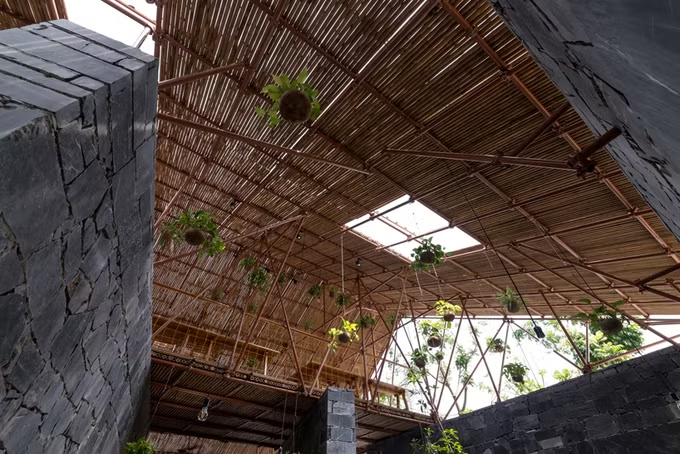
The building’s light roof and mezzanine have been built with steel pipes formerly used as scaffolding, with bamboo and wooden furniture and flooring.
- 6

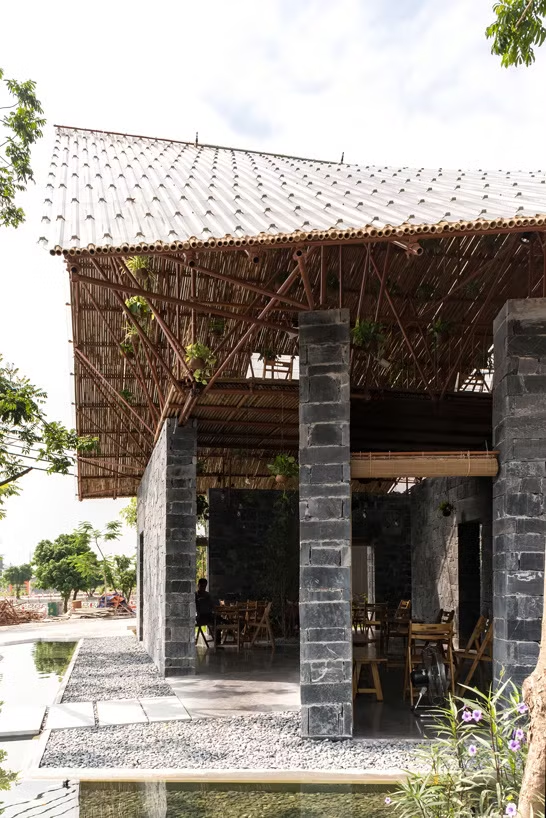
The transparent polycarbonate roof has a sprinkler system and mist spray to wash the roof and keep the building cool on hot summer days.
- 7

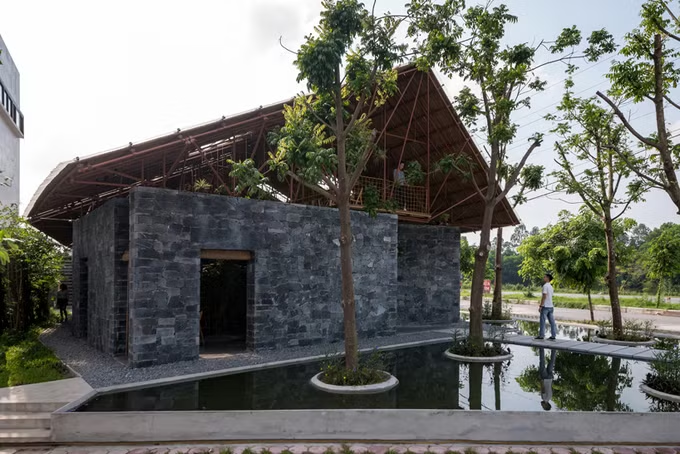
The outer space has a shallow pool and different varieties of trees, adding to the cool, natural feel of the place.
- 8

The design team, has named it S Space (S, standing for Save the Stone & Scaffolding) to warn of indiscriminate exploitation of natural resources, which has destroyed many precious mountains in the country.

VnExpress

Other News

Vietnam secure berth at FIFA U17 World Cup 2026 for first time

Vietnam secure berth at FIFA U17 World Cup 2026 for first time

Vietnam national U17 football team secured a place at the FIFA U17 World Cup 2026 for the first time after defeating United Arab Emirates national U17 football team 3-2 on in the final Group C match of the AFC U17 Asian Cup 2026 in Saudi Arabia on early May 14 (Vietnam time).

Vietnam’s most beautiful railway station twins with French counterpart

Vietnam’s most beautiful railway station twins with French counterpart

A twinning agreement between Da Lat Railway Station in Vietnam and Trouville-Deauville Railway Station in France was signed at the French Embassy in Vietnam on May 7, creating new opportunities for cooperation in station management and operations, as well as cultural and tourism promotion between the two sides.

Hanoi gains two more craft villages in World Crafts Cities network

Hanoi gains two more craft villages in World Crafts Cities network

The recognition of Chuyen My and Son Dong craft villages as members of the World Crafts Cities network represents international acknowledgement of the cultural value, artisanal techniques, creativity and sustainable vitality of Vietnam’s traditional craft villages, he said.

Thang Long - Hanoi Festival 2026 to return in September

Thang Long - Hanoi Festival 2026 to return in September

Co-hosted by the municipal People’s Committee, the Department of Culture and Sports, and domestic and foreign agencies, the whole spectacle is meant to honour the city’s millennia-old heritage while reafffirming its strategy of establishing culture as a development engine.

Spreading Vietnamese cultural identity in digital space

Spreading Vietnamese cultural identity in digital space

In the context of deep international integration, cultural identity serves as both a “shield” against assimilation and a defining marker of a nation’s image. Protecting and promoting uniquely Vietnamese cultural values has therefore become a pressing task, particularly in an increasingly complex digital environment.

ITE HCMC 2026 to promote Vietnam’s tourism on global map

ITE HCMC 2026 to promote Vietnam’s tourism on global map

With its large scale, the ITE HCMC 2026 aims to promote tourism cooperation between Vietnam and priority markets such as Northeast Asia, Western Europe, North America, Southeast Asia, and Oceania while also boosting visitor arrivals from the Indian market

Vietnamese puppetry seeks renewal amid preservation challenges

Vietnamese puppetry seeks renewal amid preservation challenges

Although widely regarded as a cultural “speciality” attracting tourists, Vietnamese puppetry is facing multiple challenges in preservation and development, requiring renewed efforts to both safeguard its identity and adapt to contemporary cultural currents.

Project on digital transformation in cultural sector approved

Project on digital transformation in cultural sector approved

By 2030, the project targets the establishment of shared digital platforms across 100% of cultural sectors. All digitised cultural heritage will be standardised under the national data framework and shared in accordance with regulations, while 80% of public digital heritage assets are expected to receive digital identifiers to clarify ownership and management, encouraging organisations and individuals to do the same and support market development.

Vietnam eyes becoming region’s leading tourism destination

Vietnam eyes becoming region’s leading tourism destination

Vietnam has in recent years undergone a notable transformation in its tourism development strategy, placing a strong emphasis on nature-based and eco-tourism. This shift is not merely aligned with global trends, but represents a necessary step towards safeguarding valuable natural resources, while appealing to a growing segment of environmentally conscious travellers.