Government urges rollout of EV charging infrastructure in apartment buildings

The Ministry of Construction has been tasked with completing urban planning standards with green transport infrastructure taken into account, including charging stations, by the second quarter of 2026.

Prime Minister Pham Minh Chinh has issued a dispatch directing ministries, sectors and localities to accelerate the development of electric vehicle (EV) charging infrastructure in urban areas and apartment buildings.

Government urges rollout of EV charging infrastructure in apartment buildings -0
Government urges rollout of EV charging infrastructure in apartment buildings

Dispatch No. 27/CD-TTg, dated March 31, 2026, highlights that the transition to electric transport is an inevitable trend aligned with the country’s goals on green growth, digitalisation and energy transition. However, the development of charging stations, parking facilities and battery-swapping points in residential areas remains limited and inconsistent. Many urban projects lack adequate parking planning to meet EV charging demand, placing pressure on internal power systems and raising concerns over fire safety.

To address these challenges, PM Chinh requested ministries, agencies and provincial authorities to improve communications, ensure transparency in planning information, and review and update policies, standards and regulations related to EV infrastructure. He stressed the need for strict supervision to prevent corruption, wastefulness and vested interests during implementation.

The Ministry of Construction has been tasked with completing urban planning standards with green transport infrastructure taken into account, including charging stations, by the second quarter of 2026. It must also revise national technical regulations for apartment buildings to provide detailed guidance on the design, installation and incident response for charging systems, with a deadline set for April 30, 2026.

In addition, the ministry will work with relevant agencies to remove bottlenecks in licensing procedures for installing or upgrading charging stations at existing residential buildings. It is also required to review the implementation of the national action programme on green energy transition in transport to propose necessary adjustments.

Meanwhile, the Ministry of Industry and Trade has been assigned to develop and issue national technical standards on safety and energy efficiency for charging equipment and systems by the third quarter of this year. It will also encourage the adoption of electric and clean-fuel vehicles, as well as the use of public transport vehicles.

Vietnam Electricity (EVN) has been instructed to enhance power demand management and simplify procedures for grid connection and separate metering for charging stations in apartment complexes, ensuring transparency in electricity usage and billing.

Local authorities are required to review planning and ensure the allocation of land and infrastructure for EV charging systems, while guiding investors and apartment buildings' management boards to deploy and use charging facilities safely and efficiently./.
VNA

Other News

Vietnamese culture connects generations in Canada

Vietnamese culture connects generations in Canada

Beyond language skills, children learn about Vietnamese history, stories of filial devotion and national heroes, and the importance of respecting parents and teachers. Weekend classes begin with the national anthem, while festivals and traditional holidays offer opportunities to make greeting cards, prepare traditional cakes and learn to wrap 'banh chung' (square sticky rice cakes).

Vietnam Studies Centre opens in northeastern Thailand

Vietnam Studies Centre opens in northeastern Thailand

The centre would serve as a valuable academic hub for teaching and promoting Vietnamese language, culture and history, while fostering people-to-people exchanges and connecting younger generations of the two countries.

950 years of Quoc Tu Giam: A milestone in Vietnam's educational and cultural history

950 years of Quoc Tu Giam: A milestone in Vietnam's educational and cultural history

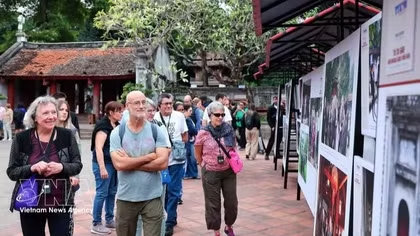
Russia’s senior researcher in Oriental studies Dr. Anatoly Sokolov said that although founded nearly a millennium ago, Quoc Tu Giam remains far more than a historical monument. It has continued to pass on the tradition of learning to successive generations and remained an integral part of Vietnam’s cultural and educational life.

Vietnam plans to go green by expanding ASEAN eco-schools model

Vietnam plans to go green by expanding ASEAN eco-schools model

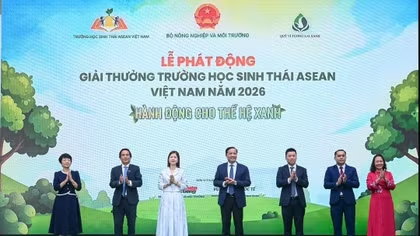
At the launch ceremony, Deputy Minister of Agriculture and Environment Le Trong Yen said schools play an important role in shaping young people's knowledge, character, and habits. Daily practices such as saving electricity and water, sorting waste and caring for trees could help students understand the value of natural resources and their responsibility towards the environment, while spreading positive habits to families and communities.

Young generation helps strengthen Vietnam–RoK friendship

Young generation helps strengthen Vietnam–RoK friendship

Through the seminar and bilingual contest, VESAMO aimed to provide a platform for young people to share knowledge, pursue their aspirations and contribute to closer friendship and comprehensive cooperation between the two nations.

Vietnamese community in Japan is encouraged to further contribute to national development

Vietnamese community in Japan is encouraged to further contribute to national development

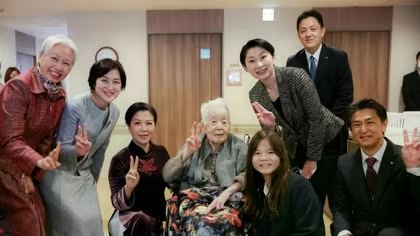
Welcoming the Vietnamese community's efforts and contributions, the General Secretary and President affirmed that the Party and State will continue improving institutions and policies to create favorable conditions for overseas Vietnamese to engage more deeply in the country's socio-economic development and play a proactive role as partners and co-creators in nation-building.

Ho Chi Minh City pushes English as a second language in schools

Ho Chi Minh City pushes English as a second language in schools

In 2027-2028, Ho Chi Minh City targets 20-30% of managers, teachers and staff in English proficiency training, 30% of establishments providing training in English/STEM/STEAM teaching methods, at least 30% of educational establishments with a complete English-speaking environment, and at least 15% of educational establishments teaching subjects in English.

Empowering people with disabilities to be immune to online scams

Empowering people with disabilities to be immune to online scams

Notably, it has organized online scam prevention training courses for more than 1,000 young people with disabilities. In coordination with the Hanoi Police, it has also run awareness campaigns and guided members on identifying fraudulent schemes, protecting their accounts and personal data, and verifying information before sharing it on social media.

New plan aims to empower people with disabilities, promote social inclusion

New plan aims to empower people with disabilities, promote social inclusion

By 2030, Vietnam aims to ensure social security and improve the quality of life of people with disabilities, with priority given to those facing hardship or unable to support themselves. It also aims to ensure their appropriate participation in elected bodies and enable them to benefit from the country's development achievements.

Vietnam advances towards high-quality, specialised healthcare

Vietnam advances towards high-quality, specialised healthcare

Recent developments in Hanoi and other localities highlight efforts to develop specialised treatment, standardise professional practices and apply artificial intelligence (AI) and advanced medical techniques, towards a more modern healthcare system.

Vietnam, US step up technology cooperation in search for war martyrs' remains

Vietnam, US step up technology cooperation in search for war martyrs' remains

Addressing a dialogue on war legacies in Southeast Asia organised by the Stimson Centre in Washington, D.C on October 21, Vietnamese Ambassador to the US Nguyen Quoc Dung briefed representatives of US government agencies, non-governmental organisations and experts on Vietnam’s efforts to address war consequences, while calling for international support and cooperation in urgent humanitarian work.