Measures suggested to conserve black-shanked doucs on Ba Den Mountain

Based on the findings, scientists proposed a range of measures to ensure the long-term protection of the black-shanked douc population on Ba Den Mountain.

Tay Ninh (VNA) – Recent findings from a survey of black-shanked douc langur (Pygathrix nigripes) groups on Ba Den Mountain in the southern province of Tay Ninh have provided an important scientific basis for developing a long-term conservation strategy for the critically endangered primate.

download-4.png
The natural forest provides an essential habitat and rich food sources for black-shanked douc langurs. (Photo: VNA)

At a recent consultation workshop on the current status of and conservation measures for black-shanked douc langurs in Sub-zone 66 of the Ba Den Mountain cultural and historical forest, scientists, conservationists and local authorities reviewed the condition of the population inhabiting the area.

According to the Centre for Nature Conservation and Development (CCD), the black-shanked douc is one of Vietnam’s 25 primate species and primarily feeds on leaves. It is endemic to Vietnam and Cambodia. Vietnam is home to three douc species: the red-shanked douc, regarded as a symbolic species of Da Nang; the grey-shanked douc; and the black-shanked douc.

The International Union for Conservation of Nature (IUCN)’s 2025 Red List classified the black-shanked douc as critically endangered while Vietnam’s Red Data Book 2024 lists it as endangered. It is also included in Group IB – endangered, precious and rare forest animals subject to Vietnam’s strict protection.
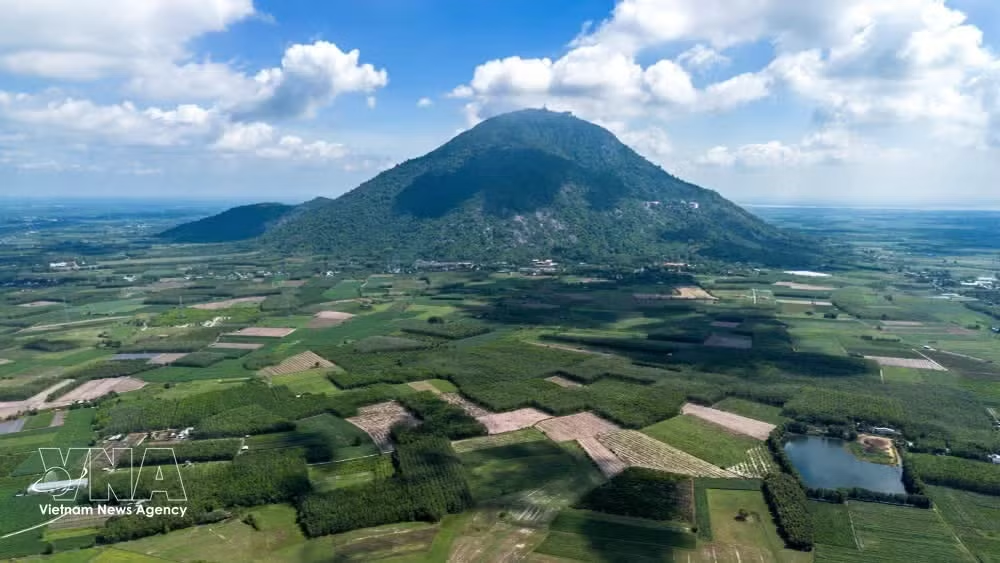
A view of Ba Den Mountain in the southern province of Tay Ninh (Photo: VNA)

Bui Thanh Tung, head of the CCD’s species conservation division, said the centre’s research team employed multiple survey methods simultaneously to assess the status of the langur population on Ba Den Mountain, including field surveys across 20 transects and 10 observation points, alongside camera traps and thermal drone technology.

“As doucs typically inhabit the forest canopy, the use of unmanned aerial vehicles proved highly effective, allowing researchers to observe from a distance without disturbing the animals or alerting them to human presence,” Tung said.

The survey documented the current status of the black-shanked douc population, mapped its distribution and identified key threats, forming the basis for proposing appropriate conservation measures.

Researchers noted that the langurs are mainly found in natural forest at elevations between 300 and 900 metres on Ba Den Mountain. They are active between 6am and 5pm daily, with peak activity occurring in the early morning and late afternoon. The species typically selects large trees for resting and overnight shelter. Although different groups maintain separate home ranges, some overlap was observed, suggesting ecological characteristics distinct from highly territorial primate species.

The survey recorded six groups comprising a total of 118 black-shanked douc langurs living within the mountain’s natural forest.

Researchers also found that all six groups included infant individuals, indicating that breeding activity is occurring across the entire population rather than being concentrated in larger groups. The finding is considered biologically significant, suggesting that the langurs have maintained stable social structures and ecological conditions suitable for reproducing and raising offspring are in place.

In addition, sub-adult individuals accounted for 30.5% of the total recorded population while infants represented 15.3%. This shows that the population is not only reproducing successfully but also has the potential to recruit new breeding individuals in the future, supporting long-term population stability, according to the CCD.

Based on the findings, scientists proposed a range of measures to ensure the long-term protection of the black-shanked douc population on Ba Den Mountain.
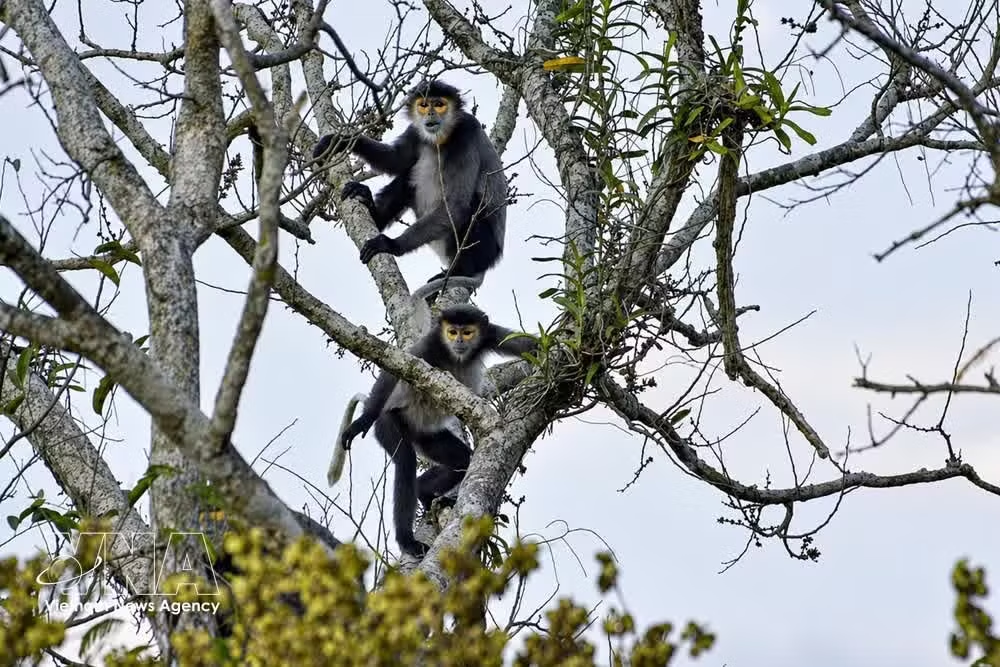
Black-shanked douc langurs inhabit the forest canopy on Ba Den Mountain and are one of the rare primate populations being monitored and conserved in Tay Ninh province. (Photo: VNA)

Tung said public communications and education to raise awareness are fundamental to reducing harmful human impacts on wildlife.

Additional recommendations included installing more educational and warning signage, strengthening forest patrols and monitoring, tightening controls over the release of rescued animals into the area, and expanding long-term research and monitoring.

Notably, the research team proposed gradually restoring habitat connectivity through a system of canopy bridges to enable movement between groups, facilitate genetic exchange, and support future expansion of the species’ range./.

VNA
en.vietnamplus.vn

Other News

Vietnamese culture connects generations in Canada

Vietnamese culture connects generations in Canada

Beyond language skills, children learn about Vietnamese history, stories of filial devotion and national heroes, and the importance of respecting parents and teachers. Weekend classes begin with the national anthem, while festivals and traditional holidays offer opportunities to make greeting cards, prepare traditional cakes and learn to wrap 'banh chung' (square sticky rice cakes).

Vietnam Studies Centre opens in northeastern Thailand

Vietnam Studies Centre opens in northeastern Thailand

The centre would serve as a valuable academic hub for teaching and promoting Vietnamese language, culture and history, while fostering people-to-people exchanges and connecting younger generations of the two countries.

950 years of Quoc Tu Giam: A milestone in Vietnam's educational and cultural history

950 years of Quoc Tu Giam: A milestone in Vietnam's educational and cultural history

Russia’s senior researcher in Oriental studies Dr. Anatoly Sokolov said that although founded nearly a millennium ago, Quoc Tu Giam remains far more than a historical monument. It has continued to pass on the tradition of learning to successive generations and remained an integral part of Vietnam’s cultural and educational life.

Vietnam plans to go green by expanding ASEAN eco-schools model

Vietnam plans to go green by expanding ASEAN eco-schools model

At the launch ceremony, Deputy Minister of Agriculture and Environment Le Trong Yen said schools play an important role in shaping young people's knowledge, character, and habits. Daily practices such as saving electricity and water, sorting waste and caring for trees could help students understand the value of natural resources and their responsibility towards the environment, while spreading positive habits to families and communities.

Young generation helps strengthen Vietnam–RoK friendship

Young generation helps strengthen Vietnam–RoK friendship

Through the seminar and bilingual contest, VESAMO aimed to provide a platform for young people to share knowledge, pursue their aspirations and contribute to closer friendship and comprehensive cooperation between the two nations.

Vietnamese community in Japan is encouraged to further contribute to national development

Vietnamese community in Japan is encouraged to further contribute to national development

Welcoming the Vietnamese community's efforts and contributions, the General Secretary and President affirmed that the Party and State will continue improving institutions and policies to create favorable conditions for overseas Vietnamese to engage more deeply in the country's socio-economic development and play a proactive role as partners and co-creators in nation-building.

Ho Chi Minh City pushes English as a second language in schools

Ho Chi Minh City pushes English as a second language in schools

In 2027-2028, Ho Chi Minh City targets 20-30% of managers, teachers and staff in English proficiency training, 30% of establishments providing training in English/STEM/STEAM teaching methods, at least 30% of educational establishments with a complete English-speaking environment, and at least 15% of educational establishments teaching subjects in English.

Empowering people with disabilities to be immune to online scams

Empowering people with disabilities to be immune to online scams

Notably, it has organized online scam prevention training courses for more than 1,000 young people with disabilities. In coordination with the Hanoi Police, it has also run awareness campaigns and guided members on identifying fraudulent schemes, protecting their accounts and personal data, and verifying information before sharing it on social media.

New plan aims to empower people with disabilities, promote social inclusion

New plan aims to empower people with disabilities, promote social inclusion

By 2030, Vietnam aims to ensure social security and improve the quality of life of people with disabilities, with priority given to those facing hardship or unable to support themselves. It also aims to ensure their appropriate participation in elected bodies and enable them to benefit from the country's development achievements.

Vietnam advances towards high-quality, specialised healthcare

Vietnam advances towards high-quality, specialised healthcare

Recent developments in Hanoi and other localities highlight efforts to develop specialised treatment, standardise professional practices and apply artificial intelligence (AI) and advanced medical techniques, towards a more modern healthcare system.

Vietnam, US step up technology cooperation in search for war martyrs' remains

Vietnam, US step up technology cooperation in search for war martyrs' remains

Addressing a dialogue on war legacies in Southeast Asia organised by the Stimson Centre in Washington, D.C on October 21, Vietnamese Ambassador to the US Nguyen Quoc Dung briefed representatives of US government agencies, non-governmental organisations and experts on Vietnam’s efforts to address war consequences, while calling for international support and cooperation in urgent humanitarian work.