Month for listening to people to be held nationwide

Under the plan, activities will be carried out nationwide at all administrative levels, from provinces and centrally run cities to communes, wards and special zones. VFF committees and socio-political organisations are required to engage directly with local communities through dialogues and meetings, with special attention given to vulnerable groups and those outside mass organisations.

Hanoi (VNA) – Vice President and General Secretary of the Vietnam Fatherland Front (VFF) Central Committee Ha Thi Nga on June 18 signed a plan to organise activities in the “Month for listening to the people”.
2.jpg
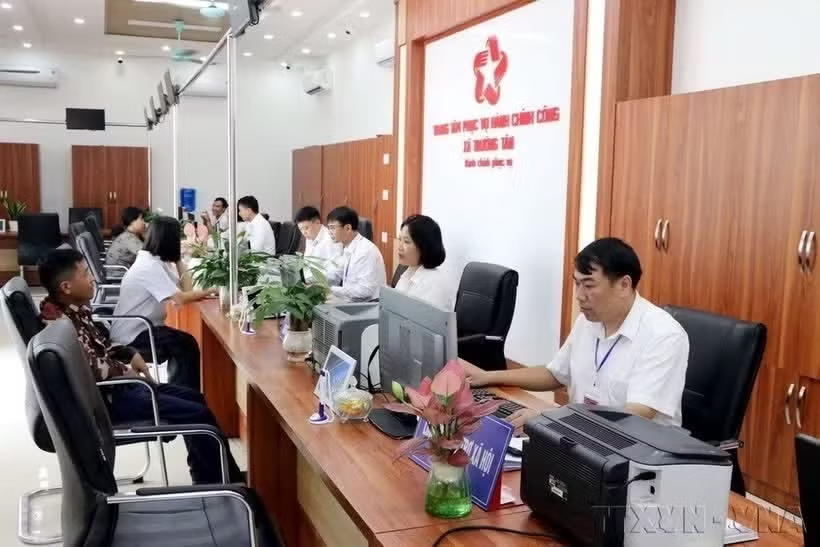
The Public Administrative Service Centre of Truong Tan commune, Hai Phong city, operates on both Saturdays and Sundays to serve citizens. (Photo: VNA)

Under the plan, activities will be carried out nationwide at all administrative levels, from provinces and centrally run cities to communes, wards and special zones. VFF committees and socio-political organisations are required to engage directly with local communities through dialogues and meetings, with special attention given to vulnerable groups and those outside mass organisations.

The effectiveness of the initiative will be measured by the actual resolution of public concerns and the satisfaction of residents, members and affiliates. The plan aims to ensure that 100% of petitions, recommendations and feedback are forwarded to competent authorities for handling within the prescribed timeframe.

The activities will be organised annually, linked to the traditional commemorative days of each organisation and aligned with the mandates of VFF committees and socio-political organisations.

A key feature of the programme is the organisation of “People’s Forums” or “Listening to the People” forums. At the central level, direct dialogues between Party and State leaders and the public will continue, focusing on major policies and issues affecting people's lives. Citizens will be encouraged to contribute opinions, express aspirations and propose solutions to practical challenges.

At provincial and grassroots levels, forums will be organised according to local conditions, with priority given to commune-level and residential community gatherings.

Discussion topics will include improving the operation of the two-tier local administration model; preserving cultural and historical values; mobilising public resources for private-sector development, innovation and technology application; policies on ethnicity, religion and social welfare; land management, urban planning, major infrastructure projects, environmental protection, healthcare, education, food safety, new-style rural building and other matters of public concern.

Annual listening themes will be selected based on local priorities, focusing on socio-economic development policies, livelihood-related programmes, social welfare, issues affecting specific demographic groups and unresolved concerns repeatedly raised by residents.

Forums may be held in person, online or in hybrid formats. Digital platforms, social media channels and official communication outlets will be used to collect feedback from residents, members and affiliates.

The plan also calls for maintaining and expanding effective public engagement models already implemented across the country, while encouraging localities to develop new initiatives suited to their circumstances. Authorities are urged to diversify channels for public participation through digital technologies, ensuring that all feedback is recorded in a centralised system and that progress and outcomes are publicly disclosed to enhance transparency and public oversight.

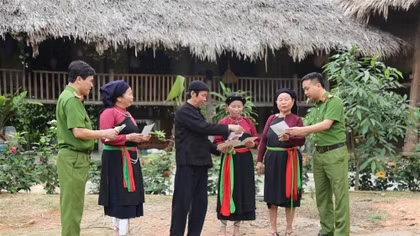
The initiative also emphasises strengthening citizen reception and direct dialogue between Party committees, local administrations and residents, particularly at the grassroots level. Commune leaders and local officials are encouraged to meet residents regularly to better understand their concerns and aspirations.

Successful engagement models will be reviewed, promoted and multiplied nationwide. Localities are also encouraged to organise cultural, sports and community activities alongside the programme, as well as exhibitions highlighting effective initiatives and achievements in addressing public concerns.

To broaden public participation, a dedicated “Month for listening to the people” section will be launched on the Digital Front Portal, alongside specialised pages on VFF and socio-political organisation media platforms. Responsibilities for receiving, processing and responding to public feedback will be clearly assigned, and results will be publicly disclosed to facilitate public monitoring.

The Standing Board of the VFF Central Committee requested central socio-political organisations and provincial-level VFF committees to promptly develop implementation plans suited to local conditions.

Every six months, annually, and before and after National Assembly and People's Council sessions, provincial VFF committees and socio-political organisations will submit reports summarising implementation results and public recommendations to the VFF Central Committee for consolidation and forwarding to the National Assembly and relevant agencies, while monitoring the settlement of public concerns./.
en.vietnamplus.vn

Other News

Vietnamese culture connects generations in Canada

Vietnamese culture connects generations in Canada

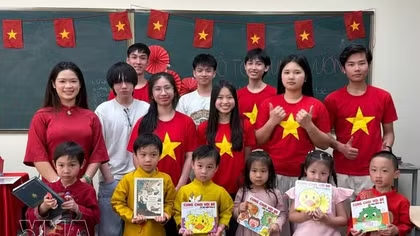
Beyond language skills, children learn about Vietnamese history, stories of filial devotion and national heroes, and the importance of respecting parents and teachers. Weekend classes begin with the national anthem, while festivals and traditional holidays offer opportunities to make greeting cards, prepare traditional cakes and learn to wrap 'banh chung' (square sticky rice cakes).

Vietnam Studies Centre opens in northeastern Thailand

Vietnam Studies Centre opens in northeastern Thailand

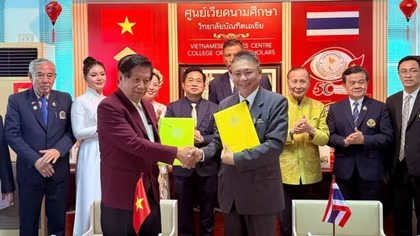
The centre would serve as a valuable academic hub for teaching and promoting Vietnamese language, culture and history, while fostering people-to-people exchanges and connecting younger generations of the two countries.

950 years of Quoc Tu Giam: A milestone in Vietnam's educational and cultural history

950 years of Quoc Tu Giam: A milestone in Vietnam's educational and cultural history

Russia’s senior researcher in Oriental studies Dr. Anatoly Sokolov said that although founded nearly a millennium ago, Quoc Tu Giam remains far more than a historical monument. It has continued to pass on the tradition of learning to successive generations and remained an integral part of Vietnam’s cultural and educational life.

Vietnam plans to go green by expanding ASEAN eco-schools model

Vietnam plans to go green by expanding ASEAN eco-schools model

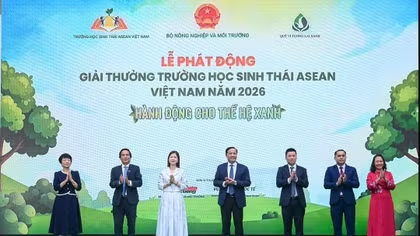
At the launch ceremony, Deputy Minister of Agriculture and Environment Le Trong Yen said schools play an important role in shaping young people's knowledge, character, and habits. Daily practices such as saving electricity and water, sorting waste and caring for trees could help students understand the value of natural resources and their responsibility towards the environment, while spreading positive habits to families and communities.

Young generation helps strengthen Vietnam–RoK friendship

Young generation helps strengthen Vietnam–RoK friendship

Through the seminar and bilingual contest, VESAMO aimed to provide a platform for young people to share knowledge, pursue their aspirations and contribute to closer friendship and comprehensive cooperation between the two nations.

Vietnamese community in Japan is encouraged to further contribute to national development

Vietnamese community in Japan is encouraged to further contribute to national development

Welcoming the Vietnamese community's efforts and contributions, the General Secretary and President affirmed that the Party and State will continue improving institutions and policies to create favorable conditions for overseas Vietnamese to engage more deeply in the country's socio-economic development and play a proactive role as partners and co-creators in nation-building.

Ho Chi Minh City pushes English as a second language in schools

Ho Chi Minh City pushes English as a second language in schools

In 2027-2028, Ho Chi Minh City targets 20-30% of managers, teachers and staff in English proficiency training, 30% of establishments providing training in English/STEM/STEAM teaching methods, at least 30% of educational establishments with a complete English-speaking environment, and at least 15% of educational establishments teaching subjects in English.

Empowering people with disabilities to be immune to online scams

Empowering people with disabilities to be immune to online scams

Notably, it has organized online scam prevention training courses for more than 1,000 young people with disabilities. In coordination with the Hanoi Police, it has also run awareness campaigns and guided members on identifying fraudulent schemes, protecting their accounts and personal data, and verifying information before sharing it on social media.

New plan aims to empower people with disabilities, promote social inclusion

New plan aims to empower people with disabilities, promote social inclusion

By 2030, Vietnam aims to ensure social security and improve the quality of life of people with disabilities, with priority given to those facing hardship or unable to support themselves. It also aims to ensure their appropriate participation in elected bodies and enable them to benefit from the country's development achievements.

Vietnam advances towards high-quality, specialised healthcare

Vietnam advances towards high-quality, specialised healthcare

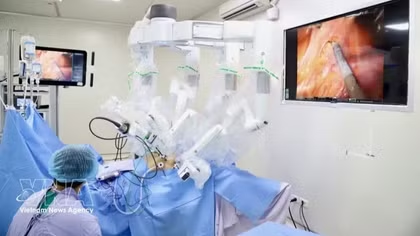
Recent developments in Hanoi and other localities highlight efforts to develop specialised treatment, standardise professional practices and apply artificial intelligence (AI) and advanced medical techniques, towards a more modern healthcare system.

Vietnam, US step up technology cooperation in search for war martyrs' remains

Vietnam, US step up technology cooperation in search for war martyrs' remains

Addressing a dialogue on war legacies in Southeast Asia organised by the Stimson Centre in Washington, D.C on October 21, Vietnamese Ambassador to the US Nguyen Quoc Dung briefed representatives of US government agencies, non-governmental organisations and experts on Vietnam’s efforts to address war consequences, while calling for international support and cooperation in urgent humanitarian work.