Hanoi (VNA) – Vietnam’s foreign affairs have continued to gather new momentum, playing an increasingly important role not only in expanding the country’s international partnerships but also in safeguarding a peaceful environment, opening up markets, attracting development resources, and enhancing the nation’s standing.
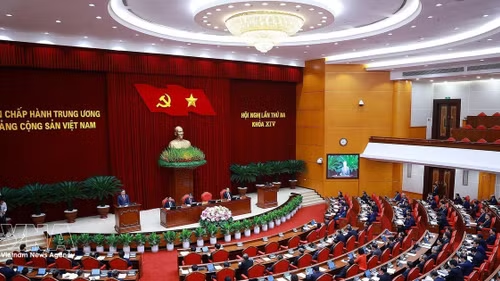
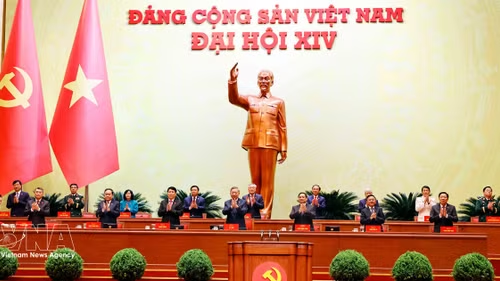
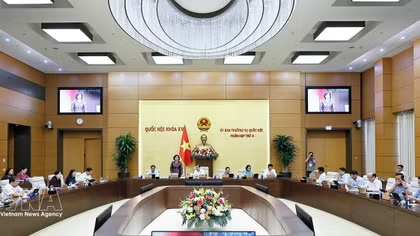
Recent diplomatic activities demonstrated that the foreign policy set out at the 14th National Party Congress is being translated into concrete action, reaffirming diplomacy as a “vital and regular” task alongside national defence and security.
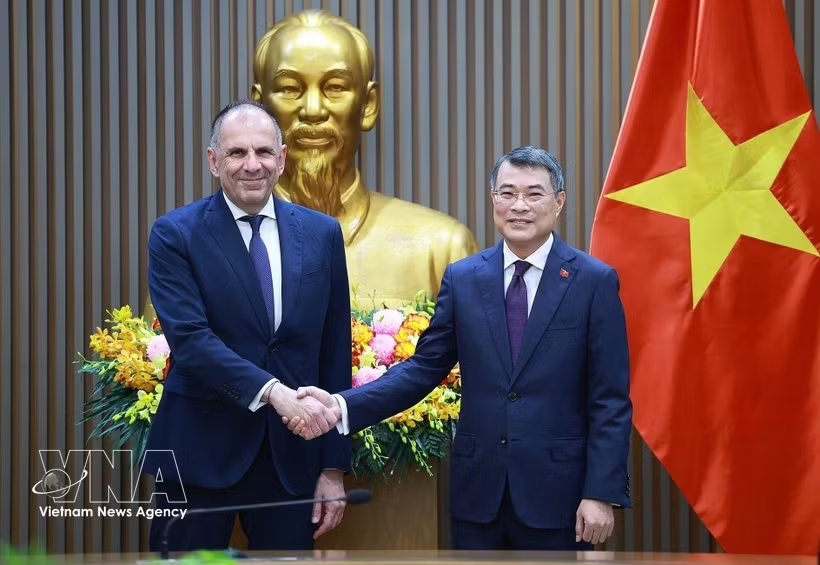
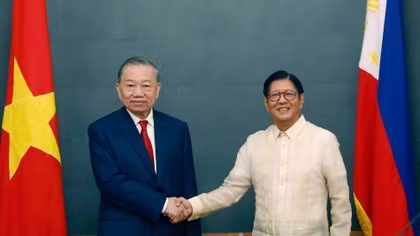
A recent meeting between Prime Minister Le Minh Hung and Greek Minister of Foreign Affairs George Gerapetritis went beyond reaffirming the long-standing friendship between the two countries. It focused on advancing cooperation in trade, investment and economic development, making full use of the EU–Vietnam Free Trade Agreement (EVFTA), strengthening business connectivity, and expanding collaboration in the maritime economy, logistics, shipbuilding, renewable energy, science and technology, and the possibility of launching direct flights. The meeting reflected efforts to translate the strong political ties between the two countries into practical economic cooperation capable of generating new growth opportunities.
Alongside strengthening bilateral relations, Vietnam has continued to play an active role in promoting ASEAN–EU cooperation. As the Country Coordinator for ASEAN-EU economic relations, and one of the few ASEAN members that has signed an FTA with the EU and been participating in the Just Energy Transition Partnership (JETP), Vietnam is proactively advancing cooperation in the fields of digital economy, energy transition, sustainable development, and trade. This approach is fully aligned with the Politburo’s Resolution No. 06-NQ/TW, which calls on Vietnam not only to participate in international cooperation mechanisms but also to contribute to shaping emerging frameworks for regional and global cooperation.
The country’s growing friendship with Mauritania, an African nation, further illustrates the evolving direction of its foreign policy. Rather than limiting exchanges to traditional diplomatic goodwill, the two sides are seeking to expand cooperation in areas where their strengths and development needs are complementary, including agriculture, telecommunications, mining, oil and gas, education, healthcare, and aquaculture. This practical, development-oriented approach is helping deepen the bilateral ties while creating new opportunities for sustainable growth and shared prosperity in both countries.
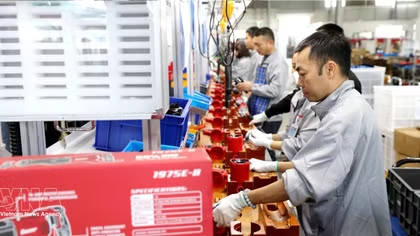
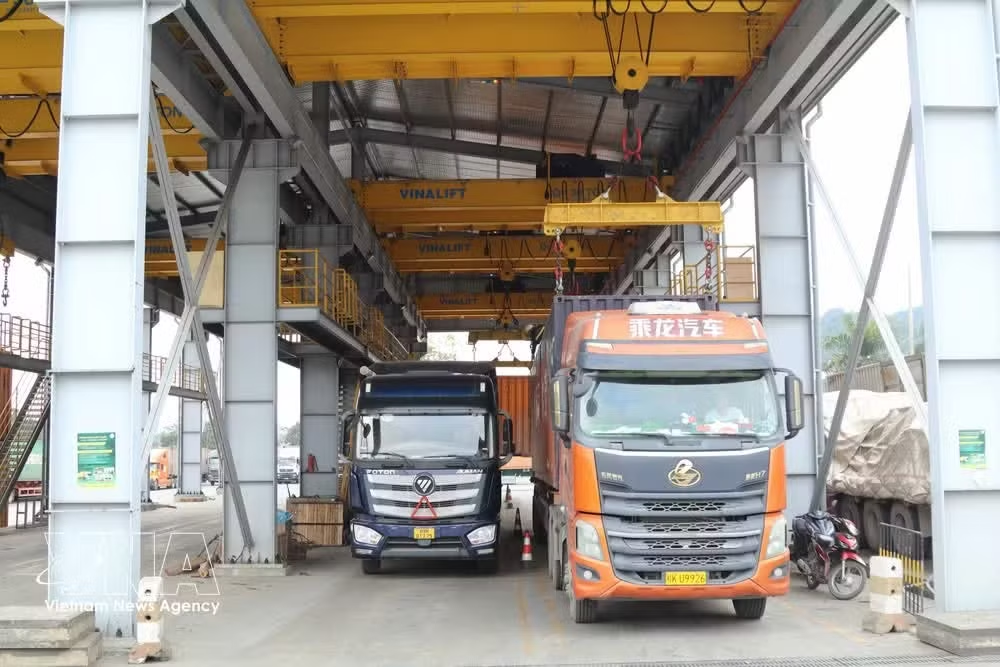
This is also evident at the local level. During a recent working visit to northern Lang Son province, PM Hung urged the locality to fully capitalise on its strategic border-gate advantages by accelerating the development of logistics, cross-border trade, cross-border economic cooperation zones, and smart border gates. In the first half of 2026, import-export turnover through the province reached 57.69 billion USD, up 42% year-on-year and accounting for around 11% of Vietnam’s total trade value. These figures underscore how effective external engagement can transform border gates from mere customs checkpoints into dynamic hubs connecting markets, attracting investment, and driving economic growth.
In border areas, building the borderline of peace, friendship, and cooperation has become a regular and coordinated effort across the political system. In Dak Lak province, for example, the provincial Vietnam Fatherland Front Committee and its counterpart in Cambodia’s Mondulkiri province recently signed a memorandum of understanding on a new phase of cooperation. The expanded programme covers not only border and boundary marker protection but also border-gate economic development, people-to-people exchanges, human resources training, and social welfare in border communities.
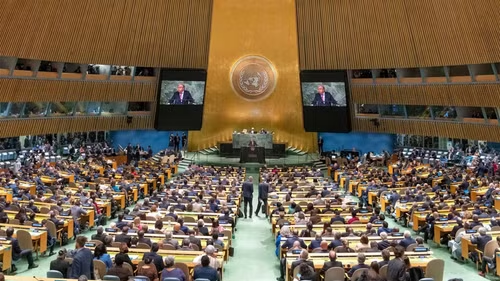
On regional and international issues, Vietnam has continued to work closely with its partners in reaffirming the consistent position of maintaining peace, stability, security, safety, and freedom of navigation and overflight, and resolving disputes through peaceful means in accordance with international law, particularly the 1982 United Nations Convention on the Law of the Sea (UNCLOS). Adhering firmly to these principles not only safeguards the peaceful environment essential for national development but also contributes to strengthening trust and promoting stability across the region.
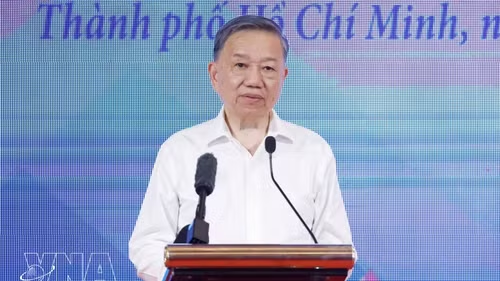
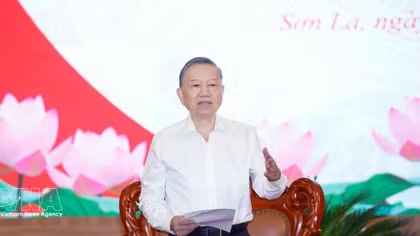
This reflects Vietnam’s strategic approach of “protecting the nation early and from afar,” a concept that extends beyond traditional security challenges. It also explains why the Party has identified foreign affairs as a frontline task that goes well beyond the responsibilities of the diplomatic sector alone. Recalling late President Ho Chi Minh’s teachings that, “National strength is like the gong, while diplomacy is its sound. Only when the gong is strong can its sound resonate far,” Party General Secretary and State President To Lam recently stressed that by performing their own responsibilities well, every ministry, sector and locality also makes a meaningful contribution to the country’s foreign affairs.
This has been clearly demonstrated in practice. A locality that successfully streamlines administrative procedures is better positioned to attract investors. A business that operates professionally and upholds its credibility enhances the reputation of Vietnamese products in international markets. A university that delivers high-quality education expands opportunities for international cooperation. Every effective contribution, however small, helps strengthen the country's image and standing.
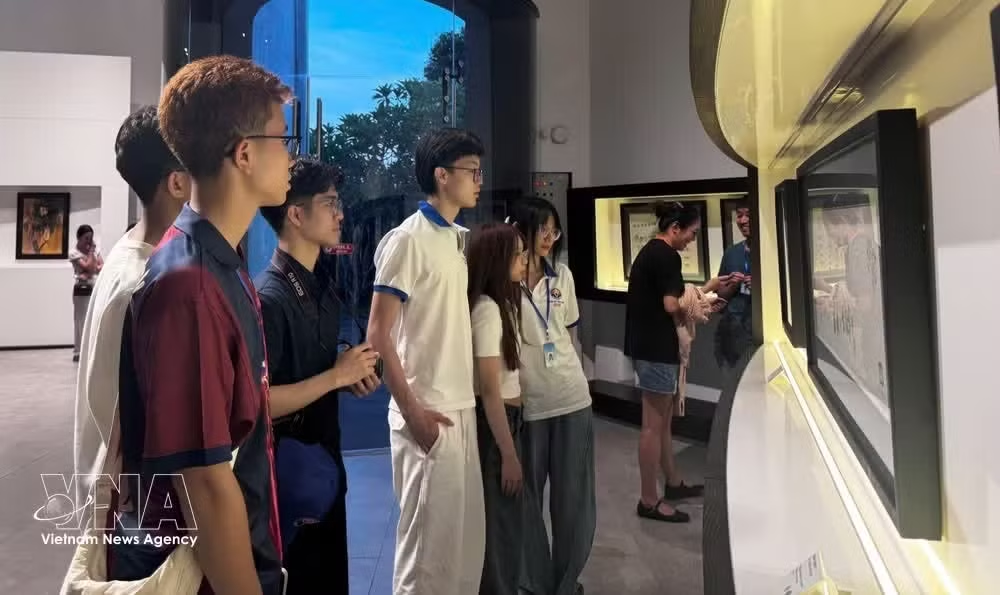
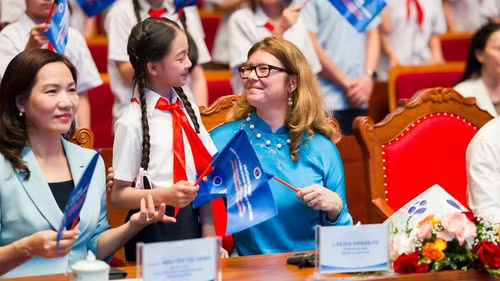
The Vietnam Summer Camp 2026 offers a vivid example. More than 100 young Vietnamese from 32 countries and territories across the world travelled nearly 1,500 kilometres across the country to explore Vietnam’s history, culture, and people. Through activities like these, younger generations of overseas Vietnamese deepen their attachment to the homeland while becoming an increasingly valuable resource for the nation’s future development.
People-to-people diplomacy has likewise been advanced through a wide range of practical activities. Events marking the 250th anniversary of the US’s Independence Day in Ho Chi Minh City, the 73rd anniversary of Cuba’s Moncada Barracks attack, and the 55th anniversary of diplomatic relations between Vietnam and Chile all placed particular emphasis on expanding people-to-people exchanges and strengthening cooperation among localities, businesses, and younger generations.
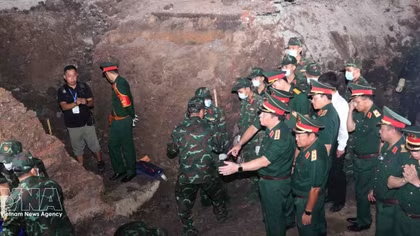
Vietnam’s responsible response to the recent canoe capsize accident involving Indian citizens further reflected the country’s humanitarian approach to diplomacy. Relevant authorities acted swiftly to conduct search and rescue operations while providing timely assistance to the victims and closely coordinating with the Indian side. Such actions have further reinforced Vietnam’s reputation for a foreign policy that is both compassionate and responsible.
The diplomatic activities carried out over the past week illustrated how the foreign policy adopted at the 14th National Party Congress is being steadily translated into practice. From high-level diplomacy and economic diplomacy to local-level and people-to-people exchanges, as well as the handling of regional and international issues, all efforts have been directed towards safeguarding a peaceful environment, mobilising external resources for development, and enhancing Vietnam’s international standing.
This also reflects a new stage in the Party’s foreign policy mindset, in which all external relations are geared towards serving the country’s development and improving the well-being of its people. Every diplomatic engagement that opens up a new partnership, creates access to a new market, attracts additional resources, or strengthens a trusted friendship represents a concrete step in bringing the foreign policy of the 14th National Party Congress into life./.