Ho Chi Minh City has launched a pilot reopening in District 7, while the central city of Da Nang has lowered the pandemic level and the southern province of Binh Duong has managed to bring COVID-19 under a degree of control.
This comes after the country witnessed more than 12,600 people recover from the disease September 14, with the number of new cases nearing 10,500. A series of provinces and cities have also started to resume operations four months on from the initial outbreak.
District 7 became the first locality in Ho Chi Minh City on September 15 to declare that the pandemic has been brought under control. As a result, the district will pilot the reopening of activities, including permitting 150 types of production and businesses to resume operations.
Alongside District 7, both Cu Chi and Can Gio districts will pilot a "vaccine green card" based on vaccination information, epidemiological factors, and antibody testing. This is in order to manage people's living activities and ensure that safety regulations about pandemic prevention measures are fully met.
As of September 15, shippers throughout the city will be able to conduct inter-district delivery and enjoy support for COVID-19 testing costs.
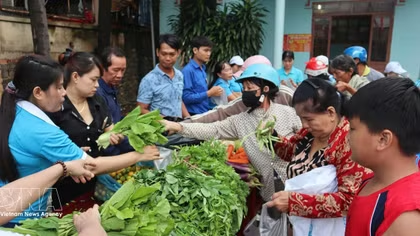
After nearly three months of closure, Hoc Mon market is anticipated to reopen for 12 small fruit and vegetable traders, thereby becoming a transshipment point for goods, although the site will not return to trading activities as before for the time being.
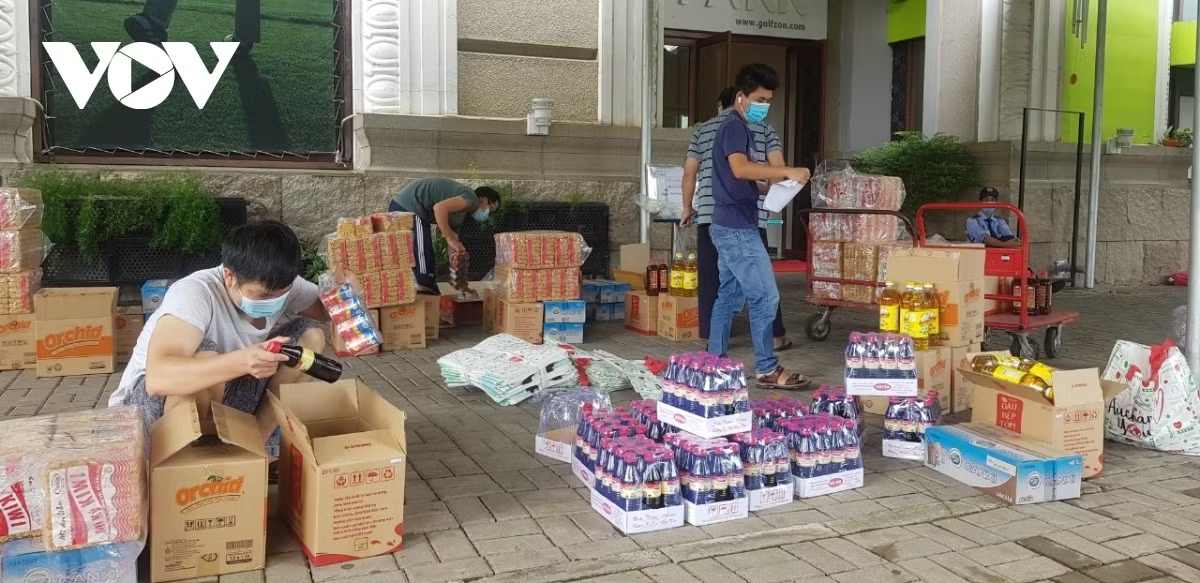
Over the past ten days, the southern metropolis has gradually restored a number of economic and livelihood activities, such as selling takeaway food and reopening services for computer equipment and essential aids to help learning.
Ho Chi Minh City will also extend the enforcement of Directive 16 until the end of September, with activities being gradually eased on the basis of the pandemic being brought under control, without massively reopening every activity at once.
According to Binh Duong’s provincial leaders, the past ten days has seen the number of hospital discharges higher than the number of new infections, indicating that the peak of the pandemic may have already passed.
A total of 104,000 out of 160,000 infections in total have now fully recovered from the disease, with mortality rate standing at 0.8%.
The locality is therefore considering opening up socio-economic activities step-by-step, including piloting "green zones" first, while continuing to contain the pandemic in "red zones".
Starting from September 15, people with "vaccine green cards" will be able to move within "green zone" districts, before being able to travel throughout the province after September 20.
Also as from September 15, more than 1.1 million people in Da Nang will continue to observe the enforcement of social distancing measures at a higher level than Directive 16 after a month of "staying at home", with these people also set to undergo frequent testing.
Furthermore, half of the communes and wards throughout the city have been identified as "green zones" due to no new positive COVID-19 cases being recorded for 14 consecutive days.
The central city will allow “orange zones” in order to restore some construction, engineering, and repair services, while agencies and offices will be able to operate up to 70% of employees.
Citizens will also be able to go and purchase food and essential goods every five days, whilst outdoor exercise activities will be extended from 5 p.m. to 7 p.m. daily.
A number of other central and northern provinces have also loosened anti- pandemic measures.
Hai Phong has opened flower gardens, parks, street food, and indoor services, although it is limiting the number of guests and operating hours. In addition, Thanh Hoa is reopening tourist spots, with capacity not exceeding 50% and only welcomes domestic tourists.
Elsewhere, Ha Giang has moved to restore activities at yoga studios, gyms, Internet shops, massage, and sauna services, in the event that that staff have received two jabs of the COVID-19 vaccine and get tested every seven days.
This comes after a total of six northern provinces, including Lao Cai, Phu Tho, Vinh Phuc, Bac Giang, Bac Ninh, and Son La, also gradually restored business and livelihood activities.
Although Hanoi has yet to finalise a plan for any services to resume operation, it is set to ease Directive 16, with top priority being given to pandemic prevention and control to protect people's health.
In recent times, the capital has speed up its vaccination campaign, with the goal of providing 100% of the population aged 18 and above with their first dose.
The capital's health sector successfully administered more than two million doses in six days and is expected to complete 100% of local citizens by September 15.
The nation has recorded 630,662 COVID-19 community cases in 62 out of its 63 cities and localities nationwide, along with more than 15,900 fatalities.