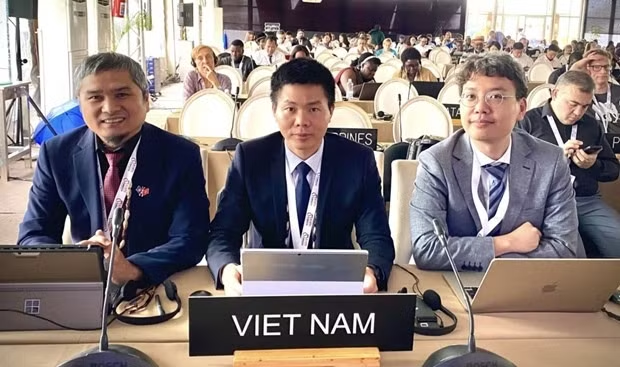
Vietnam was elected as the Vice Chair of the UNESCO's Intergovernmental Committee for the Safeguarding of Intangible Cultural Heritage on December 8 during the committee's 18th session in Kasane, Botswana.
This is the second time that Vietnam has been elected to the position after the first time in the 2006-2010 tenure, representing the Asia-Pacific region.
According to Ambassador Le Thi Hong Van, Permanent Representative of Vietnam to the UNESCO, this is another success of Vietnam this year, besides other good news including being elected as the Vice President of the UNESCO's General Conference.
The diplomat said that becoming the Vice Chair of one of the key specialised committees of the UNESCO affirms Vietnam's position and reputation in the world arena, showing the support and confidence of the international community in Vietnam's ability to make contributions and management capacity at the UNESCO, as well as the recognition of Vietnam's positive contributions to cooperation in the field of culture in general and intangible cultural heritage in particular, helping promote the role of culture and cultural heritage in sustainable and inclusive development and self-reliance in nations and regions.
This is also evidence for Vietnam's success in implementing its external policy of multilateralisation, diversification and comprehensive international integration in line with the spirit of the 13th National Party Congress' Resolution, and the Directive of the Party Central Committee’s Secretariat on strengthening and enhancing multilateral diplomacy until 2030, said Ambassador Van.
As the Vice Chair of the UNESCO's Intergovernmental Committee for the Safeguarding of Intangible Cultural Heritage, Vietnam will have more favourable conditions in completing and implementing goals and priorities of the UNESCO's Convention for the Safeguarding of Intangible Cultural Heritage (the 2003 Convention), thus enhancing the significant role of intangible cultural heritage as a motivation for sustainable development, cultural diversity, creativity and dialogue among cultures, connecting the society with the increased engagement of the community, women and the youth, she said.
The 18th session of the Intergovernmental Committee for the Safeguarding of Intangible Cultural Heritage took place from December 4-9 with the participation of more than 500 delegates and observers from 24 member states as well as international organisations and non-governmental organisations on culture and art.
The Vietnamese delegation to the event included Dao Quyen Truong, Vice Director of the Department of Cultural Affairs and UNESCO under the Ministry of Foreign Affairs, members of Vietnam National UNESCO Committee’s Secretariat, among others.
At the session, participants approved a list of 56 new dossiers of intangible cultural heritage, while evaluating the implementation of the 2003 Convention in member states in the Arab region, discussing and approving a mechanism to simplify the process of building nomination documents, and preparing activities to celebrate the 20th anniversary of the establishment of the 2003 Convention.
Truong said that the Vietnamese delegation made active engagement in all contents of the session.
The Secretariat and members of the committee hailed Vietnam's policies and strategies and practical measures in promoting the role of intangible cultural heritage as a driving force for sustainable economic, cultural-social development, environmental protection, and biodiversity protection, he said.
The official said that Vietnam's efforts in early researching and integrating many contents of the 2003 Convention into Vietnam's Cultural Heritage Law were highly appreciated internationally.
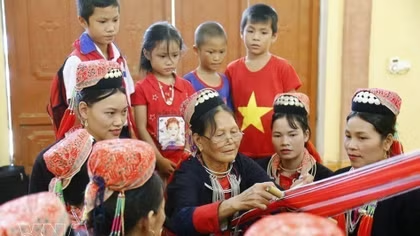
Vietnam's experience in designing management, protection and promotion plans for all 15 UNESCO-recognised intangible cultural heritage and 534 national ones with the engagement of the community and administration was also highly evaluated, he added.
The UNESCO's Intergovernmental Committee for the Safeguarding of Intangible Cultural Heritage comprises 24 members, acting as an UNESCO important executive agency for the protection of intangible cultural heritage, deciding on key issues related to recognising intangible cultural heritage and allocating funds to support the conservation of intangible cultural heritage in different countries, and designing policies and development orientations of the 2003 Convention.
The 19th session of the committee is slated for December 2024 in Paraguay, during which participants will consider Vietnam's nomination of the Festival of Ba Chua Xu Goddess at Sam Mountain as an intangible cultural heritage of humanity.