- Amendments to power purchase agreement called for more FDI
- Vietnam urged to focus more on dynamic advantages to attract FDI
- FDI disbursement up despite a decrease in registered inflow

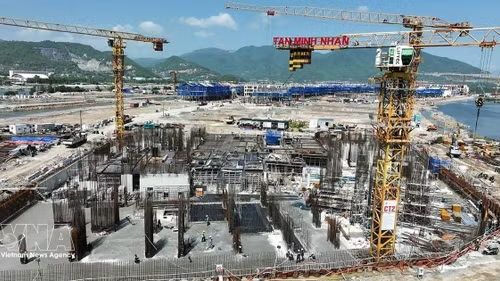
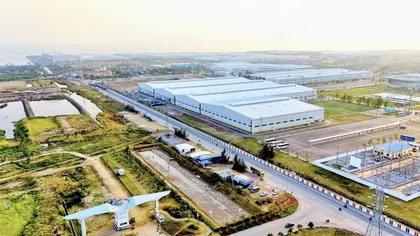
German-based Amann Group, one of the world’s top three leading producers of high-quality sewing and embroidery thread, is expanding its network to Vietnam with a new factory being constructed in Tam Thang Industrial Park in the central province of Quang Nam.
The new facility will be added to Amann’s existing network of factories in various countries across Asia, including Bangladesh, China, India and Indonesia.
At the new production site, the group will produce around 2,300 tonnes of sewing thread per year, mainly for the manufacture of apparel and shoes.
The first phase of the project is scheduled to commence in late July next year.
Kraig Biocraft Laboratories Inc, the US’ leading developer of spider silk-based yarn, is working with agricultural co-operatives in Quang Nam to expand mulberry production and develop high-quality silk in Vietnam.
The firm plans to set up a centre for research and development (R&D) of silk, as well as grow about 2,500ha of mulberry to support spider silk in the country.
According to Kraig Biocraft Laboratories, Vietnam had been chosen to scale up its spider silk commercialisation efforts as one of the firm’s strategic moves to expand.
The domino effect created by FDI expansion in the textile and garment sector has also led to an increase in the number of foreign suppliers of machinery and equipment for the industry.
In June, ILLIES Vietnam – a member of the German C. ILLIES & Co and also a leading distributor of industrial textiles machinery and equipment – announced it had expanded its portfolio in the spinning sector. It now provides machines and spare parts for short-staple yarn-spinning systems for the Rieter Group and the local textile market.
In the first quarter of 2019, the company will open a repair centre for mechanical and electrical parts of Rieter machines.
So far this year, the Vietnam Textile and Apparel Association (VITAS) had welcomed many foreign textile and garment producers visiting to explore investment opportunities, said VITAS vice chairman Truong Van Cam. More FDI projects would arrive in the country’s textiles sector in the coming years, Cam added.
Once new-generation free trade agreements (FTA), like the CPTPP and the EU-Vietnam FTA (EVFTA), entered into force, investment in the textile and garment industry will increase, offering a great opportunity for machinery suppliers like Rieter, said a representative from ILLIES Vietnam.
Statistics from VITAS showed that a total of nearly US$15.9 billion in FDI had been injected into more than 2,090 textile and garment projects in Vietnam by the end of last year. In the first half of 2018, the industry attracted another US$2.8 billion in FDI.
US$18 billion trade surplus
The country is now among the leading exporters of textile and garments in Asia. Vietnam’s total textile and garment exports have experienced a 3.6-fold increase over the past decade, from US$7.78 billion in 2007 to US$31 billion in 2017. Last year’s figure represented 16% of the nation’s total export revenue.
The domestic textile and garment industry is expected to gain a trade surplus of $18 billion this year, according to an official report from VITAS.
VITAS Chairman Vu Duc Giang said the sector was estimated to earn US$36 billion from exports this year, a year-on-year increase of about 16%.
Giang said that many enterprises had been working on completing a textile and garment supply chain.
Next year, the textile and garment industry has set a target of US$40 billion in export value, a year on year increase of 10.8%, and a trade surplus of US$20 billion.
To reach the target of US$40 billion, the association has recommended enterprises focus on investment, markets, human resources and the application of scientific and technological advances.
The Government and relevant State agencies needed to continue administrative reforms and inspections while removing difficulties for enterprises in 2019, Giang said.
The association needed to connect enterprises and markets at home and abroad by increasing trade promotions, he said.
The State should only grant investment licences to projects with large investments, advanced technology and wastewater treatment systems to meet the requirements of free trade agreements such as CPTPP and EVFTA.
The association has asked the National Assembly to adopt the Law on Association to allow foreign-owned enterprises to become association members so they can co-ordinate with local enterprises to set up supply chains and exchange experiences in production and business between local and foreign companies.