Foreigners' qualifications, requirements for working in preschool, general education institutions

Decree No. 411/2026/ND-CP, which will take effect on January 15, 2027, applies to preschool, general education, continuing education, vocational education and higher education institutions, as well as specialised schools, foreign-invested educational institutions and other educational establishments.

The Government has issued detailed regulations on the qualifications and requirements for foreign nationals working at preschool and general education institutions in Vietnam under Decree No. 411/2026/ND-CP.

The decree covers foreign nationals engaged in management, teaching, scientific research and academic exchanges at educational institutions.
1.jpg
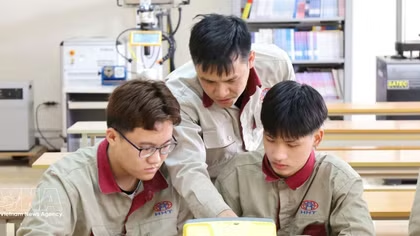
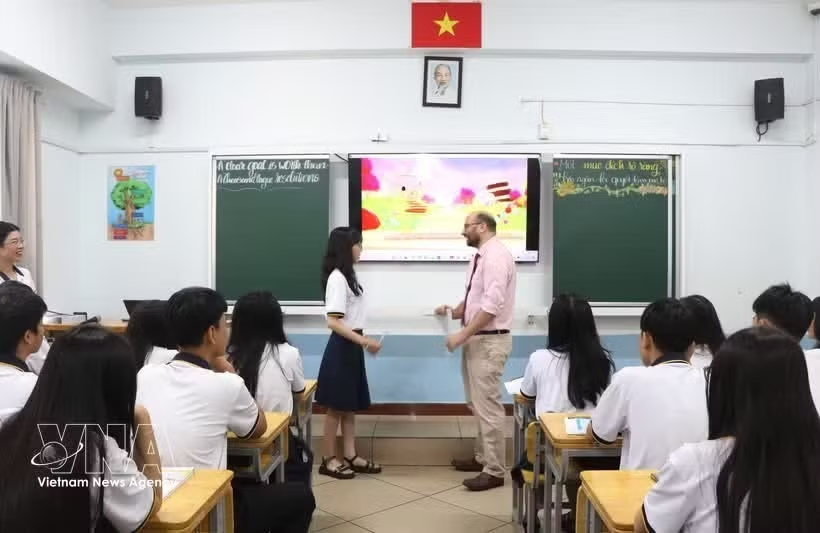
Under the new decree, foreign nationals engaged in teaching must also comply with the Law on Teachers and relevant regulations. (Photo: VNA)

Effective January 15, 2027, the decree comprises five chapters and 23 articles, setting out requirements on professional qualifications, duties, recruitment, employment contracts, professional management, and the rights and responsibilities of foreign workers and educational institutions, as well as relevant agencies and organisations.

It applies to preschool, general education, continuing education, vocational education and higher education institutions, as well as specialised schools, foreign-invested educational institutions and other educational establishments. It also covers agencies, organisations and individuals involved in recruiting and employing foreign nationals.

Under the decree, foreign nationals working at educational institutions must meet the general requirements set out in the document, as well as those applicable to their specific positions under Vietnam's regulations on foreign workers.

Those engaged in teaching must also comply with the Law on Teachers and relevant regulations. They must not be subject to any ban on holding positions or practising professions under court rulings or decisions by competent authorities. Their intended positions must also not be subject to restrictions on foreign employment for reasons related to national defence, security, state secrets, information security, cybersecurity or personal data protection.

Priority will be given to foreign nationals proficient in Vietnamese or holding a Vietnamese language proficiency certificate at Level 2 or above under the Vietnamese Language Proficiency Framework for Foreigners, as well as those familiar with Vietnamese culture and customs.

At preschool institutions, foreign managers must hold at least a bachelor's degree in education management or a relevant field and have at least two years of management experience, or possess a doctoral degree, professorial title or academy membership.

Foreign preschool teachers must hold at least a college degree in early childhood education or a relevant field and have at least two years of teaching or educational experience, or meet the alternative academic criteria stipulated in the decree.

Foreign language teachers who are native speakers must hold at least a college degree, an approved language teaching certificate and complete at least 90 hours of internship at a Vietnamese preschool.

At general education institutions, foreign managers must meet similar academic and management experience requirements. Foreign teachers must hold at least a bachelor's degree in a subject relevant to their teaching, together with a pedagogical certificate or at least two years of teaching experience, or possess a doctoral degree, professorial title or academy membership.

Foreign nationals using a language for management, teaching or educational activities must demonstrate proficiency at Level 4 or above under Vietnam's six-level foreign language proficiency framework, equivalent to B2 under the Common European Framework of Reference for Languages (CEFR).

Native speakers and those who have completed full-time undergraduate or postgraduate programmes overseas in the relevant language may be exempt from this requirement, provided their qualifications are recognised.
en.vietnamplus.vn

Other News

Vietnamese, Chinese localities agree to build border marker square

Vietnamese, Chinese localities agree to build border marker square

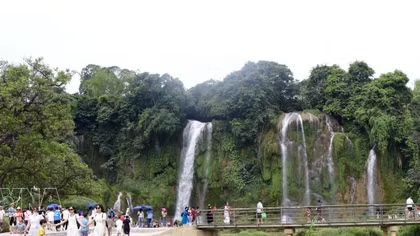
Dam Thuy commune in Vietnam’s Cao Bang province and Daxin county in China’s Guangxi Zhuang Autonomous Region have agreed to jointly build a border marker square in the area encompassing former Markers No. 53, No. 835 and No. 835/1, within the Ban Gioc (Vietnam) – Detian (China) Waterfall Scenic Area.

Vietnamese culture connects generations in Canada

Vietnamese culture connects generations in Canada

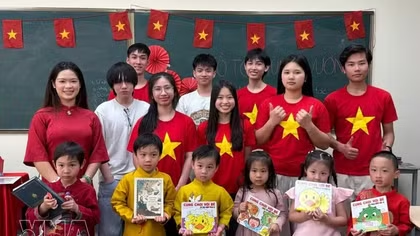
Beyond language skills, children learn about Vietnamese history, stories of filial devotion and national heroes, and the importance of respecting parents and teachers. Weekend classes begin with the national anthem, while festivals and traditional holidays offer opportunities to make greeting cards, prepare traditional cakes and learn to wrap 'banh chung' (square sticky rice cakes).

Vietnam Studies Centre opens in northeastern Thailand

Vietnam Studies Centre opens in northeastern Thailand

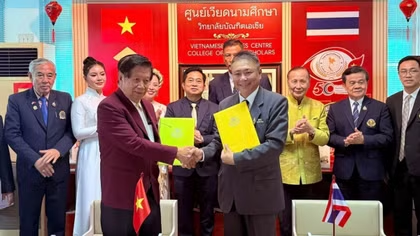
The centre would serve as a valuable academic hub for teaching and promoting Vietnamese language, culture and history, while fostering people-to-people exchanges and connecting younger generations of the two countries.

950 years of Quoc Tu Giam: A milestone in Vietnam's educational and cultural history

950 years of Quoc Tu Giam: A milestone in Vietnam's educational and cultural history

Russia’s senior researcher in Oriental studies Dr. Anatoly Sokolov said that although founded nearly a millennium ago, Quoc Tu Giam remains far more than a historical monument. It has continued to pass on the tradition of learning to successive generations and remained an integral part of Vietnam’s cultural and educational life.

Vietnam plans to go green by expanding ASEAN eco-schools model

Vietnam plans to go green by expanding ASEAN eco-schools model

At the launch ceremony, Deputy Minister of Agriculture and Environment Le Trong Yen said schools play an important role in shaping young people's knowledge, character, and habits. Daily practices such as saving electricity and water, sorting waste and caring for trees could help students understand the value of natural resources and their responsibility towards the environment, while spreading positive habits to families and communities.

Young generation helps strengthen Vietnam–RoK friendship

Young generation helps strengthen Vietnam–RoK friendship

Through the seminar and bilingual contest, VESAMO aimed to provide a platform for young people to share knowledge, pursue their aspirations and contribute to closer friendship and comprehensive cooperation between the two nations.

Vietnamese community in Japan is encouraged to further contribute to national development

Vietnamese community in Japan is encouraged to further contribute to national development

Welcoming the Vietnamese community's efforts and contributions, the General Secretary and President affirmed that the Party and State will continue improving institutions and policies to create favorable conditions for overseas Vietnamese to engage more deeply in the country's socio-economic development and play a proactive role as partners and co-creators in nation-building.

Ho Chi Minh City pushes English as a second language in schools

Ho Chi Minh City pushes English as a second language in schools

In 2027-2028, Ho Chi Minh City targets 20-30% of managers, teachers and staff in English proficiency training, 30% of establishments providing training in English/STEM/STEAM teaching methods, at least 30% of educational establishments with a complete English-speaking environment, and at least 15% of educational establishments teaching subjects in English.

Empowering people with disabilities to be immune to online scams

Empowering people with disabilities to be immune to online scams

Notably, it has organized online scam prevention training courses for more than 1,000 young people with disabilities. In coordination with the Hanoi Police, it has also run awareness campaigns and guided members on identifying fraudulent schemes, protecting their accounts and personal data, and verifying information before sharing it on social media.

New plan aims to empower people with disabilities, promote social inclusion

New plan aims to empower people with disabilities, promote social inclusion

By 2030, Vietnam aims to ensure social security and improve the quality of life of people with disabilities, with priority given to those facing hardship or unable to support themselves. It also aims to ensure their appropriate participation in elected bodies and enable them to benefit from the country's development achievements.

Vietnam advances towards high-quality, specialised healthcare

Vietnam advances towards high-quality, specialised healthcare

Recent developments in Hanoi and other localities highlight efforts to develop specialised treatment, standardise professional practices and apply artificial intelligence (AI) and advanced medical techniques, towards a more modern healthcare system.