Amending the Penal Code towards a safer, more harmonious society

According to Deputy Minister Le Quoc Hung, imposing harsher penalties does not necessarily translate into lower crime rates. Rather than pursuing increasingly severe punishments, the amended Penal Code seeks to address the underlying causes of crime and promote more effective prevention and enforcement measures, ultimately fostering a safer, more harmonious society.

During the session pertaining to the draft amended Penal Code on the afternoon of October 19, Deputy Minister Le Quoc Hung, a member of the Party Central Committee, Deputy Minister of Public Security and National Assembly deputy representing Ho Chi Minh City, highlighted several progressive provisions in the proposed legislation.

He noted that the amendments align with Politburo Resolution No. 68 on private-sector development, which calls for prioritizing civil, administrative and economic measures before resorting to criminal proceedings, while allowing businesses and entrepreneurs to proactively remedy violations and compensate for the damages.

Under the resolution, even in cases warranting criminal prosecution, priority should be given to measures addressing economic consequences, with remedial efforts serving as an important basis for determining subsequent legal action.

Deputy Minister Le Quoc Hung also referred to the significant policy direction set out in Resolution No. 4, adopted at the second plenum of the 14th Party Central Committee, on further strengthening Party leadership in the fight against corruption, wastefulness and other misconduct.

On this basis, the draft amended Penal Code expands the grounds for excluding criminal liability, introduces provisions allowing the temporary deferral of criminal prosecution, and adds new grounds for exemption from criminal liability. These proposed changes, he said, are closely aligned with the directives of the Party, the Politburo and the Party Central Committee.
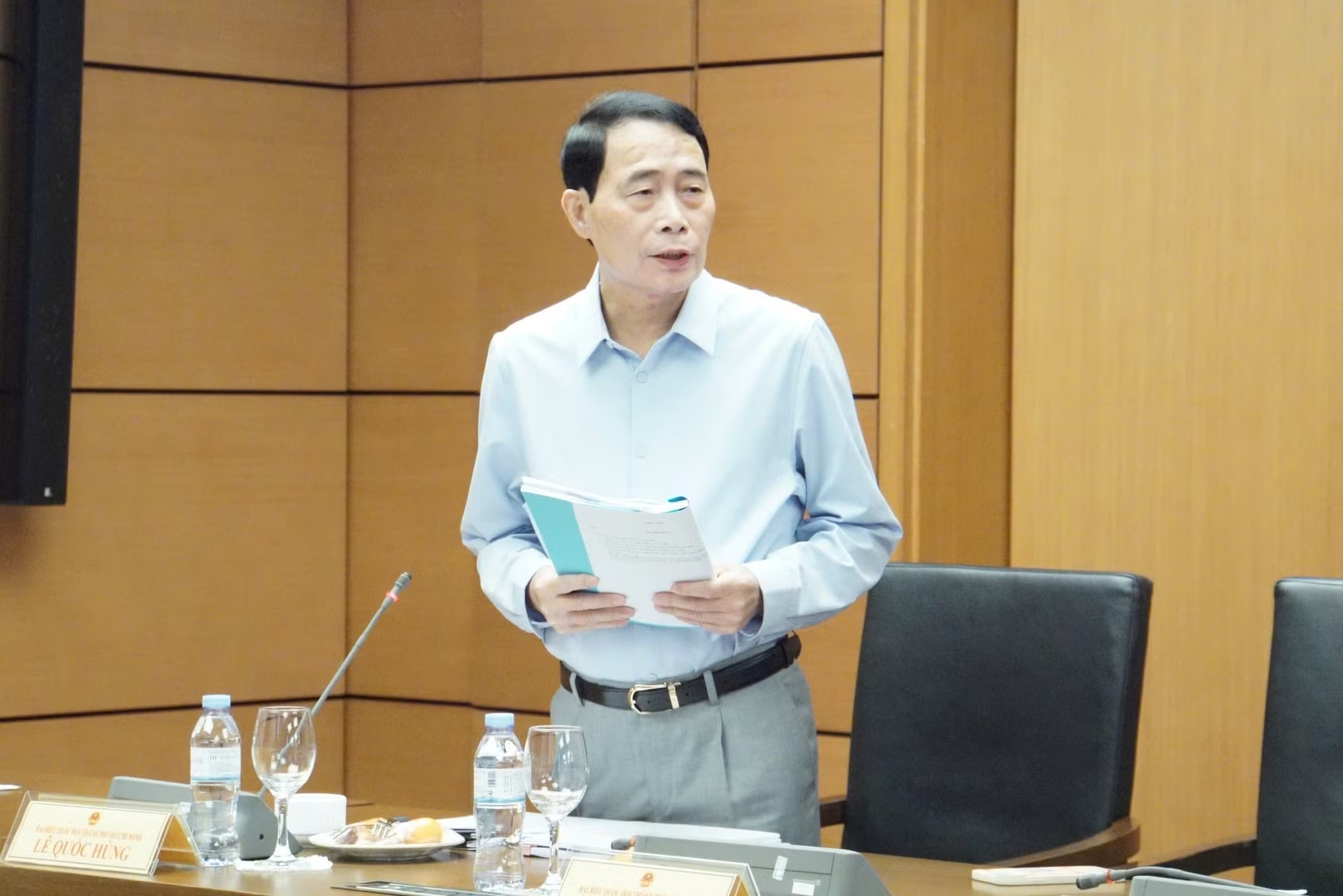
Deputy Minister Le Quoc Hung speaks during the session on the afternoon of October 19.

Deputy Minister Le Quoc Hung said the draft amended Penal Code expands exemptions from criminal liability for research, experimentation and the application of new technologies, as well as controlled testing of innovative technologies, processes, solutions, products, services and business models. The proposed provisions are intended to address practical needs amid the rapid development of the digital economy, artificial intelligence, financial technology and emerging business models.

Innovation inherently involves a degree of uncertainty. If every instance of damage arising during experimentation could lead to criminal prosecution, regardless of whether established procedures and risk-control measures had been fully observed, it could discourage innovation and hinder the implementation of Resolution No. 57 and the Party Central Committee’s broader agenda for innovation and digital transformation. "Thus, this Penal Code draft has expanded the scope, and we can be completely assured on this matter," the Deputy Minister affirmed.

The draft Penal Code also excludes criminal liability for damages caused while performing national defense, security, and crime prevention duties, thereby institutionalizing the project to protect officers and soldiers of the armed forces while on duty. This project, led by the Central Public Security Party Committee and approved by the Politburo, introduces many new criminal policy mechanisms to protect officers performing national defense and security tasks.
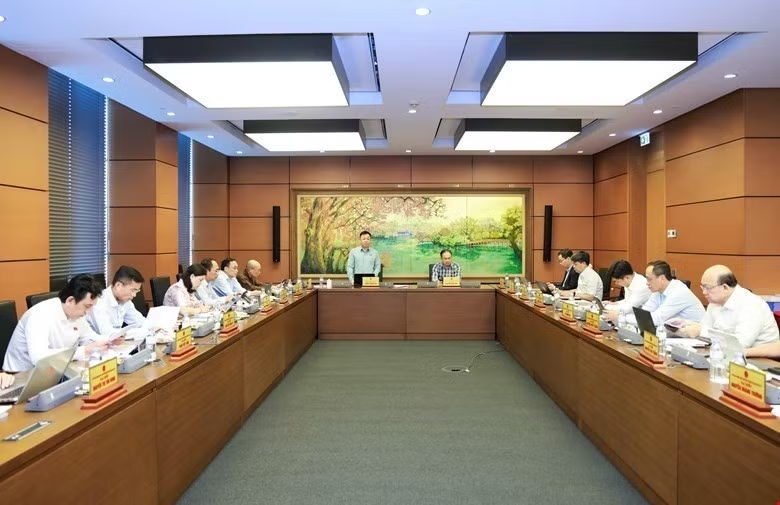
Overview of the session.

Addressing proposals to abolish the death penalty for illegal drug trafficking and the rape of children under 16, Deputy Minister Le Quoc Hung argued that harsher punishments do not necessarily lead to lower crime rates.

“I have figures demonstrating that, in combating drug-related crime, we have retained the death penalty for numerous offenses, and enforced it very strictly. Nevertheless, drug-related crime is a multifaceted issue and harsher penalties do not necessarily result in less crime,” he explained.

“The overarching objective, and the ultimate goal of this round of criminal justice reform, is not to make punishments more severe, but to reduce crime, make society safer, and ensure more rigorous and effective law enforcement.”

He noted that the Party Central Committee had recently issued Resolution No. 18 on building a disciplined, safe, civilized, harmonious and developed society, alongside Resolution No. 22 on the National Security Strategy.

“The further abolition of the death penalty for certain offenses under the Penal Code is consistent with these policy directions of the Party and the State,” he explained.

Viet Nam has progressively reduced the number of offenses punishable by death through successive revisions of its Penal Code. The 1985 Penal Code had 44 offenses with capital punishment; the 1999 version reduced this to 29; the 2009 version to 22; the 2015 version to 18; and the 2025 amendment reduced it to 10 offenses. This time, further reductions are being made to follow the Politburo and Party Central Committee's directive to gradually eliminate the death penalty from the Penal Code.

"Currently, out of 194 sovereign nations and 16 territories, only 50 nations and territories still retain the death penalty. The majority have abolished it. This is a global trend that warrants our consideration," the Deputy Minister noted.

Regarding the crime of illegal trading of narcotics, Deputy Minister Le Quoc Hung cited that Article 6 of the International Covenant on Civil and Political Rights does not consider this among the most serious crimes. The most serious crimes are those involving the deprivation of another person's life. International practice also does not classify this as a most serious crime. Therefore, both practical and international grounds exist for removing the death penalty for this offense.

The removal of the death penalty for illegal trading of narcotics, while retaining it for the illegal production of narcotics, is both consistent with the practical application of the law to these types of crimes and serves to differentiate the degree of danger and subjective intent between the two offenses.

Regarding the crime of "Rape of persons under 16," the drafting committee based its decision on the Party's policy and viewpoint of gradually narrowing the scope of offenses subject to the death penalty in the Penal Code and the current practical application of the death penalty. This approach is also consistent with the International Covenant on Civil and Political Rights, which only recommends the death penalty for the most serious crimes, those involving the deprivation of human life.


By Manh Nguyen

Other News

Viet Nam, Denmark promote law enforcement cooperation

Viet Nam, Denmark promote law enforcement cooperation

While accompanying General Secretary of the Communist Party of Viet Nam and State President To Lam and his spouse on an official State visit to the Kingdom of Denmark, Minister of Public Security General Luong Tam Quang had a bilateral meeting with Danish Minister of Justice Nicolai Wammen in Copenhagen on the afternoon of October 19, 2026 (local time).

Minister Luong Tam Quang meets NA Deputies serving in the PSF

Minister Luong Tam Quang meets NA Deputies serving in the PSF

Minister Luong Tam Quang has called on National Assembly (NA) deputies who are officers of the People's Public Security Forces (PSF) to demonstrate a strong sense of responsibility, proactively participate in discussions, and provide contructive opinions on draft laws and resolutions. He also urged them to strengthen coordination and information sharing, thereby contributing to improving the quality and effectiveness of the second session of the 16th NA.

Viet Nam, Slovakia law enforcement cooperation gains momentum

Viet Nam, Slovakia law enforcement cooperation gains momentum

During his official visit to the Slovak Republic, Deputy Minister Le Quoc Hung met with Slovakia’s Minister of the Interior to discuss a proposed intergovernmental agreement on crime prevention and control, aimed at strengthening the legal framework for bilateral law enforcement cooperation.

Viet Nam and Czech seek to bolster law enforcement cooperation

Viet Nam and Czech seek to bolster law enforcement cooperation

During a working visit to the Czech Republic from October 11 to 13, 2026, Member of the Party Central Committee and Deputy Minister of Public Security Senior Lieutenant General Le Quoc Hung led a high-level delegation from the Ministry of Public Security of Viet Nam to hold working sessions with Czech Deputy Minister of Justice Adam Šimice and leading representatives from agencies under the Czech Ministries of Justice and the Interior.

Promoting ties with Samsung in semiconductor technology and AI

Promoting ties with Samsung in semiconductor technology and AI

Minister Luong Tam Quang expressed his hope that Samsung would expand cooperation in training high-tech human resources, in conjunction with research and development of specific products to serve the security industry. These include biometric recognition software, artificial intelligence-powered document processing systems, and security chips for security devices.

Further deepen security and police cooperation between Viet Nam and RoK

Further deepen security and police cooperation between Viet Nam and RoK

Minister Luong Tam Quang expressed his hope that Viet Nam and the Republic of Korea (RoK) will further enhance the effectiveness of their security and police cooperation mechanisms, improve the quality of information exchange, and strengthen joint efforts to combat high-tech crime, drug-related offenses, and transnational crime.

Viet Nam and Czech seek to bolster law enforcement cooperation

Viet Nam and Czech seek to bolster law enforcement cooperation

Strengthening coordination in the fight against transnational crime, promoting negotiations on an extradition agreement, and expanding cooperation in cybersecurity and digital transformation are key directions discussed by Deputy Minister Le Quoc Hung with relevant authorities of the Czech Republic. The Czech side highly appreciated Vietnam's proposals and affirmed their readiness to enhance collaboration to deepen and make the partnership more effective.

Minister highlights importance of comprehensive review of legal normative document system

Minister highlights importance of comprehensive review of legal normative document system

Minister Luong Tam Quang emphasized the need for a unified understanding that a comprehensive review of the Ministry of Public Security’s legal normative documents is a particularly important task. He stated that this review is crucial for effectively implementing the Party’s new perspectives on security and order, as well as for improving the legal framework...

Minister Luong Tam Quang meets Laos senior official

Minister Luong Tam Quang meets Laos senior official

Minister Luong Tam Quang highly appreciated the significant contributions of Comrade Vilay Lakhamphong in strengthening and developing the cooperative relationship between the Ministry of Public Security of Viet Nam and Laos. He also expressed his confidence that the partnership between the two ministries would continue to deepen, becoming increasingly practical and effective, thereby further nurturing the special friendship between the two countries.

Minister Luong Tam Quang meets with Nokia head of business

Minister Luong Tam Quang meets with Nokia head of business

Based on the outcomes of discussions regarding quantum cybersecurity and sovereign artificial intelligence (AI) infrastructure, Minister Luong Tam Quang expressed his hope that Nokia would strengthen cooperation in research, technology transfer, and human resource development. He emphasized the need to gradually enhance Viet Nam’s capacity to master AI technology, cybersecurity, and next-generation telecommunications solutions in order to safeguard national security and ensure public order and safety.

Vietnam, Russia strengthen cooperation in criminal sentence enforcement

Vietnam, Russia strengthen cooperation in criminal sentence enforcement

PSNews – Vietnam’s Ministry of Public Security and Russia’s Federal Penitentiary Service (FSIN) have signed a cooperation program for the 2026–2028 period, aiming to bolster collaboration in improving prison management, inmate correction and rehabilitation, ensuring security and safety at detention facilities, and enhancing experience sharing, personnel training and the application of science and technology in criminal sentence enforcement.

Vietnam, China seek to enhance judicial cooperation

Vietnam, China seek to enhance judicial cooperation

PSNews - Vietnam’s Ministry of Public Security and China’s Ministry of Justice have agreed to further enhance cooperation in prison management while stepping up the exchange of information and experience in judicial administration, management and digital transformation, contributing to deeper cooperation between the two ministries.