Hanoi accelerates shift to green buses, targets 100% by 2030

In the 2027–2030 period, the city will accelerate the transition towards the complete phase-out of fossil fuel-powered buses. The share of electric and green energy-fueled buses is projected to reach 79–89% by 2029 and 100% by 2030.

Hanoi is rolling out solutions to support enterprises in transitioning public transport from petrol- and diesel-powered buses to electric and clean energy-fueled vehicles, aiming for all buses in the city to go green by 2030.

The move is a key step in the capital’s strategy to develop sustainable transport, cut emissions, and improve the urban environment. The roadmap is divided into two phases. In 2025–2026, Hanoi will focus on finalising support mechanisms and policies while expanding the electric bus network and building charging infrastructure, including fast-charging stations.
Hanoi accelerates shift to green buses, targets 100% by 2030 -0
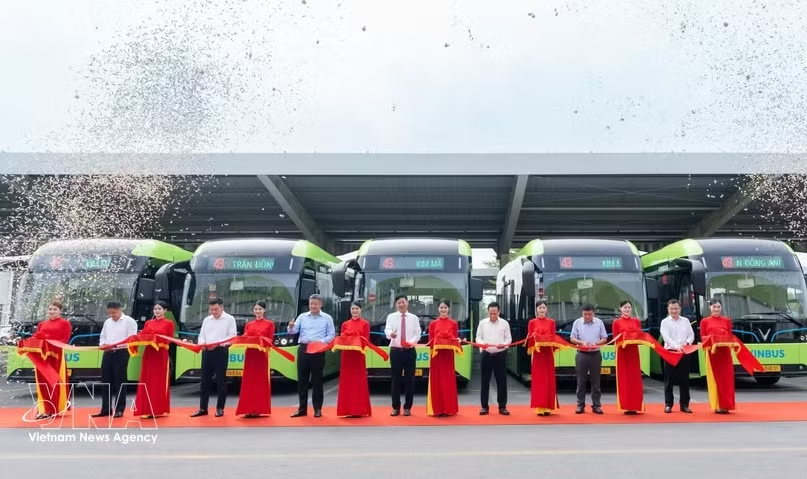
Delegates cut the ribbon to inaugurate the operation of electric bus route No. 43. Photo: VNA

In the 2027–2030 period, the city will accelerate the transition towards the complete phase-out of fossil fuel-powered buses. The share of electric and green energy-fueled buses is projected to reach 79–89% by 2029 and 100% by 2030.

To facilitate the shift, Hanoi is implementing a range of support measures. The municipal People’s Committee has tasked the Department of Construction with adjusting the duration of public bus service contracts in line with vehicle depreciation periods, thereby enhancing the attractiveness of bidding packages and encouraging investment in new vehicles.

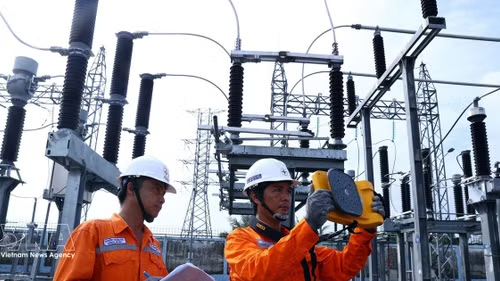
Meanwhile, the Department of Industry and Trade is responsible for planning a network of charging stations and green energy supply points, as well as upgrading the power grid to meet rising demand as electric bus numbers increase.

A notable policy is the increase in interest rate subsidies for enterprise loans. The city now covers 70% of loan interest for projects investing in electric buses and related infrastructure, up from 50% previously. The higher support level is considered necessary as electric buses cost two to three times more than diesel ones, leading to significantly higher financing costs.

Implementation is also gaining pace. The Hanoi Centre for Traffic Management and Operation reported that the city is expanding services by adding vehicles on multiple routes. Under Plan No. 149/KH-UBND, since early April, Hanoi has launched 10 additional electric bus routes with 288 vehicles through a bidding process, marking further progress in green public transport development.

By April 30, the number of electric and green energy-fueled buses is expected to reach 822, including 683 electric buses and 139 clean-fuel vehicles, accounting for more than 42% of the total fleet.

Hanoi’s bus network currently covers all communes and wards, with 155 routes in operation, including 128 subsidised ones. The fleet exceeds 2,200 vehicles, more than 1,500 of which meet Euro IV emission standards or higher.

While these efforts demonstrate the city’s commitment to modernising public transport in an environmentally friendly direction, further progress will depend on continued improvements in infrastructure, financial mechanisms, and strong participation from businesses to achieve the green and sustainable urban transport target.

VNA

Other News

Hanoi ready to implement Capital Law 2026, unlocking new development momentum

Hanoi ready to implement Capital Law 2026, unlocking new development momentum

The effectiveness of the Capital Law 2026 will be measured not by the number of legal documents issued but by tangible improvements in governance and public administration, better services for people and businesses, faster administrative procedures, stronger investment attraction and higher economic growth.

Vietnamese students earn honours at ROBOG Asia Cup 2026

Vietnamese students earn honours at ROBOG Asia Cup 2026

Three teams from Chu Van An Secondary School in Vietnam’s Thai Nguyen province have earned First Prize honours and advanced to the quarterfinals at the ROBOG Asia Cup 2026, a regional robotics and artificial intelligence (AI) competition for students held in Hong Kong, China.

Hanoi sets out new investment blueprint with century-long development vision

Hanoi sets out new investment blueprint with century-long development vision

As of early June, Hanoi had attracted 74.6 billion USD in foreign direct investment (FDI) through more than 9,250 valid projects. FDI inflows in the first six months were projected at 3.2 billion USD, surpassing the annual target by 116%, while nearly 16,000 new businesses were established in the first five months, up 34.4% year-on-year.

Vietnam promotes legal cooperation and rule of law at global forum

Vietnam promotes legal cooperation and rule of law at global forum

Vietnam’s development and international integration have gone hand in hand with the improvement of its legal system, the incorporation of international commitments into domestic legislation, and legal reforms aimed at fostering development, openness and global integration. The country regards international law as an essential instrument for building fair, mutually beneficial relations among nations.

Hanoi to hold investment promotion event on June 29

Hanoi to hold investment promotion event on June 29

At the event, Hanoi authorities plan to grant investment policy decisions and investment registration certificates to 20 exemplary projects in the fields of transportation infrastructure, industrial parks, urban development, social housing, environment, science and technology, and foreign investment attraction.

Hanoi's Red River urban area development draws widespread attention

Hanoi's Red River urban area development draws widespread attention

Located south of the Red River and extending from the historic inner city to newly developing areas in the south and the west, the central urban area along Red River’s right bank covers approximately 45,317 hectares and is projected to accommodate around 6.365 million residents by 2045 and 6.455 million by 2065.

Hanoi's Red River urban area development draws widespread attention

Hanoi's Red River urban area development draws widespread attention

Located south of the Red River and extending from the historic inner city to newly developing areas in the south and the west, the central urban area along Red River’s right bank covers approximately 45,317 hectares and is projected to accommodate around 6.365 million residents by 2045 and 6.455 million by 2065.

Regional cooperation strengthened to combat cross-border drug crime

Regional cooperation strengthened to combat cross-border drug crime

Vietnam, China, Laos and Myanmar face common challenges as drug syndicates increasingly exploit the Mekong River, cross-border transport networks, e-commerce platforms, international logistics services, cyberspace and cryptocurrencies to organise drug transactions and smuggling operations.