Hanoi sets out new investment blueprint with century-long development vision

As of early June, Hanoi had attracted 74.6 billion USD in foreign direct investment (FDI) through more than 9,250 valid projects. FDI inflows in the first six months were projected at 3.2 billion USD, surpassing the annual target by 116%, while nearly 16,000 new businesses were established in the first five months, up 34.4% year-on-year.

Hanoi will hold its Investment Promotion Conference 2026 on June 29 alongside the announcement of the capital city’s master plan with a 100-year vision, marking a major step in implementing its long-term development strategy.

Introducing a new investment landscape

Deputy Director of the Hanoi Department of Finance Le Trung Hieu said the conference will review the city’s socio-economic achievements while introducing its development vision and new special mechanisms and policies. The event is expected to showcase Hanoi’s aspirations and attract stronger cooperation from domestic and international investors.
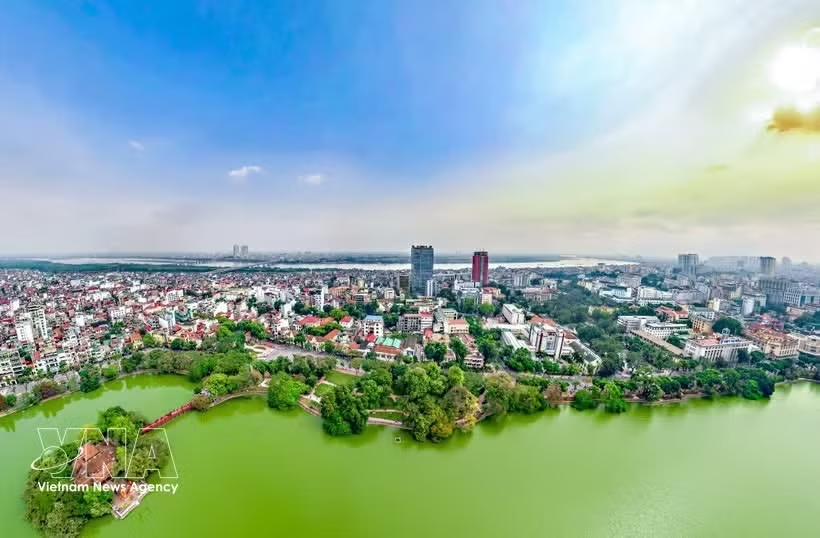
hanoi.jpg
A panoramic view of Hanoi’s political centre, stretching from Hoan Kiem Lake to the Red River (Photo: VNA)

The conference is expected to draw 1,000–1,200 participants, including representatives of businesses, investment organisations, ministries, international organisations, embassies, financial institutions, investment funds and local authorities.

A highlight of the event will be the launch of a digital investment project management and data platform. The system will digitise investment projects through 3D images, digital maps and field data, enabling investors to access planning information, procedures and policies more easily. Interactive tools are expected to improve transparency and shorten the time needed to identify investment opportunities.

An exhibition on Hanoi’s master plan will also be held, featuring scale models, maps and 3D mapping technology to help residents and businesses better understand the city’s development orientation.

From capital attraction to quality investment selection

A key feature of Hanoi’s new strategy is a shift from extensive to intensive investment attraction.

According to Hieu, the city will prioritise strategic investors and projects capable of generating high added value and driving growth, rather than focusing solely on the number of projects or registered capital.

Economic results in the first half of the year have provided momentum for this approach. State budget revenue was estimated at more than 404 trillion VND (15.3 billion USD), up 2.9%, while total development investment reached 256.9 trillion VND, up 15.2% year-on-year.

The city’s Index of Industrial Production rose 8.8%, while total retail sales of goods and consumer service revenue reached 516.9 trillion VND, up 13.3%. Tourist arrivals were estimated at 4.8 million, up 33% from a year earlier.

The digital economy accounted for about 17.34% of Hanoi’s gross regional domestic product (GRDP), helping the city maintain its leading position nationwide in the digitisation of administrative procedures.

As of early June, Hanoi had attracted 74.6 billion USD in foreign direct investment (FDI) through more than 9,250 valid projects. FDI inflows in the first six months were projected at 3.2 billion USD, surpassing the annual target by 116%, while nearly 16,000 new businesses were established in the first five months, up 34.4% year-on-year.

New growth poles on Hanoi’s investment map

Under Decision No. 2512/QD-UBND, Hanoi will develop under a “multi-layered, multi-polar and multi-centre” model, with the Red River serving as the ecological and cultural axis linking nine development poles, nine major centres and nine growth corridors.

The master plan targets average GRDP growth of over 11% annually during 2026–2035, with the economy projected to reach about 200 billion USD by 2035 and 640 billion USD by 2045.

Key growth zones have been identified to attract investment in strategic sectors. The Hoa Lac – Son Tay – Xuan Mai area will focus on high technology, semiconductors, artificial intelligence and research and development. The Noi Bai – Dong Anh – Soc Son – Me Linh zone will specialise in aviation logistics and a free trade zone, while the Red River corridor will promote cultural industries, finance, commerce, tourism and creative urban development.

To support these goals, Hanoi plans to accelerate major infrastructure and institutional projects, including a 1,153-km urban railway network, a free trade zone linked to a northern airport city, the Hoa Lac science and technology urban area, and studies for a second airport in the Capital Region.

Together with the 2026 Capital Law and new special mechanisms, these initiatives are expected to strengthen Hanoi’s appeal to strategic investors and high-tech projects in the years ahead.
en.vietnamplus.vn

Other News

Vietnamese culture connects generations in Canada

Vietnamese culture connects generations in Canada

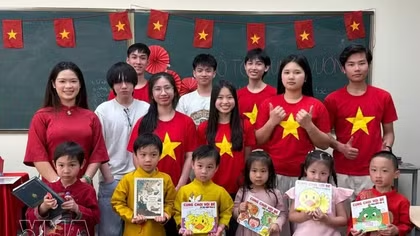
Beyond language skills, children learn about Vietnamese history, stories of filial devotion and national heroes, and the importance of respecting parents and teachers. Weekend classes begin with the national anthem, while festivals and traditional holidays offer opportunities to make greeting cards, prepare traditional cakes and learn to wrap 'banh chung' (square sticky rice cakes).

Vietnam Studies Centre opens in northeastern Thailand

Vietnam Studies Centre opens in northeastern Thailand

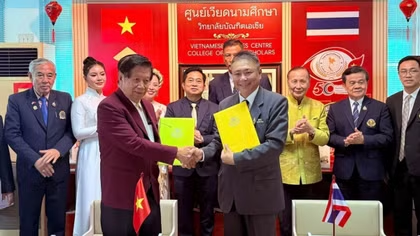
The centre would serve as a valuable academic hub for teaching and promoting Vietnamese language, culture and history, while fostering people-to-people exchanges and connecting younger generations of the two countries.

950 years of Quoc Tu Giam: A milestone in Vietnam's educational and cultural history

950 years of Quoc Tu Giam: A milestone in Vietnam's educational and cultural history

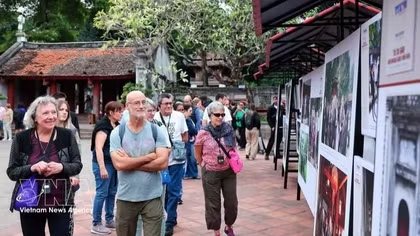
Russia’s senior researcher in Oriental studies Dr. Anatoly Sokolov said that although founded nearly a millennium ago, Quoc Tu Giam remains far more than a historical monument. It has continued to pass on the tradition of learning to successive generations and remained an integral part of Vietnam’s cultural and educational life.

Vietnam plans to go green by expanding ASEAN eco-schools model

Vietnam plans to go green by expanding ASEAN eco-schools model

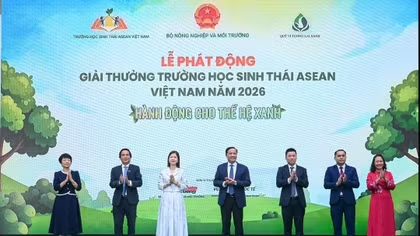
At the launch ceremony, Deputy Minister of Agriculture and Environment Le Trong Yen said schools play an important role in shaping young people's knowledge, character, and habits. Daily practices such as saving electricity and water, sorting waste and caring for trees could help students understand the value of natural resources and their responsibility towards the environment, while spreading positive habits to families and communities.

Young generation helps strengthen Vietnam–RoK friendship

Young generation helps strengthen Vietnam–RoK friendship

Through the seminar and bilingual contest, VESAMO aimed to provide a platform for young people to share knowledge, pursue their aspirations and contribute to closer friendship and comprehensive cooperation between the two nations.

Vietnamese community in Japan is encouraged to further contribute to national development

Vietnamese community in Japan is encouraged to further contribute to national development

Welcoming the Vietnamese community's efforts and contributions, the General Secretary and President affirmed that the Party and State will continue improving institutions and policies to create favorable conditions for overseas Vietnamese to engage more deeply in the country's socio-economic development and play a proactive role as partners and co-creators in nation-building.

Ho Chi Minh City pushes English as a second language in schools

Ho Chi Minh City pushes English as a second language in schools

In 2027-2028, Ho Chi Minh City targets 20-30% of managers, teachers and staff in English proficiency training, 30% of establishments providing training in English/STEM/STEAM teaching methods, at least 30% of educational establishments with a complete English-speaking environment, and at least 15% of educational establishments teaching subjects in English.

Empowering people with disabilities to be immune to online scams

Empowering people with disabilities to be immune to online scams

Notably, it has organized online scam prevention training courses for more than 1,000 young people with disabilities. In coordination with the Hanoi Police, it has also run awareness campaigns and guided members on identifying fraudulent schemes, protecting their accounts and personal data, and verifying information before sharing it on social media.

New plan aims to empower people with disabilities, promote social inclusion

New plan aims to empower people with disabilities, promote social inclusion

By 2030, Vietnam aims to ensure social security and improve the quality of life of people with disabilities, with priority given to those facing hardship or unable to support themselves. It also aims to ensure their appropriate participation in elected bodies and enable them to benefit from the country's development achievements.

Vietnam advances towards high-quality, specialised healthcare

Vietnam advances towards high-quality, specialised healthcare

Recent developments in Hanoi and other localities highlight efforts to develop specialised treatment, standardise professional practices and apply artificial intelligence (AI) and advanced medical techniques, towards a more modern healthcare system.

Vietnam, US step up technology cooperation in search for war martyrs' remains

Vietnam, US step up technology cooperation in search for war martyrs' remains

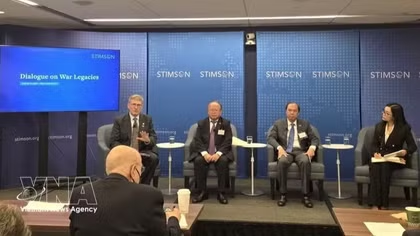
Addressing a dialogue on war legacies in Southeast Asia organised by the Stimson Centre in Washington, D.C on October 21, Vietnamese Ambassador to the US Nguyen Quoc Dung briefed representatives of US government agencies, non-governmental organisations and experts on Vietnam’s efforts to address war consequences, while calling for international support and cooperation in urgent humanitarian work.